
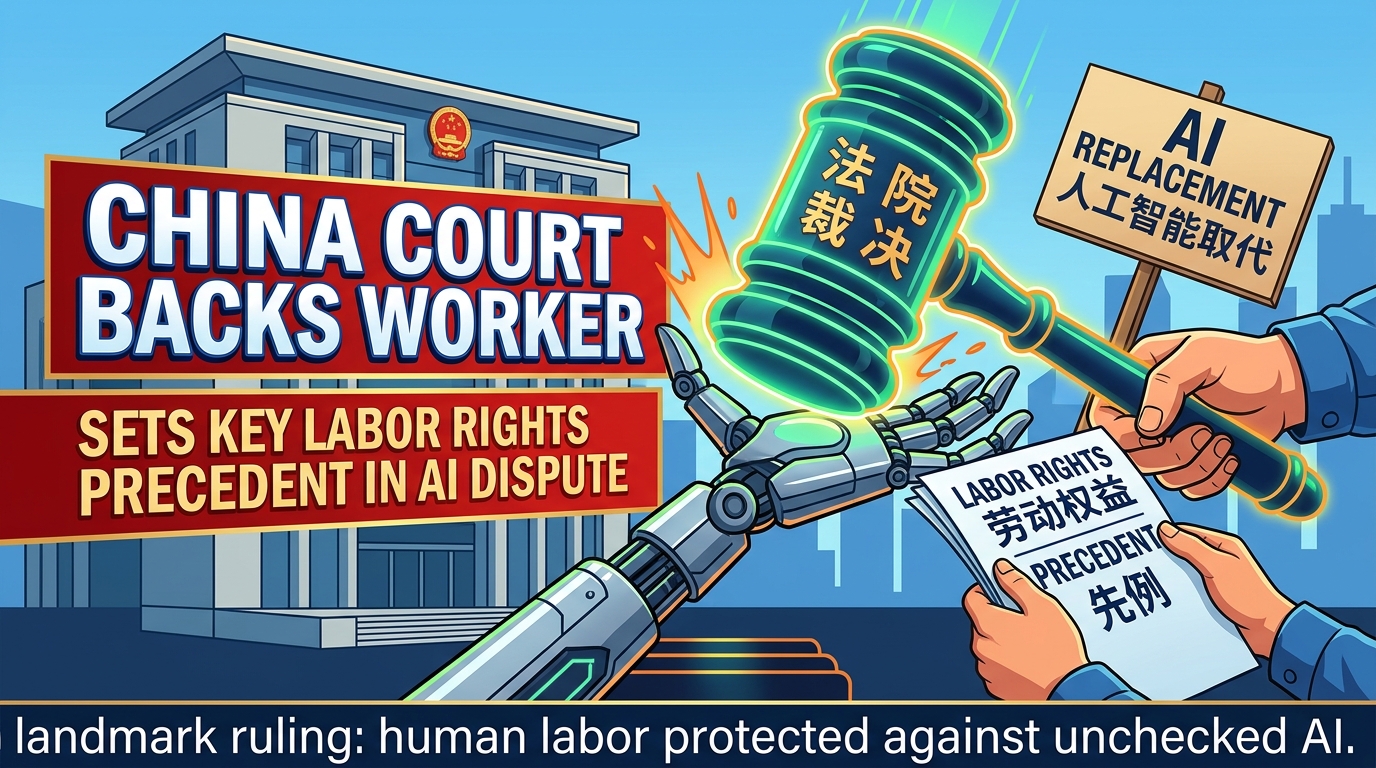
China Court Backs Worker in AI Job Dispute, here’s something interesting. A court in Hangzhou, China, just ruled in favor of a worker who got fired after his company replaced him with Artificial Intelligence. And honestly? This is a pretty big deal.
The Hangzhou Intermediate People’s Court didn’t just side with the employee. They sent a clear message: adopting fancy new Tech doesn’t mean you get to ignore labor laws.
What Actually Happened
The worker was let go. Then the company offered him a different role — but at a much lower salary. He said no thanks, and took them to court.
And the court agreed with him.
The judges basically said: look, we get it. Companies want to use AI. That’s fine. But you still have to follow the rules. You can’t just toss someone aside, cut their pay, and call it progress.
You want to automate? Great. But you still owe your workers fair treatment, proper severance if it comes to that, and a real effort to find them another role if possible.
This Matters Because China Is Going All In on AI
China is moving fast on artificial intelligence. Really fast. Factories, call centers, even some white-collar jobs — AI is creeping in everywhere. It’s cheaper. It’s efficient. It doesn’t complain about overtime.
But here’s the flip side: people lose their jobs. And not everyone can just pivot to something new overnight.
This case isn’t a one-off. It’s part of a growing wave of disputes as machines replace humans. And the court just drew a line in the sand.
What the Court Was Really Saying to Employers
If you’re a business owner in China right now, you should be paying attention. The message is pretty straightforward:
- You can’t fire someone and blame the Robot.
- You can’t slash their salary and call it a “reassignment.”
- You still owe them severance. You still owe them due process.
Innovation is great. But it’s not a free pass to be shady.
China’s Balancing Act
Here’s the thing about China. On one hand, they want to lead the World in AI. They’re pouring billions into research and development. They’re proud of it.
On the other hand, they really care about social stability. Mass unemployment? Protests? That’s bad for business — and bad for the Party.
So this ruling actually makes a lot of sense. It’s the government saying: “Go ahead, automate. Just don’t break the system while you’re doing it.”
Why the Rest of the World Should Care
This happened in China, sure. But it could happen anywhere.
The US, Europe, India — every country is wrestling with the same problem. What do you do when AI starts taking jobs? Who protects the worker? What are companies allowed to do?
This Hangzhou case won’t set legal precedent outside China. But it might influence how other judges and lawmakers think about these issues. It’s a real-world example of a court saying: “No, you can’t hide behind the algorithm.”
So What Does This Mean for the Future of Work?
For workers? It’s a small reassurance. Courts are starting to catch up with technology. Your job might be at risk from AI — but your rights aren’t dead yet.
For companies? It’s a warning. Go ahead and automate. But do it responsibly. Have a plan for your people. Don’t be cheap.
And for everyone else? It’s a reminder that technology and humanity have to find a way to live together. Because at the end of the day, a robot didn’t write this article. A person did. And that still counts for something.
Conclusion
Companies cannot use AI adoption to bypass employee protections