
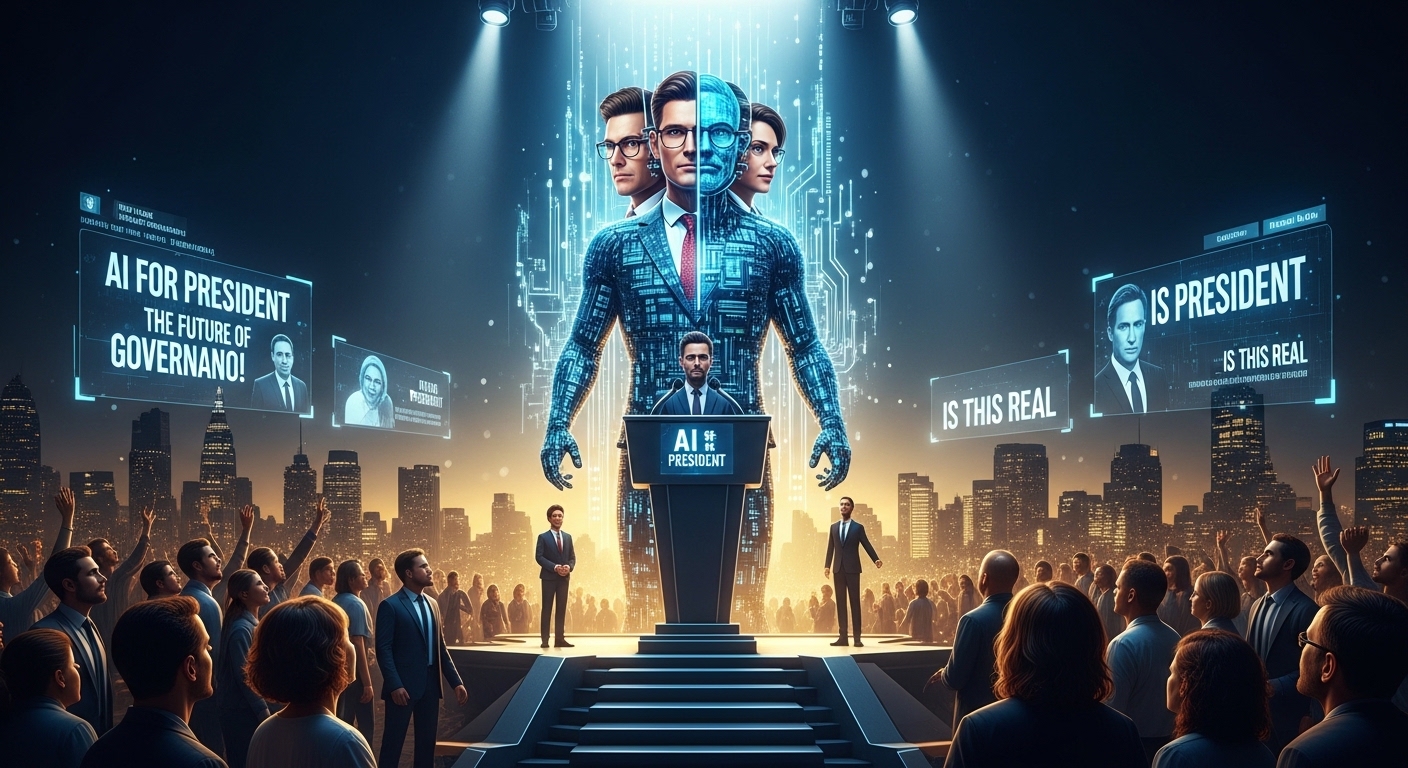
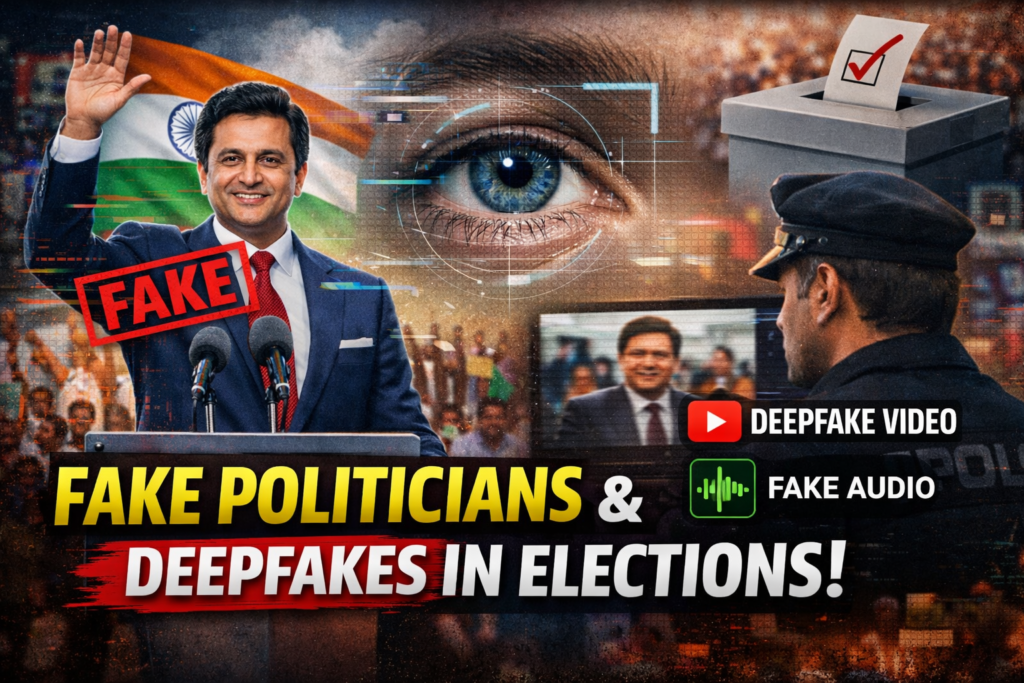
The Rise of Fake AI Politicians – Synthetic Candidates Appears in Modern Elections
In an election season already packed with tension, something new—and a little unsettling—is starting to show up on people’s screens.
Candidates who never gave a speech. Rallies that never happened. Audio clips of statements that were never actually made.
They look real. They sound real. But they’re not.
These “synthetic politicians,” created using advanced deepfake tools, are quietly finding their way into political conversations. And in some cases, they’re spreading faster than the truth can catch up.
When campaigning doesn’t need a crowd
Take Kerala, for example, where assembly elections are on the horizon.
A video recently made the rounds online showing BJP candidate P. R. Sivasankar addressing what looked like a massive, energetic rally. Supporters cheering, flags waving—the whole scene felt authentic.
Except it wasn’t.
No rally took place. No speech was delivered. The entire thing was generated digitally.
And yet, for many people who saw it, that distinction wasn’t obvious.
That’s part of what makes this shift so significant. What once required real planning, real people, and real logistics can now be created on a computer—and made to look convincing enough to pass at first glance.
Old safeguards, new problems
For a long time, elections relied on a basic assumption: seeing is believing.
If there was video footage or an audio clip, it carried weight. It could be verified, cross-checked, and reported.
But deepfakes have started to chip away at that foundation.
In India, fact-checking groups like BOOM say they’re seeing a noticeable increase in AI-generated misinformation, especially during election periods. In some cases, entire News segments are being fabricated—complete with logos, anchors, and voiceovers.
One example involved a fake broadcast made to look like it came from Aaj Tak. It had all the visual cues people associate with a real news report, but none of it was genuine.
By the time it was debunked, it had already reached a large audience.
Audio is becoming just as risky
It’s not just video.
Audio deepfakes are becoming more common—and in some ways, harder to question.
A short clip of a politician saying something controversial can spread quickly, especially on messaging platforms. And without visual context, people often take it at face value.
In South Korea, election officials have already flagged a sharp rise in this kind of content. One widely shared clip appeared to show opposition leader Lee Jae-myung verbally abusing his spouse.
The problem? It never happened.
Still, the damage was done before corrections could catch up.
Authorities there have since tightened rules, including restrictions on distributing deepfake political material close to election dates.
Europe facing its own version of the problem
The issue isn’t limited to one region.
In Hungary, deepfake videos targeting opposition figure Péter Magyar have racked up millions of views online.
One clip falsely showed him alongside Ursula von der Leyen, hinting at outside influence in domestic politics.
Situations like this put regulators in a difficult position. The European Union wants to limit misinformation, but stepping too far into national election processes raises its own concerns about overreach.
Why this is harder to control
What makes synthetic content particularly tricky is how quickly it moves—and how believable it can be.
Even when something is proven false, that correction doesn’t always spread as widely as the original clip. By then, opinions may already be shaped.
There’s also the issue of scale. Creating one fake video used to take significant effort. Now, with AI tools becoming more accessible, it can be done faster and in larger volumes.
That changes the equation completely.
What people can actually do
There’s no simple fix, but experts tend to repeat a few practical steps:
- Pause before sharing something that feels shocking or too perfectly timed
- Check whether it’s been reported by reliable sources
- Look closely—sometimes small visual or audio inconsistencies give things away
- When in doubt, rely on official election updates
It’s not foolproof, but it helps.
The bigger picture
Deepfakes aren’t just a technical problem—they’re starting to affect how people interpret reality during elections.
When voters can’t be sure whether what they’re seeing or hearing is real, trust becomes fragile.
And once that trust is shaken, it’s not easy to rebuild.
Conclusion
AI isn’t creating the idea of misinformation. That’s been around for a long time.
What it’s doing is making it faster, more convincing, and harder to spot.
As elections continue to evolve, so will the tools used to influence them.
Which means the challenge isn’t just about technology anymore—it’s about awareness.
Because in the end, the line between real and fake isn’t just drawn by software.
It’s decided by how carefully people choose to look.