
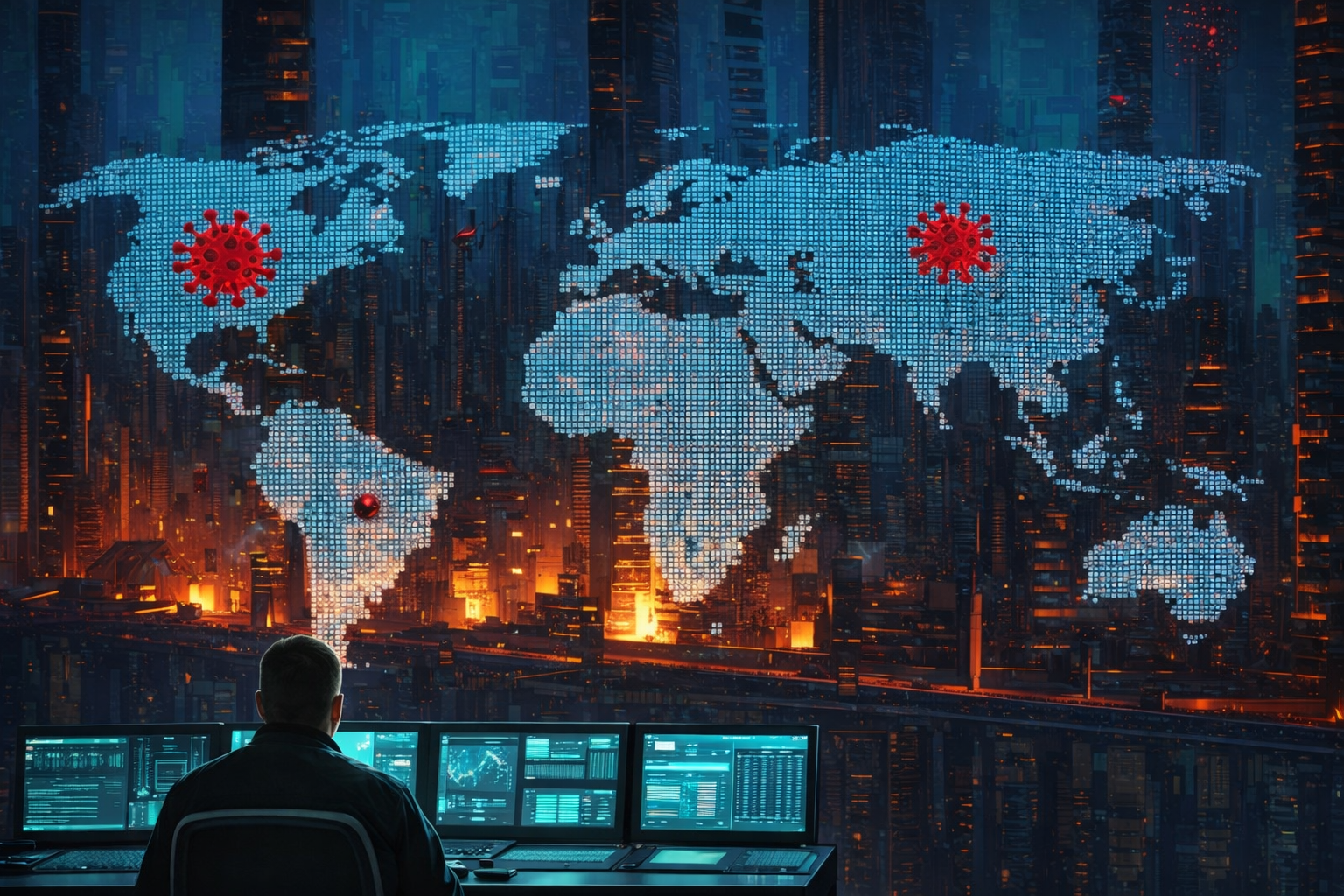
Experts Warn of Growing Threats to Critical Infrastructure in the Digital Age
April 3, 2026 — Global
Artificial Intelligence is usually described as progress—and to be fair, that’s true. It’s speeding up work, improving services, and reshaping how entire industries operate.
But there’s another side to it that doesn’t always get the same attention.
Behind the scenes, cybersecurity experts are starting to worry about how this same technology could be used in ways that are harder to predict—and harder to stop. The concern isn’t abstract. It’s about systems people depend on every day, especially something as basic as electricity.
“As artificial intelligence advances, protecting critical systems is quietly becoming more difficult—not less“
Why infrastructure is getting more attention
Power grids rarely come into focus unless something fails. Yet they sit quietly behind almost everything—hospitals, transport, communication networks, even day-to-day routines most people don’t think twice about.
That importance is exactly what makes them attractive targets.
Organizations like the Cybersecurity and Infrastructure Security Agency and the International Energy Agency have been pointing this out for a while now: attacks on infrastructure are becoming more common, not necessarily because these systems are easy to breach, but because the fallout can spread quickly once something goes wrong.
Built for reliability—not modern threats
A lot of the technology behind power grids comes from a time when cyber threats looked very different.
Control systems—often called SCADA networks—were designed with one goal in mind: keep things stable and running. They weren’t built to deal with constantly evolving digital threats.
That creates a gap.
As cyber risks become more advanced, these older systems don’t always keep up. Upgrading them isn’t simple either. It takes time, investment, and careful planning—because you can’t just shut down a power grid to fix it.
Where AI changes the picture
Artificial intelligence adds a layer of complexity that isn’t easy to categorize.
It helps. And it complicates things at the same time.
On one side, AI is already improving security. It can monitor networks continuously, pick up patterns that humans might miss, and react faster than traditional tools.
But the same capabilities can be used in the opposite direction.
AI can scan systems for weak points, test different ways to get in, and adjust its approach almost instantly. That ability to adapt is what sets it apart. It’s not just about launching an attack—it’s about refining it as it goes.
A different kind of threat
Cyber attacks used to follow more predictable paths. That’s changing.
With AI involved, attacks don’t have to stay fixed. They can shift, adjust, and evolve depending on what they encounter.
For defenders, that makes things more complicated. Blocking known threats isn’t enough anymore—you also have to think about what hasn’t happened yet.
And that’s a much harder problem to solve.
AI is also part of the Defense
There’s a bit of a paradox here.
The same technology raising concerns is also becoming one of the most useful tools for dealing with them.
Security teams are increasingly relying on AI to catch unusual behavior early, respond faster when something happens, and identify weak spots before they turn into real problems.
In many cases, it’s already making a difference.
But it also means both attackers and defenders are operating with more advanced tools than ever before—and that raises the stakes on both sides.
What recent incidents have shown
Over time, there have been enough cyber incidents involving infrastructure to shift how people think about risk.
Even when the damage has been contained, one thing has become clear: these systems are not out of reach.
That realization has pushed governments and companies to invest more in security, run more frequent system checks, and spend more time planning how to respond if something goes wrong.
There’s also been a noticeable increase in cooperation between countries, especially when it comes to sharing information about emerging threats.
Because once systems are connected, problems don’t stay in one place.
From stopping attacks to staying operational
One change in thinking stands out.
It’s not just about stopping attacks anymore.
There’s growing emphasis on making sure systems can keep running, even if something does go wrong.
That means having backups ready, designing networks so issues don’t spread too far, and regularly testing how systems perform under stress.
It’s not the most visible part of cybersecurity—but it’s one of the most important.
Questions that don’t have clear answers yet
As AI continues to develop, the conversation is starting to go beyond technology itself.
There are bigger questions coming into focus.
Who is responsible when things go wrong?
Who decides how AI should be used?
And how do you regulate something that’s still evolving so quickly?
There aren’t simple answers to any of these. Discussions are happening, but they’re still very much in progress.
Looking ahead
What’s clear is that AI and digital infrastructure are becoming more tightly connected to everyday life.
And that makes the margin for error smaller.
Protecting systems like power grids isn’t just a technical problem anymore—it’s about finding a balance between pushing innovation forward and managing the risks that come with it.
Conclusion
Artificial intelligence isn’t introducing entirely new dangers—but it is changing how fast and how far existing risks can spread.
And when those risks involve systems people rely on daily, even small weaknesses can have wide effects.
The challenge now is staying adaptable—because the threats aren’t slowing down, and neither is the technology behind them.