
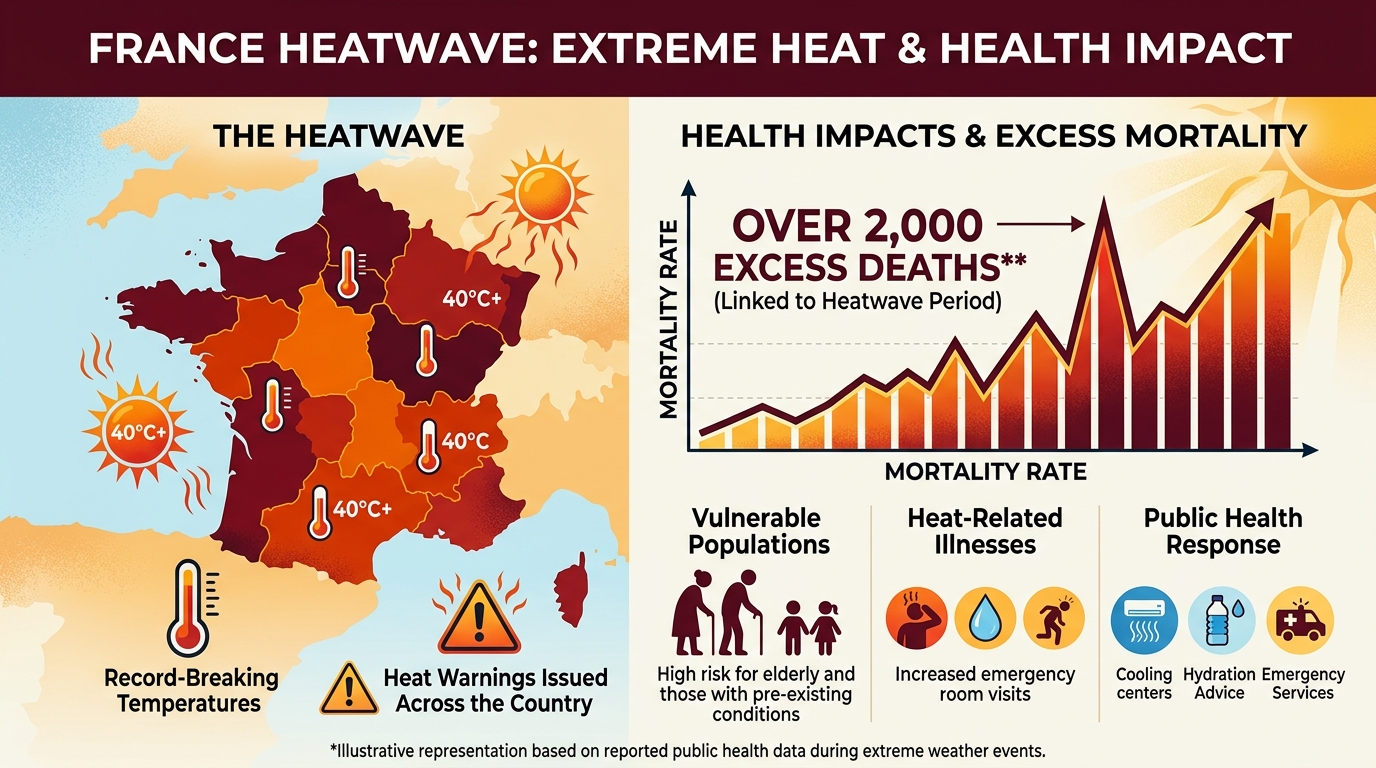
French Health authorities say an intense June heatwave contributed to more than 2,000 excess deaths, while nearly 9,000 total deaths were recorded nationwide during the week of extreme temperatures.
France is facing the deadly consequences of one of its most intense early summer heatwaves in recent years, with health officials estimating that more than 2,000 additional deaths were linked to soaring temperatures across the country. The latest figures highlight the growing health risks posed by prolonged periods of extreme heat as Europe continues to experience increasingly frequent climate-related weather events.
According to preliminary data released by French public health authorities, nearly 9,000 deaths were recorded nationwide between June 22 and June 28. However, officials stressed that not all of those deaths were directly caused by the heatwave. Instead, experts estimate that approximately 2,025 of the deaths were “excess deaths,” meaning they occurred above the number normally expected during that period and are believed to be associated with the unusually high temperatures.
The France heatwave excess deaths estimate remains preliminary, and authorities say the number could change as more detailed health records become available. Even so, the early findings point to the significant impact that extreme weather can have on public health, especially among vulnerable populations.
The heatwave affected much of France during the final weeks of June, with temperatures climbing well above seasonal averages in many regions. Several cities experienced consecutive days of intense heat, placing additional strain on hospitals, emergency responders, and healthcare workers.
Health officials reported that elderly people, individuals with chronic illnesses, and those living alone were among the groups most at risk. High nighttime temperatures also made conditions more dangerous because they prevented the human body from cooling down after extremely hot daytime weather.
Authorities activated emergency heat plans across multiple regions as temperatures continued to rise. Local governments opened cooling centers, extended operating hours at public buildings, and encouraged residents to stay indoors during the hottest parts of the day. Public health agencies also urged people to drink plenty of water, avoid unnecessary outdoor activities, and regularly check on elderly relatives and neighbors.
The France heatwave excess deaths figures underline the importance of these emergency measures. Medical experts have long warned that prolonged exposure to extreme heat can increase the risk of dehydration, heat exhaustion, heatstroke, respiratory complications, and cardiovascular problems.
Hospitals across several parts of the country reported an increase in emergency admissions during the heatwave. Ambulance services also responded to a growing number of calls involving heat-related illnesses, particularly among older adults and people with existing medical conditions.
Meteorologists said the June heatwave developed as a powerful mass of hot air moved across western Europe, pushing temperatures to unusually high levels for early summer. Climate scientists note that while individual weather events cannot always be attributed to climate change alone, rising global temperatures are making severe heatwaves more frequent, longer-lasting, and more intense.
France has experienced several deadly heatwaves over the past two decades. The country has strengthened its emergency response systems since the devastating summer of 2003, when tens of thousands of excess deaths were recorded across Europe, including thousands in France. Since then, authorities have introduced improved warning systems, public awareness campaigns, and emergency planning designed to reduce the loss of life during extreme heat events.
Despite these improvements, officials say extreme heat continues to present serious public health challenges. Aging populations, urban heat islands, and longer periods of exceptionally high temperatures have increased the pressure on healthcare systems throughout Europe.
The France heatwave excess deaths estimate also reflects a broader trend seen across the continent this summer. Several European countries have issued heat alerts as temperatures reached record or near-record levels. Wildfire risks, water shortages, and increased electricity demand for cooling have also become major concerns for governments responding to prolonged hot weather.
Public health experts emphasize that heatwaves are among the deadliest natural hazards because many heat-related illnesses develop gradually and may not immediately appear life-threatening. They encourage people to recognize early warning signs such as dizziness, heavy sweating, confusion, rapid heartbeat, and dehydration before conditions become severe.
French officials continue to monitor health data collected from hospitals, emergency services, and regional authorities to better understand the full impact of the June heatwave. Final mortality figures are expected after additional analysis is completed in the coming weeks.
Authorities say continued public awareness will remain essential throughout the summer as additional periods of extreme heat remain possible. Weather agencies are closely monitoring forecasts and stand ready to issue further alerts if temperatures begin rising again.
While the latest assessment remains preliminary, the findings serve as another reminder that heatwaves are becoming an increasingly serious public health issue. Officials say protecting vulnerable populations, improving emergency preparedness, and adapting communities to rising temperatures will remain key priorities as climate-related weather extremes become more common across Europe.
The France heatwave excess deaths report highlights the importance of early warnings, public health planning, and community support during periods of extreme weather. As France continues to evaluate the full impact of the June heatwave, authorities are encouraging residents to remain prepared for future heat events that could place similar pressure on public health systems.