Progressive Candidates Across the United States Look to Replicate New York Success While Democratic Establishment Watches Closely
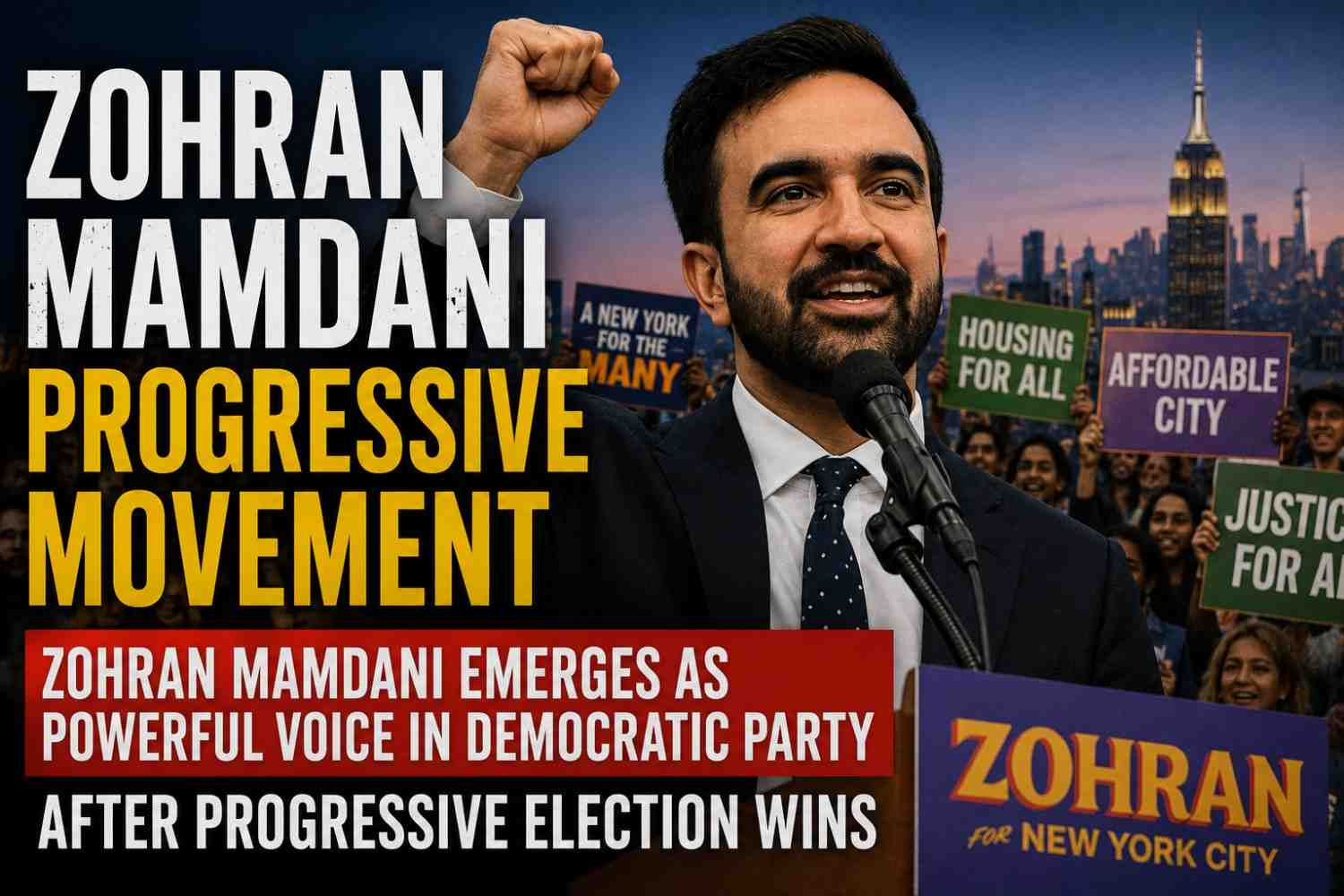
The growing influence of New York Mayor Zohran Mamdani is becoming one of the most closely watched developments in American politics. What began as a local progressive movement in New York City is now showing signs of spreading to other states, with Democratic socialist candidates attempting to replicate the model in congressional, Senate, and state legislative races across the country.
Recent primary victories by candidates backed by Mamdani have energized progressive activists and intensified debates within the Democratic Party about its future direction. Supporters see the movement as a response to rising living costs, economic inequality, and frustration with traditional political leadership. Critics argue that while progressive candidates perform strongly in heavily Democratic districts, they have yet to prove they can consistently win in competitive swing areas.
As a result, the Zohran Mamdani Progressive Movement is increasingly becoming a defining conversation within Democratic politics ahead of future national elections.
New York Victories Spark National Attention
The latest attention surrounding the movement follows a series of notable victories by candidates associated with Mamdani and progressive organizations.
Among the most significant results was the victory of Darializa Avila Chevalier, who defeated longtime Congressman Adriano Espaillat in a Democratic primary. Claire Valdez also secured an important win after running a campaign centered on progressive economic policies and strong grassroots organizing.
Both campaigns reflected themes that have become closely associated with modern democratic socialist politics, including housing affordability, labor rights, healthcare access, economic justice, and a more critical approach to U.S. foreign policy.
Political analysts say these victories demonstrate the growing appeal of progressive messaging among younger voters and urban communities. The success of these campaigns has helped strengthen the national profile of the Zohran Mamdani Progressive Movement, encouraging activists in other states to pursue similar strategies.
Progressive Candidates Look Beyond New York
The movement’s influence is no longer limited to New York City.
In Colorado, progressive candidates have begun organizing around many of the same issues that fueled recent victories in New York. Activists argue that economic challenges facing working families are creating opportunities for candidates who advocate more aggressive policy solutions.
Meanwhile, in Michigan, progressive campaigns are placing increased emphasis on healthcare reform, economic inequality, and foreign policy issues. Similar efforts are emerging in Wisconsin and other states where Democratic primary voters are increasingly open to alternatives outside the party’s traditional establishment structure.
Supporters believe these campaigns demonstrate that the Zohran Mamdani Progressive Movement can expand into new regions while maintaining its focus on grassroots organizing and economic populism.
The goal for many activists is not simply winning individual races but reshaping the broader Democratic Party agenda.
Democratic Establishment Remains Cautious
Despite growing enthusiasm among progressives, many Democratic strategists remain cautious about the movement’s national prospects.
Several analysts point out that progressive victories often occur in districts that are already overwhelmingly Democratic. Winning a safe blue district requires a different political strategy than competing in battleground areas where elections are decided by independent and moderate voters.
Recent election results have highlighted this distinction. In several competitive districts, Democratic voters selected more moderate candidates with military, business, or government experience rather than progressive challengers.
Party leaders argue that maintaining a broad coalition remains essential for winning congressional majorities and presidential elections. They worry that positions popular in urban Democratic strongholds may not resonate as effectively in suburban or rural regions.
Even so, the Zohran Mamdani Progressive Movement continues to shape internal party debates and influence campaign messaging nationwide.
Republicans See Political Opportunity
Republican strategists are also paying close attention to the rise of progressive candidates.
Many GOP campaigns view democratic socialism as a powerful issue for mobilizing conservative voters and attracting independents concerned about government spending and economic policy.
Political advertisements increasingly highlight progressive proposals as evidence of what Republicans describe as a broader shift within the Democratic Party. Conservative strategists hope to connect moderate Democratic candidates to more left-wing figures, particularly in competitive districts.
However, political experts note that this strategy carries risks. While progressive policies may face resistance in some areas, concerns about affordability, housing costs, healthcare expenses, and wages continue to resonate with voters across the political spectrum.
As debates intensify, the Zohran Mamdani Progressive Movement is becoming both a source of inspiration for activists and a focal point for political opponents.
A Battle Over the Future of the Democratic Party
The broader question facing Democrats is whether the future of the party will be defined by its progressive wing or its centrist leadership.
Progressives argue that bold economic reforms are necessary to address the challenges facing working-class Americans. They believe traditional political approaches have failed to keep pace with rising costs and changing voter expectations.
Moderates counter that electoral success depends on appealing to a wide range of voters, including independents and centrists who may be uncomfortable with more ideological positions.
For now, both sides continue to claim victories. Progressives are increasingly shaping political conversations and attracting grassroots enthusiasm. Moderates continue to perform strongly in many of the competitive districts that determine congressional control.
Looking Ahead
As election cycles continue, the influence of the Zohran Mamdani Progressive Movement is expected to remain a major topic in Democratic politics.
Whether the movement can translate success in urban strongholds into victories in competitive states remains one of the most important questions facing American politics today.
What is already clear, however, is that progressive candidates have become a more influential force within the Democratic Party than many observers predicted just a few years ago. Their growing presence is reshaping political debates, challenging established leaders, and helping define the party’s future direction in an increasingly polarized political landscape.