Beijing says only diplomacy and ceasefire can restore stability in the World’s key oil shipping route
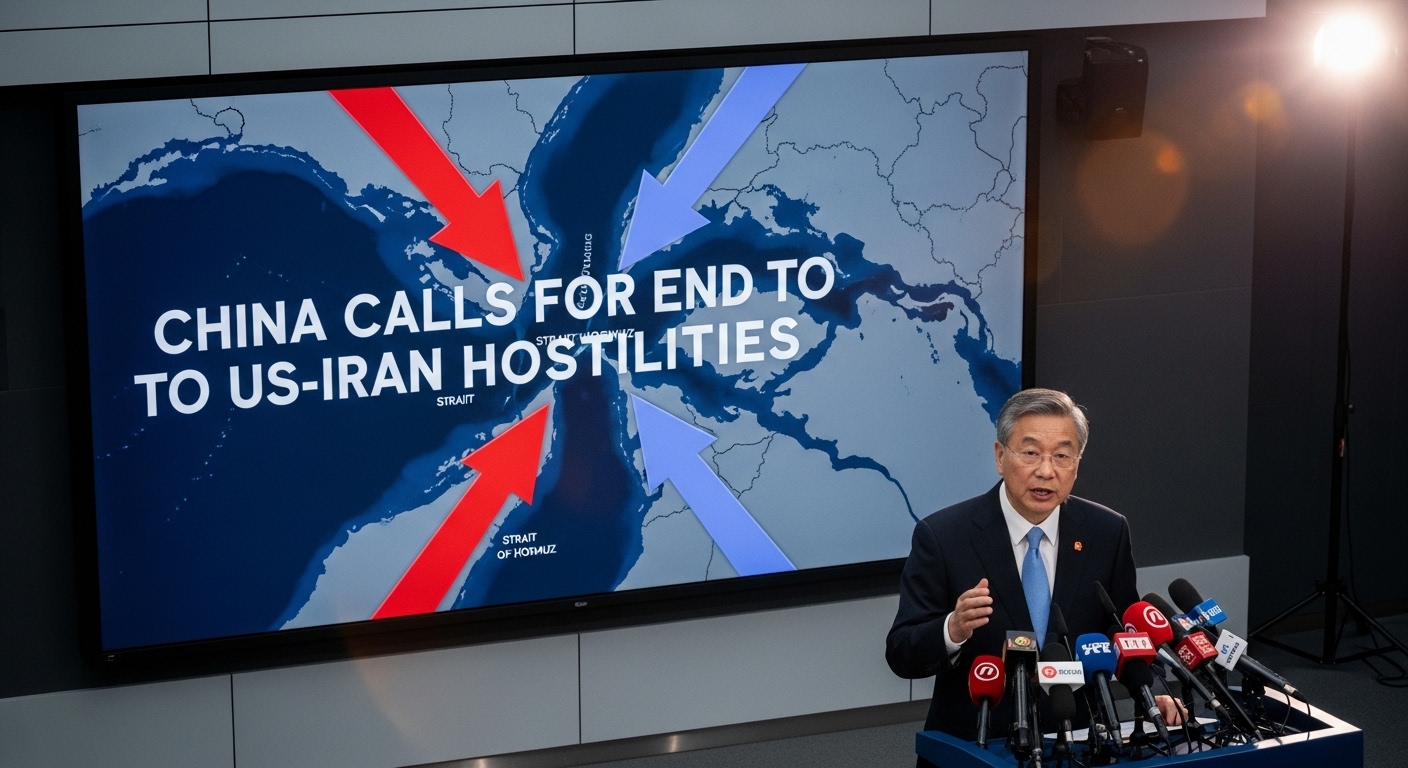
China has urged an immediate end to military tensions between the United States and Iran, saying that stopping hostilities is the only realistic solution to the growing crisis in the Strait of Hormuz. The statement comes at a time when global concern is rising over security risks in one of the most important oil transport routes in the world.
According to Chinese officials, continued conflict and military pressure are increasing instability in the region and putting global trade and energy supplies at risk. Beijing stressed that all parties must return to dialogue and avoid further escalation.
The comments were reported after recent tensions in the Gulf region escalated, with fears that shipping routes could face disruption if the situation worsens.
Strait of Hormuz remains global energy lifeline
The Strait of Hormuz is one of the most strategic waterways in the world. A large share of global oil exports from the Middle East passes through this narrow channel, making it extremely sensitive to conflict or blockades.
Any disruption in this region can directly impact global Oil Prices, shipping costs, and energy security for many countries, including major importers in Asia and Europe.
China highlighted that stability in the Strait is not just a regional issue but a global economic necessity. It warned that continued military confrontation could lead to serious consequences for international markets.
China calls for diplomacy over military action
Beijing’s position is that the crisis cannot be solved through pressure or force. Instead, China has called for immediate de-escalation and a return to diplomatic negotiations.
Officials emphasized that the only sustainable path forward is a ceasefire and political dialogue between the United States and Iran. China believes that continued confrontation will only deepen instability and increase risks for global shipping and energy supplies.
The statement also reflects China’s broader foreign policy approach, which often supports dialogue-based conflict resolution and opposes military escalation in international disputes.
Rising global concern over energy security
The tensions in the Gulf region have sparked concern among global energy markets. Analysts warn that even the possibility of disruption in the Strait of Hormuz can lead to fluctuations in oil prices and uncertainty in supply chains.
Countries that depend heavily on imported oil are closely monitoring the situation. Any escalation could have a ripple effect on fuel costs, inflation, and global trade stability.
Conclusion
China’s call for an end to US-Iran hostilities highlights growing international pressure to avoid further escalation in the Gulf region. With the Strait of Hormuz remaining a critical global energy route, diplomatic engagement is being seen as the only viable path to prevent a wider economic and security crisis.
As tensions continue, the world is watching closely to see whether diplomatic efforts can replace confrontation and restore stability in this highly sensitive region.