
Escalating Military Exchanges Raise Concerns Over Regional Stability and Global Shipping Routes
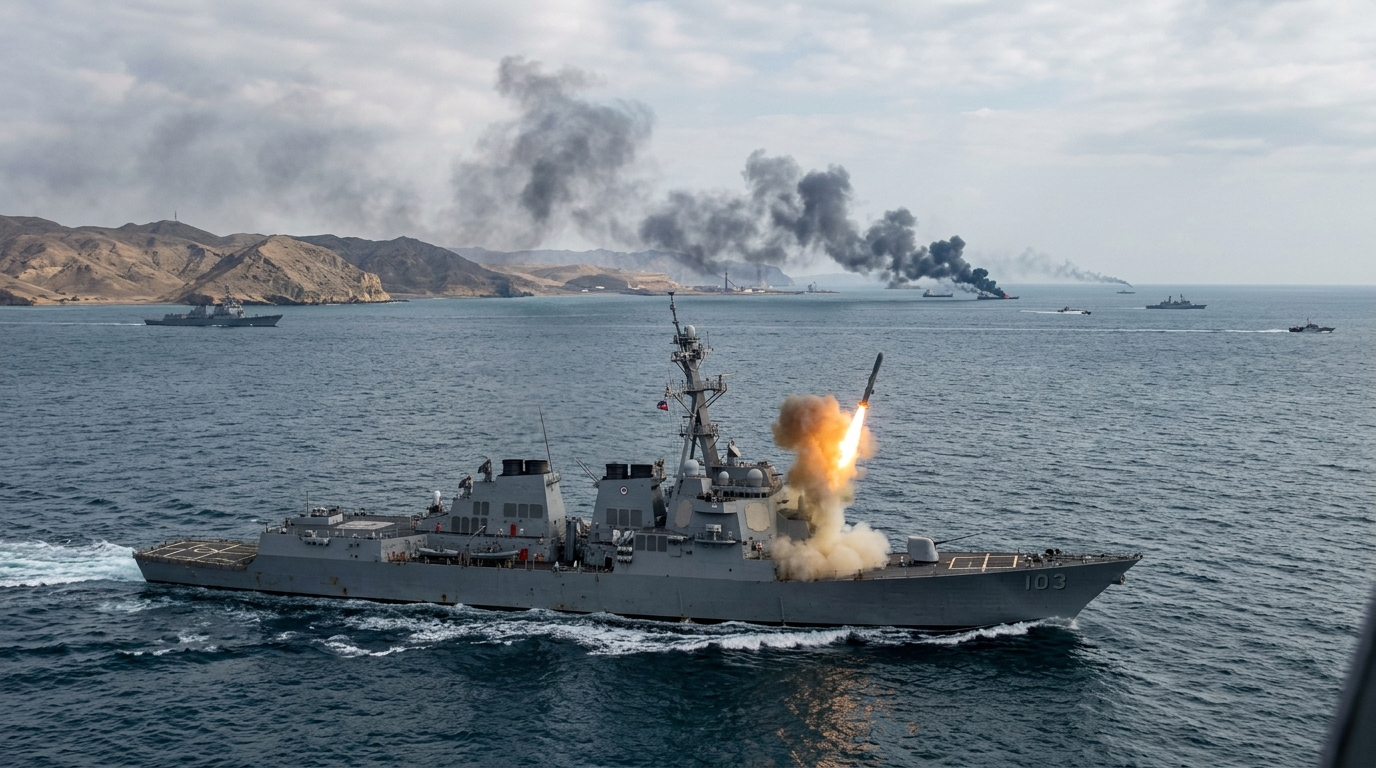
The United States has launched a new round of military strikes against Iranian targets following attacks on commercial shipping in the Strait of Hormuz, marking a significant escalation in tensions between Washington and Tehran.
According to U.S. officials, the latest operation targeted Iranian surveillance systems, air Defense infrastructure, drone storage facilities, and capabilities linked to maritime mine deployment. The strikes were carried out after Iran was accused of attacking a commercial oil tanker traveling through the strategically important Strait of Hormuz.
The latest development has raised fresh concerns about stability in the Gulf region, where military confrontations can quickly affect international trade, energy supplies, and diplomatic efforts aimed at reducing tensions.
The US Iran Strikes Strait of Hormuz story has become one of the most closely watched geopolitical developments of the week as both countries exchange accusations over violations of recent agreements intended to reduce hostilities.
President Donald Trump confirmed that U.S. forces carried out the strikes and warned that further military action remains possible if attacks on commercial shipping continue. Reports indicate that Washington views the operation as a direct response to what it describes as Iranian aggression against civilian maritime traffic.
The Strait of Hormuz remains one of the World’s most important waterways. A significant portion of global oil exports passes through the narrow passage connecting the Persian Gulf with international shipping lanes. Any disruption in the area can affect energy markets and global trade routes.
Military officials stated that the strikes focused on defensive and surveillance-related targets rather than broader civilian infrastructure. The objective, according to U.S. Central Command, was to protect freedom of navigation and maintain safe passage for commercial vessels operating in the region.
The US Iran Strikes Strait of Hormuz incident comes at a particularly sensitive moment. Just days earlier, diplomatic efforts had shown signs of progress after discussions aimed at reducing tensions between the two countries. However, the recent exchange of military actions has placed those efforts under significant pressure.
Iran has strongly criticized the U.S. operation, describing it as a violation of its sovereignty. Iranian officials have argued that Washington’s actions risk further destabilizing the region and undermining diplomatic initiatives that had been underway in recent weeks.
In response to the U.S. strikes, reports indicate that Iran launched drone and missile attacks targeting locations in Bahrain and Kuwait. Regional governments condemned the attacks, although early assessments suggested limited physical damage.
The growing confrontation has drawn attention from governments around the world. Many countries rely on secure access through the Strait of Hormuz for energy imports and international trade. Any prolonged disruption could have economic consequences extending far beyond the Middle East.
The US Iran Strikes Strait of Hormuz confrontation has also increased concerns among shipping companies and maritime operators. Security risks in the area have already led some vessel operators to review routes, increase precautions, and monitor military developments closely.
Energy analysts note that markets often react quickly to events involving the Strait of Hormuz because of its importance to global oil transportation. While oil prices have remained relatively stable in recent trading sessions, experts continue to watch the situation for signs of further escalation.
Military experts believe drone warfare is playing an increasingly important role in modern conflicts. Compared with traditional military operations, drones can be deployed over long distances and often present difficult challenges for air defense systems. The latest exchange between the United States and Iran highlights how such technologies are reshaping security dynamics across the region.
The US Iran Strikes Strait of Hormuz dispute is part of a broader pattern of tensions that have affected Gulf security throughout 2026. Multiple incidents involving commercial shipping, military assets, and regional allies have contributed to an increasingly complex security environment.
International observers are urging restraint from both sides. Diplomats warn that continued military exchanges could weaken ongoing efforts to establish a more durable framework for regional stability. Several governments have called for dialogue and de-escalation while emphasizing the importance of protecting commercial shipping routes.
For businesses and global markets, the Strait of Hormuz remains a critical concern. The waterway serves as one of the world’s most important energy corridors, making any military activity in the region closely watched by investors, policymakers, and industry leaders.
As investigations continue into the latest tanker attack and military response, uncertainty remains over what steps each side may take next. Analysts caution that even limited confrontations can quickly escalate if diplomatic channels fail to contain tensions.
For now, U.S. and Iranian officials remain firmly divided over responsibility for the recent incidents. With military forces on alert and international attention focused on the Gulf, the coming days could prove crucial in determining whether the situation moves toward further confrontation or renewed diplomacy.
The latest developments underscore how fragile regional security remains and why events in the Strait of Hormuz continue to influence global politics, energy markets, and international trade far beyond the Middle East.