
Major Fire Erupts at Russian Energy Facility as Cross-Border Strikes Continue to Intensify
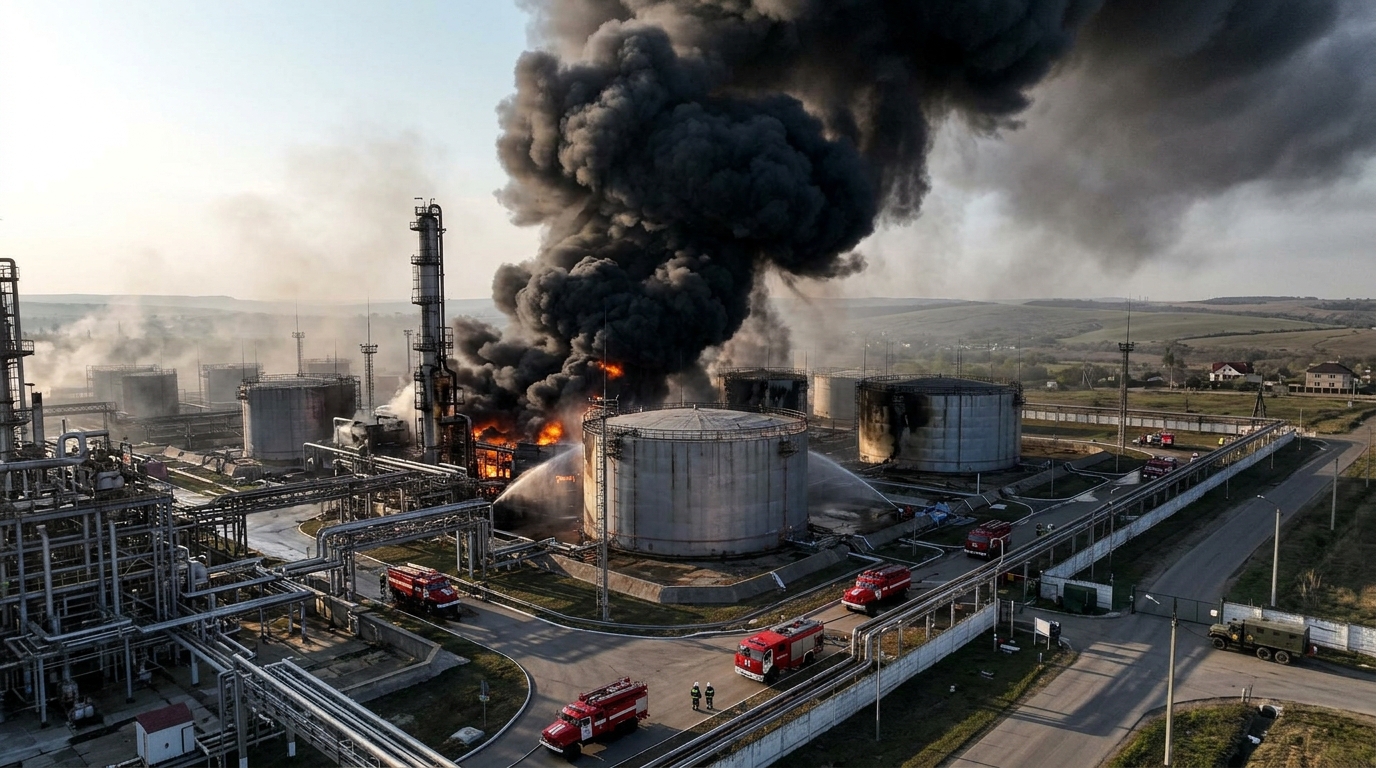
A major fire broke out at an oil refinery in Russia’s Krasnodar Krai after what officials described as an overnight Ukrainian drone attack, adding to a growing series of strikes targeting energy and industrial facilities deep inside Russian territory.
The incident occurred during the early hours of the morning when air Defense systems were reportedly activated to intercept incoming drones. Regional authorities stated that falling debris from intercepted drones caused a fire at the refinery, sending thick black smoke into the sky and prompting emergency response teams to rush to the scene.
The event quickly drew attention across Russia and Ukraine, as videos shared online appeared to show flames and smoke rising from the industrial facility. Local officials confirmed that firefighters were deployed immediately to contain the blaze and prevent further damage.
The Oil Refinery Burns in Krasnodar Krai incident comes at a time when both Russia and Ukraine are intensifying attacks on strategic infrastructure linked to military operations and economic activity.
According to regional authorities, emergency crews worked throughout the night to control the fire. Initial reports suggested that there were no immediate large-scale disruptions to nearby residential areas, although investigations into the extent of the damage were still ongoing.
Krasnodar Krai is one of Russia’s most important regions for energy and industrial operations. Facilities located in the area play a significant role in fuel production and supply chains that support both civilian and industrial needs. As a result, any attack on energy infrastructure attracts significant attention from military analysts and government officials.
The Oil Refinery Burns in Krasnodar Krai story is part of a broader pattern that has emerged during the conflict. Over the past months, Ukraine has increasingly relied on long-range drone operations aimed at military sites, industrial plants, fuel depots, and logistical hubs located far from the front lines.
Military observers note that such attacks are designed to disrupt supply networks and create operational challenges for Russian forces. While the full impact of individual strikes can be difficult to assess immediately, repeated attacks on infrastructure can place pressure on maintenance, transportation, and production systems.
Russian authorities reported that air defense units intercepted several drones during the overnight attack. However, debris from the interceptions allegedly fell onto the refinery grounds, triggering the fire. Officials did not immediately provide a detailed assessment of the damage to refinery equipment or production capacity.
Ukraine has not always publicly commented on specific drone operations inside Russia. However, Ukrainian military officials have repeatedly stated that facilities supporting Russia’s military effort are considered legitimate targets under wartime conditions.
The Oil Refinery Burns in Krasnodar Krai incident occurred alongside reports of other strikes targeting military and industrial locations in different regions of Russia. Ukrainian officials claimed that several strategic facilities were hit during coordinated operations aimed at weakening Russia’s military-industrial capabilities.
At the same time, Russia continues to conduct large-scale missile and drone attacks against Ukrainian cities and infrastructure. Air raid alerts remain a regular occurrence across many parts of Ukraine, where authorities frequently report damage to energy facilities, residential buildings, and transportation networks.
Analysts believe the growing use of drones by both sides reflects the changing nature of modern warfare. Compared with traditional aircraft, drones can travel long distances at lower costs while posing significant challenges for air defense systems. Their increasing role has transformed how military operations are planned and executed.
Residents living near the refinery reported hearing explosions before seeing smoke rising from the facility. Emergency services responded quickly, establishing safety zones around affected areas while firefighters battled the flames.
The Oil Refinery Burns in Krasnodar Krai event also highlights the vulnerability of critical infrastructure during prolonged conflicts. Energy facilities are often viewed as strategic assets because they support transportation, manufacturing, and military logistics. Damage to such facilities can have consequences that extend far beyond the immediate site of an attack.
As investigations continue, authorities are expected to release additional information regarding the cause of the fire, the scale of the damage, and any potential impact on refinery operations. Energy market observers are also monitoring developments closely, although no major disruptions have been reported so far.
International attention remains focused on the broader conflict between Russia and Ukraine, which has increasingly expanded beyond traditional battlefield zones. Long-range strikes, drone warfare, and attacks on infrastructure have become defining features of the ongoing war.
For now, emergency crews remain engaged in recovery efforts at the refinery while officials assess the aftermath of the attack. The latest incident serves as another reminder of how the conflict continues to affect critical infrastructure on both sides of the border.
With tensions remaining high and both countries continuing military operations, analysts expect strategic facilities such as energy plants, fuel depots, and industrial complexes to remain key targets in future operations. The fire at the refinery in Krasnodar Krai represents yet another chapter in a conflict that continues to reshape security and infrastructure across the region.