Iranian Officials Urge Caution on Timeline While Washington Signals Agreement Could Be Signed Within Days
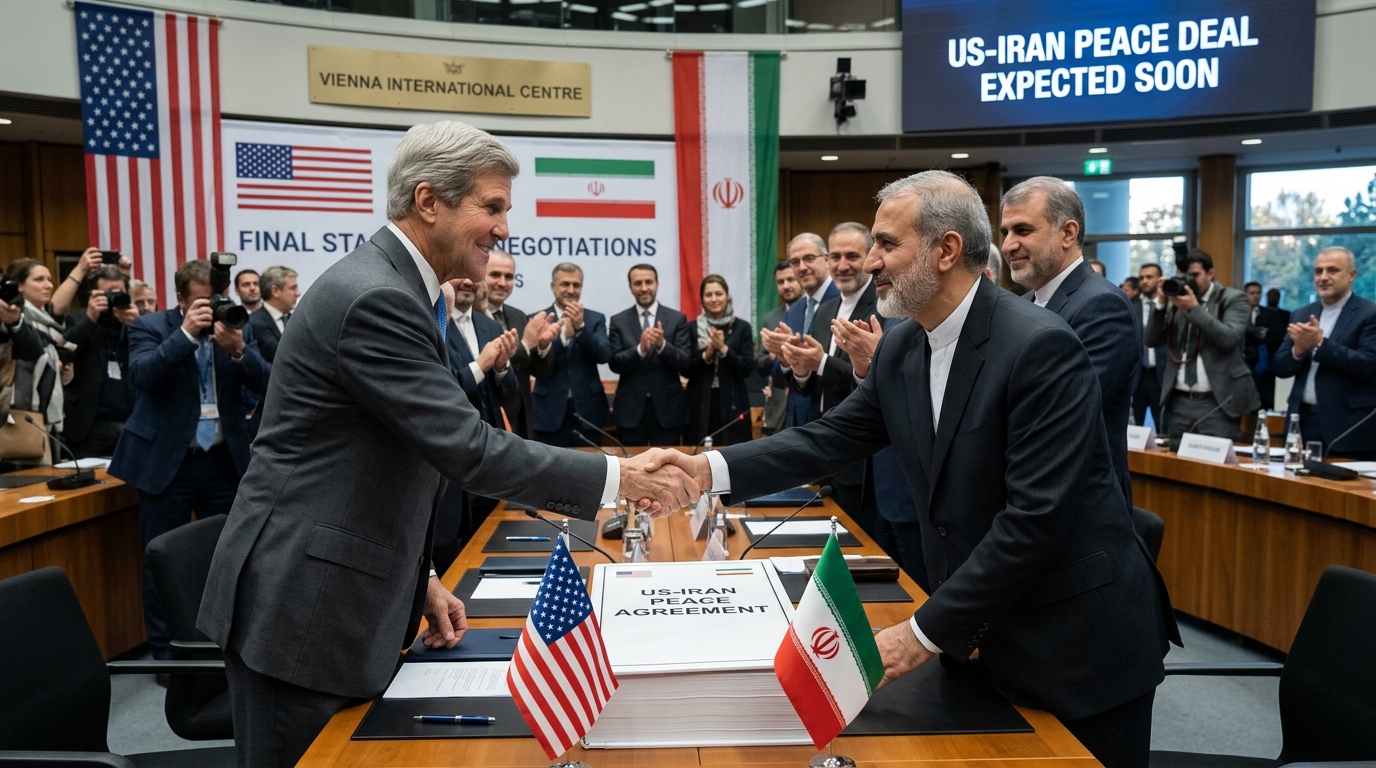
The long-awaited US-Iran peace deal appears to be moving closer to reality as both countries continue high-level diplomatic discussions aimed at reducing tensions and restoring stability in the region. While leaders in Washington have expressed confidence that an agreement could be finalized soon, Iranian officials have indicated that some details are still under review before a final signature takes place.
Recent statements from political leaders have raised expectations that the agreement may be completed within days. However, officials involved in the negotiations have stressed that diplomatic processes often require careful review, and the exact timing remains uncertain.
The proposed US-Iran peace deal is being viewed as a significant step toward easing years of political and economic tensions between the two nations. If finalized, the agreement could have major implications for regional security, global energy markets, and future nuclear negotiations.
What Leaders Are Saying
Speaking about the ongoing negotiations, former US President Donald Trump expressed optimism that the agreement would soon be signed. According to reports, he suggested that the deal could help prevent future conflicts and create a framework for long-term cooperation.
Pakistani Prime Minister Shehbaz Sharif also commented on the diplomatic efforts, stating that the agreement was nearing completion and could be finalized shortly through a formal signing process.
However, Iranian officials have taken a more cautious approach. Iranian Foreign Ministry spokesperson Esmaeil Baghaei emphasized that discussions were still ongoing and warned against assuming a specific signing date. His comments suggest that while progress has been made, final adjustments may still be required before the agreement becomes official.
Key Elements of the Proposed Agreement
Although the complete text of the agreement has not been publicly released, several reports indicate that the proposed US-Iran peace deal could include a number of important measures designed to improve relations and strengthen regional stability.
Among the reported provisions are:
- Reopening and securing shipping routes through the Strait of Hormuz.
- Gradual easing of certain economic sanctions.
- Release of frozen Iranian financial assets.
- Renewed discussions regarding Iran’s nuclear program.
- Increased diplomatic engagement between both countries.
These measures are expected to help reduce tensions that have affected the Middle East for years while creating opportunities for economic and political cooperation.
Impact on Global Energy Markets
One of the most closely watched aspects of the negotiations is the potential effect on global energy supplies. The Strait of Hormuz remains one of the World’s most important shipping routes for oil and natural gas exports.
Any agreement that improves security and stability in the region could help reduce concerns about supply disruptions. Energy analysts believe that a successful US-Iran peace deal may contribute to greater confidence in international markets and improve long-term energy security.
Investors and policymakers around the world are carefully monitoring developments, as changes in regional stability often influence Oil Prices and global trade.
Nuclear Talks Remain a Major Focus
Iran’s nuclear program continues to be a central issue in the negotiations. For years, international leaders have sought assurances that Iran’s nuclear activities remain peaceful and transparent.
Reports suggest that future nuclear discussions may form a major part of the agreement. Diplomatic sources indicate that both sides are exploring ways to establish monitoring mechanisms and confidence-building measures that could reduce concerns among international partners.
Iranian Foreign Minister Abbas Araghchi recently noted that modifications to the draft agreement remain possible, highlighting the ongoing nature of the talks. His comments reinforce the idea that negotiators are still working to finalize key details before any official announcement is made.
Regional and International Reactions
The potential agreement has attracted attention from governments across the Middle East and beyond. Many countries view improved relations between the United States and Iran as an opportunity to reduce regional tensions and support broader diplomatic initiatives.
Political observers believe that a successful peace agreement could encourage additional cooperation on security, trade, and regional development projects. At the same time, some analysts remain cautious, noting that implementation will be just as important as the signing itself.
International organizations have also welcomed efforts aimed at dialogue and peaceful conflict resolution. Many experts argue that diplomacy remains the most effective path toward long-term regional stability.
What Happens Next?
As negotiations continue, attention remains focused on whether both sides can finalize the remaining details. While officials differ on the exact timeline, there is broad agreement that significant progress has been made.
The coming days are expected to be critical as diplomats work to resolve outstanding issues and prepare for a possible signing ceremony. If completed, the US-Iran peace deal could mark one of the most significant diplomatic developments in recent years.
For now, global leaders, investors, and citizens across the region are watching closely as negotiations enter what may be their final phase. Whether the agreement is signed immediately or after additional discussions, its outcome is likely to influence international relations and regional stability for years to come.