
Kremlin Acknowledges Supply Problems While Officials Work to Stabilize Fuel Distribution Across the Country
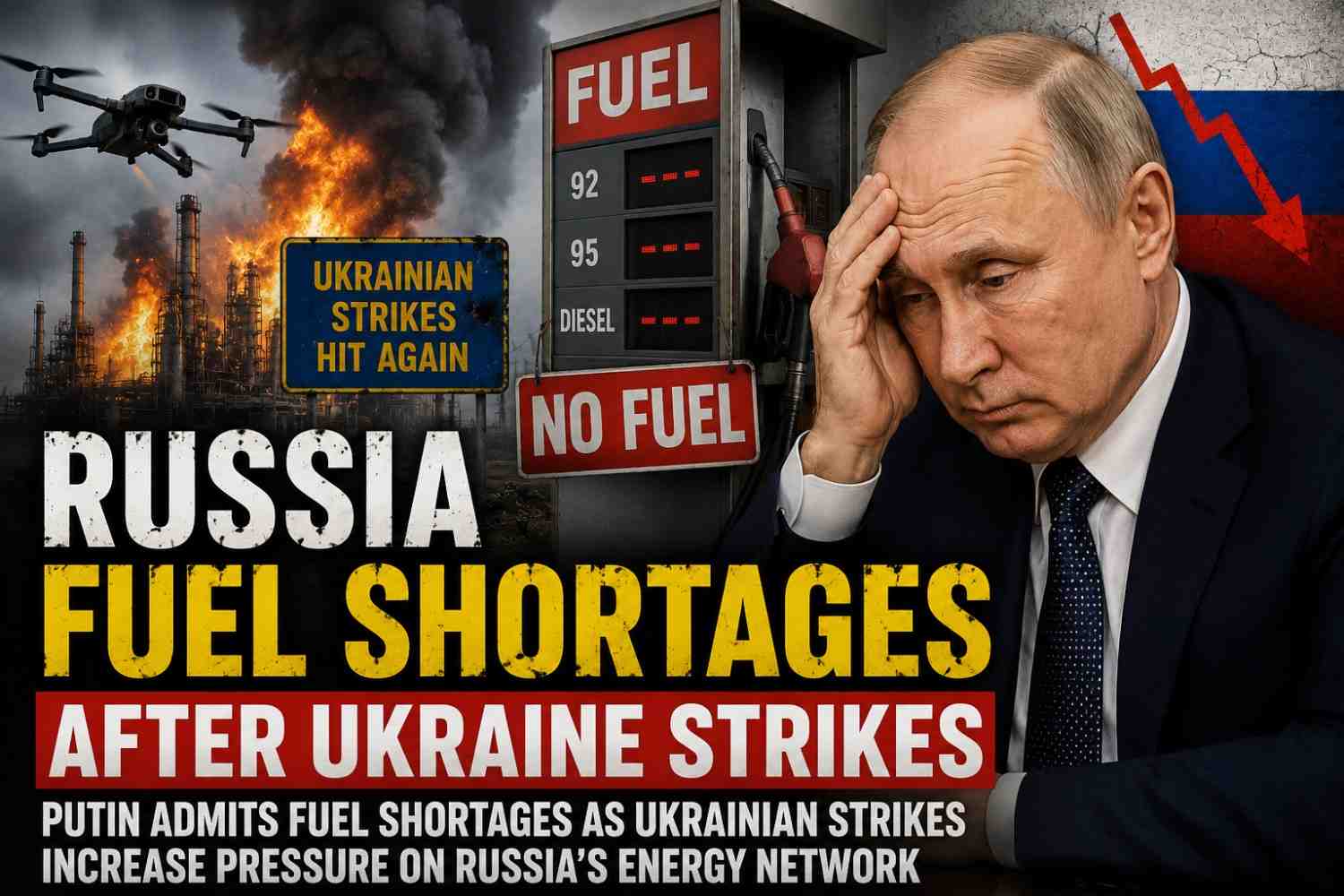
Russian President Vladimir Putin has publicly acknowledged that parts of Russia are experiencing fuel shortages following a series of Ukrainian strikes on energy infrastructure, marking one of the clearest admissions yet that Kyiv’s long-range attacks are creating challenges inside Russian territory.
The comments come as Ukraine continues expanding its campaign against oil refineries, fuel depots, logistics centers, and other strategic energy facilities that support Russia’s Economy and military operations. While Moscow insists the situation remains under control, growing fuel supply concerns have drawn attention from businesses, motorists, regional authorities, and international observers.
The Russia Fuel Shortages After Ukraine Strikes issue has emerged as one of the most significant domestic challenges facing the Kremlin as the war enters another year.
Speaking during a meeting focused on fuel distribution and energy supplies, Putin acknowledged that attacks on critical infrastructure had created difficulties in several regions. He admitted that fuel shortages were being observed but stressed that the situation was not yet considered critical. Russian officials have since moved to reassure the public that measures are being implemented to maintain supplies and prevent further disruptions.
The Kremlin leader said authorities were actively working to increase fuel availability and strengthen protection for energy facilities that have come under repeated attack. According to Russian officials, a special task force has been operating around the clock to coordinate fuel distribution and address supply concerns across the country.
Ukraine has intensified strikes against Russian energy infrastructure in recent months, targeting facilities viewed as important to Moscow’s war effort. Ukrainian officials argue that these operations are designed to weaken Russia’s military logistics and reduce its ability to sustain long-term military operations.
Among the most frequently targeted sites have been oil refineries, fuel storage facilities, transportation hubs, and infrastructure connected to petroleum production and distribution. Several major facilities have reportedly suffered damage, leading to temporary production interruptions and logistical challenges.
The growing Russia Fuel Shortages After Ukraine Strikes situation has become particularly noticeable in areas heavily dependent on fuel deliveries from affected regions. Reports indicate that some locations have experienced longer waits at gas stations, supply limitations, and concerns about fuel availability during peak demand periods.
Crimea appears to be among the regions facing the greatest pressure.
Authorities in the Russian-controlled peninsula recently declared an emergency situation after fuel shortages and power disruptions affected local communities. Officials linked the problems to attacks on logistics routes and energy infrastructure that support the region. The announcement highlighted how Ukrainian strikes are increasingly affecting areas far from active front-line combat zones.
The issue is especially important because fuel supplies play a critical role in transportation, agriculture, industry, and military operations. Any prolonged disruption can affect economic activity and place additional strain on regional governments responsible for maintaining essential services.
Russian officials have emphasized that national fuel reserves remain substantial. Putin stated that gasoline stocks continue to be available and expressed confidence that production levels would improve in the coming months. Nevertheless, authorities are reportedly considering additional measures to stabilize supplies and limit market volatility.
The Russia Fuel Shortages After Ukraine Strikes challenge comes at a sensitive time for Russia’s economy.
Although energy exports remain an important source of revenue, maintaining domestic supply has become increasingly important as infrastructure faces repeated attacks. Experts note that damage to refineries can have a ripple effect throughout the supply chain, affecting production, transportation, and retail distribution.
Military analysts also point out that modern conflicts increasingly extend beyond traditional battlefields. Rather than focusing exclusively on troop movements and territorial control, both Russia and Ukraine are targeting infrastructure considered essential to sustaining long-term operations.
For Ukraine, striking energy facilities represents a way to impose costs without directly engaging large military formations. For Russia, defending thousands of kilometers of pipelines, storage facilities, and industrial sites presents a complex security challenge.
Despite acknowledging supply difficulties, Putin rejected suggestions that the attacks would alter Russia’s military objectives. He stated that operations would continue and argued that infrastructure strikes had not changed the overall situation on the battlefield. Russian officials maintain that the country possesses sufficient resources to adapt to the challenges created by the attacks.
However, economists note that even temporary fuel disruptions can have broader consequences. Transportation companies, agricultural producers, and manufacturers often rely on predictable fuel supplies to maintain operations. Rising costs or shortages can affect productivity and create additional economic pressure.
The Russia Fuel Shortages After Ukraine Strikes story has also attracted international attention because it highlights the evolving nature of the conflict. Rather than focusing solely on military targets near the front, Ukraine is increasingly attempting to affect Russia’s industrial and logistical capacity through long-range operations.
Observers say this strategy reflects a wider trend in modern warfare, where economic resilience and infrastructure protection can become just as important as battlefield performance. As technology improves, countries are increasingly able to reach strategic targets far from traditional combat zones.
International energy markets are also monitoring developments closely. While global oil supplies have not experienced major disruptions directly linked to the shortages, continued attacks on infrastructure could influence market sentiment and contribute to price fluctuations if the situation worsens.
For now, Russian authorities remain focused on stabilizing fuel supplies and restoring confidence among consumers. Officials have pledged to increase deliveries, accelerate repairs at damaged facilities, and strengthen air Defense systems around critical energy infrastructure.
Whether these measures will fully resolve the problem remains uncertain. What is clear is that Ukrainian strikes are increasingly having an impact beyond the battlefield, creating economic and logistical challenges that Russian leaders can no longer ignore.
Putin’s public acknowledgment of fuel shortages represents a rare admission of the domestic consequences of the war. As both sides continue adapting their strategies, the battle over infrastructure and energy resources is becoming an increasingly important part of the broader conflict between Russia and Ukraine.