Government Reviews Legal Options as Officials Cite Concerns Over Integration and Public Space
Denmark has reignited a major debate over religion, immigration, and national identity after announcing plans to examine a possible nationwide ban on the Islamic call to prayer, commonly known as the adhan. The proposal, put forward by Immigration and Integration Minister Morten Bødskov, has drawn attention across Europe and sparked discussions about religious freedom, integration policies, and the role of faith in public spaces.
The proposal remains under legal review and has not yet become law. Danish officials say the government is investigating whether such a restriction could be introduced while remaining consistent with constitutional protections and European human rights obligations.
As debate continues, the Denmark Islamic Call to Prayer Ban proposal has become one of the most discussed political issues in the country and a significant topic across Europe.
What Is the Proposed Ban?
The proposal focuses on the public broadcasting of the adhan through loudspeakers attached to mosques. The adhan is traditionally recited five times daily to invite Muslim worshippers to prayer.
According to Danish officials, the review is intended to determine whether nationwide restrictions on loudspeaker broadcasts could be legally implemented. Immigration Minister Morten Bødskov stated that the call to prayer should not be heard across Danish neighborhoods and argued that concerns about what he described as increasing “Islamisation” have become part of the national discussion.
The Denmark Islamic Call to Prayer Ban would not affect private worship inside mosques but would focus specifically on amplified public broadcasts.
Why Has the Issue Returned?
This is not the first time Denmark has considered restrictions on the Islamic call to prayer.
Reports indicate that similar discussions took place in 2020 and again in 2025, but previous efforts did not result in nationwide legislation. The latest proposal follows the formation of a new government under Prime Minister Mette Frederiksen and continues a broader trend of strict immigration and integration policies.
Supporters of the review argue that modern technology has reduced the practical need for public loudspeaker announcements because worshippers can receive prayer reminders through smartphones and digital applications. They also claim the issue relates to noise regulation and shared public spaces rather than religious practice itself.
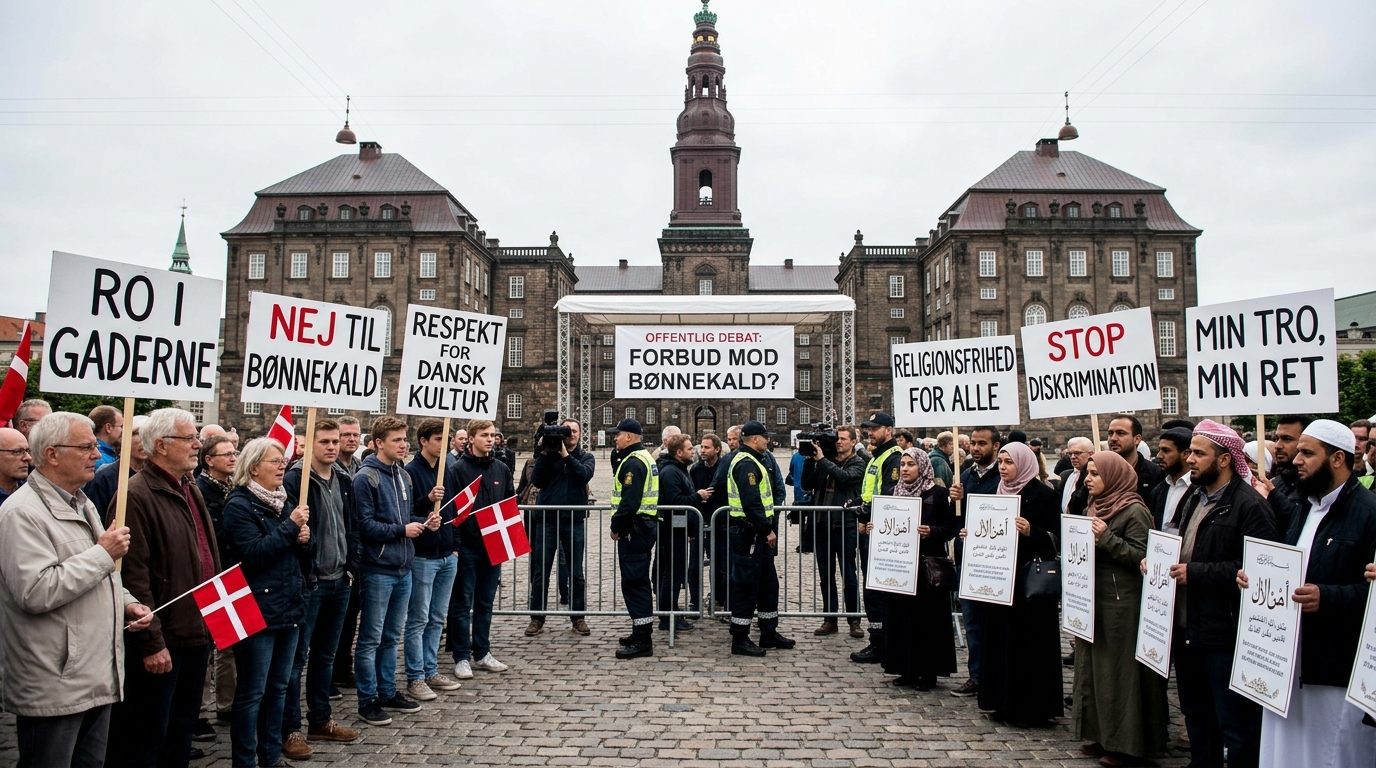
Critics, however, argue that the proposal specifically targets one religious community and raises concerns about equal treatment under the law.
Denmark’s Broader Immigration Policies
The proposed review comes against the backdrop of Denmark’s increasingly strict immigration policies.
Over the past decade, Denmark has implemented some of Europe’s most restrictive migration measures. Successive governments have argued that strong integration policies are necessary to preserve social cohesion and national identity.
The country has introduced measures affecting asylum procedures, residency requirements, and integration standards. Supporters of these policies often point to Denmark’s relatively controlled migration levels compared with some neighboring countries.
The Denmark Islamic Call to Prayer Ban proposal is therefore being viewed by many observers as part of a broader political strategy focused on immigration and cultural integration.
Existing Restrictions Already Apply in Some Areas
Although the current debate concerns a nationwide ban, some local restrictions already exist.
In Copenhagen and certain other municipalities, noise regulations effectively prevent the public broadcasting of the call to prayer through loudspeakers. As a result, outdoor broadcasts are already limited in several areas of the country.
The Grand Mosque of Copenhagen, one of the country’s most prominent Islamic centers, reportedly does not conduct outdoor loudspeaker calls to prayer under existing arrangements with local authorities.
These existing practices have become part of the debate, with supporters arguing that a national policy would simply formalize restrictions already in place in some locations.
Religious Freedom Concerns
Opponents of the proposal have raised questions about religious liberty and constitutional protections.
Denmark’s constitution guarantees freedom of religion and the right to worship. Legal experts note that any attempt to introduce a nationwide restriction would likely face scrutiny regarding its compatibility with constitutional rights and European human rights standards.
Critics argue that banning a religious practice associated with one faith could set a controversial precedent. They contend that governments should remain cautious when regulating expressions of religious identity in public life.
Human rights advocates have also warned that such policies could increase social divisions and contribute to feelings of exclusion among minority communities.
The legal review currently underway is expected to address many of these concerns before any formal legislation is proposed.
Denmark’s Muslim Community
Denmark is home to approximately 270,000 Muslims, representing around five percent of the country’s population. Reports estimate that roughly 100 mosques operate across the nation.
Many members of the Muslim community have expressed concern about the proposal, viewing it as part of a broader trend of increased scrutiny toward Islamic practices in Europe.
At the same time, public opinion remains divided. Some Danes support stronger integration policies and believe public religious broadcasts should be limited, while others argue that freedom of expression and religious liberty should take precedence.
The Denmark Islamic Call to Prayer Ban debate therefore reflects wider discussions taking place across Europe about immigration, cultural identity, and religious pluralism.
What Happens Next?
For now, the proposal remains under review rather than active legislation.
The Danish government has not announced a final timeline for completing its legal assessment. Any future law would likely face parliamentary debate and possible legal challenges before taking effect.
Political analysts expect the issue to remain highly controversial because it touches on fundamental questions about religion, integration, and constitutional rights.
Whether the proposal ultimately becomes law or not, the Denmark Islamic Call to Prayer Ban discussion has already become a significant political issue that is shaping national and international conversations about faith, immigration, and public life in modern Europe.
As the review continues, attention will remain focused on how Denmark balances religious freedom with its broader policy goals regarding integration and social cohesion.