
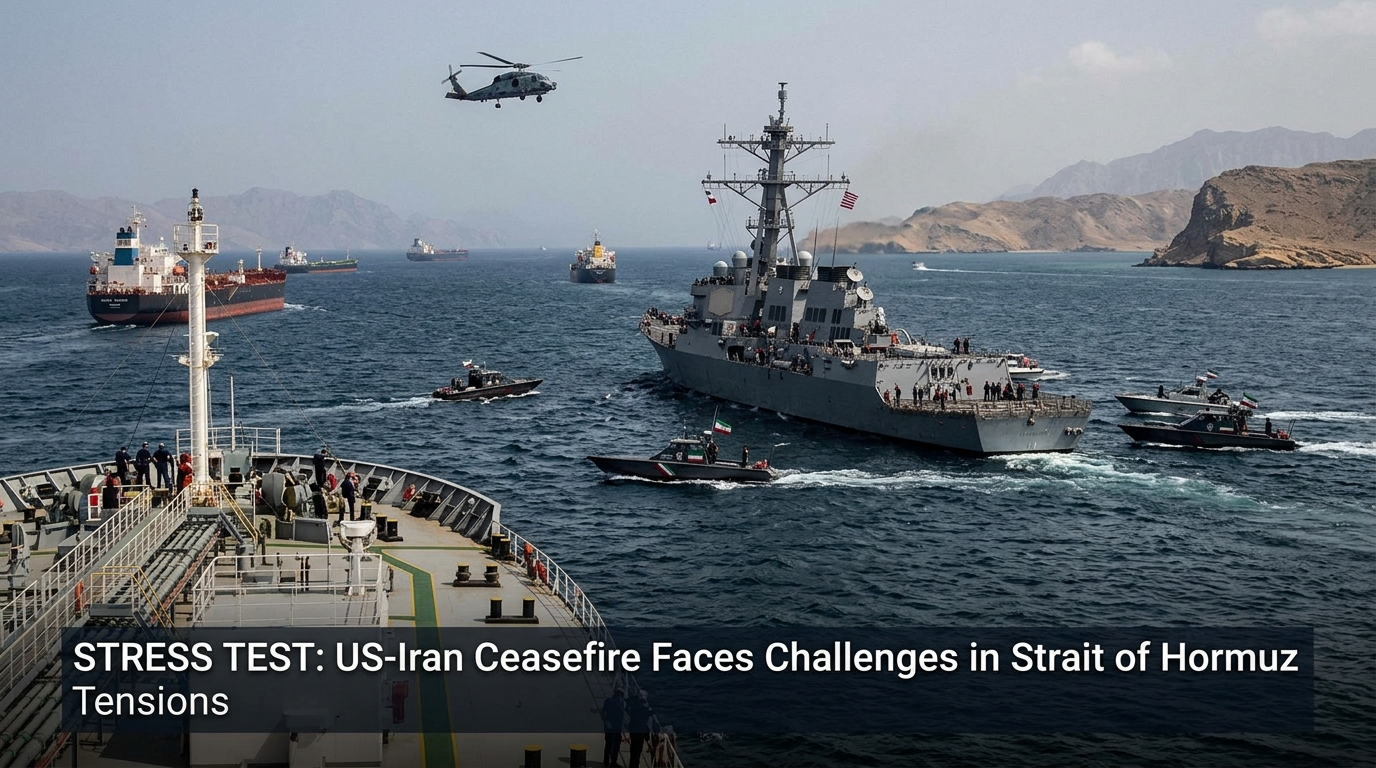
Fresh Military Action and Shipping Security Concerns Raise Questions About Stability in the Strategic Waterway
A fragile ceasefire between the United States and Iran is facing renewed pressure after fresh military action near the Strait of Hormuz raised concerns about regional stability and global energy security. The latest developments have drawn international attention because the Strait of Hormuz remains one of the World’s most important shipping routes, handling a significant share of global oil and energy exports. Recent events have renewed fears that any escalation could have far-reaching consequences for international trade and financial markets.
The situation intensified after U.S. military forces carried out strikes against Iranian targets following an attack on a commercial cargo vessel operating in the Strait of Hormuz. U.S. officials described the action as a limited response intended to enforce the existing ceasefire framework and protect freedom of navigation in the region. Iran, meanwhile, defended its position and warned against further military actions.
As governments, shipping companies, and investors monitor developments closely, the future of the US Iran Ceasefire has become a major focus of international diplomacy.
Why the Strait of Hormuz Matters
The Strait of Hormuz is one of the most strategically important waterways in the world. Located between the Persian Gulf and the Gulf of Oman, it serves as a critical route for oil and natural gas exports from several major energy-producing countries.
Energy analysts estimate that a substantial portion of the world’s seaborne oil passes through the strait each day. Any disruption to shipping in this narrow passage can immediately affect global energy markets and raise concerns about supply shortages.
Because of its importance, the region has frequently been at the center of geopolitical tensions involving Iran, the United States, and other international powers.
The current US Iran Ceasefire was intended to reduce military risks and help restore stability after months of heightened tensions. However, recent incidents suggest that maintaining the agreement may prove challenging.
What Triggered the Latest Escalation?
According to U.S. officials, military strikes were launched after an Iranian drone attack targeted a commercial cargo ship operating in the Strait of Hormuz. American authorities described the incident as a violation of the ceasefire arrangement and argued that a response was necessary to protect international shipping.
The U.S. operation reportedly targeted missile storage sites, drone facilities, and radar installations linked to Iranian military capabilities near the waterway. Officials emphasized that the strikes were limited in scope and not intended to trigger a broader conflict.
Iran rejected the U.S. characterization of events and argued that its actions were consistent with its security interests. Iranian officials warned that additional military pressure could lead to further instability in the region.
The developments have placed the US Iran Ceasefire under intense scrutiny as both sides exchange accusations over responsibility for the latest confrontation.
Global Markets React
Financial markets responded cautiously to the renewed tensions.
Oil Prices experienced noticeable volatility after reports of the military action emerged. Although prices did not experience the dramatic spikes seen during previous regional crises, analysts noted that investors remain highly sensitive to developments involving the Strait of Hormuz.
Market observers explained that uncertainty surrounding shipping routes, energy supplies, and geopolitical stability often influences oil prices and broader investor sentiment.
Shipping companies are also closely monitoring the situation. Several maritime organizations have increased security assessments and warned vessel operators about potential risks in the area. Some ships have reportedly altered routes or adopted additional safety precautions while operating near the strait.
The ongoing uncertainty highlights the economic significance of preserving a stable US Iran Ceasefire and ensuring uninterrupted maritime commerce.
Diplomatic Efforts Continue
Despite the military exchange, diplomatic channels remain active.
Reports indicate that both countries continue discussing mechanisms designed to reduce the risk of miscalculation and prevent future incidents. One notable development involves efforts to establish direct communication channels between military officials operating in the region. Such measures are intended to improve crisis management and reduce the possibility of accidental escalation.
International partners have also encouraged restraint. Several governments have emphasized the importance of dialogue and called on all parties to avoid actions that could jeopardize regional stability.
Diplomatic experts note that ceasefire agreements are often tested during periods of tension. Maintaining communication during difficult moments can be essential for preventing a temporary crisis from developing into a larger conflict.
Impact on Energy Security
Energy security remains one of the most important concerns associated with developments in the Gulf region.
The Strait of Hormuz has long been viewed as a critical chokepoint in global energy supply chains. Any disruption, even temporary, can influence oil prices, transportation costs, and broader economic conditions worldwide.
Analysts have warned that prolonged instability could increase uncertainty for energy markets and potentially affect inflation rates in countries dependent on imported oil.
At the same time, some experts believe the continued operation of commercial shipping routes demonstrates that both sides recognize the economic importance of preventing a major disruption.
The future success of the US Iran Ceasefire may therefore depend not only on military restraint but also on the shared economic interest in maintaining stable maritime trade.
What Happens Next?
The coming weeks are likely to be critical for determining whether the ceasefire framework can withstand renewed tensions.
Military officials, diplomats, and international organizations will continue monitoring activity in and around the Strait of Hormuz. Additional negotiations may be necessary to address disputes and clarify expectations regarding maritime security and military operations.
For now, both governments appear eager to avoid a larger confrontation, even as disagreements continue over recent events.
The latest developments demonstrate how quickly tensions can re-emerge in one of the world’s most strategically important regions. As international attention remains focused on the Gulf, the durability of the US Iran Ceasefire will play a major role in shaping regional stability, energy markets, and global economic confidence in the months ahead.