
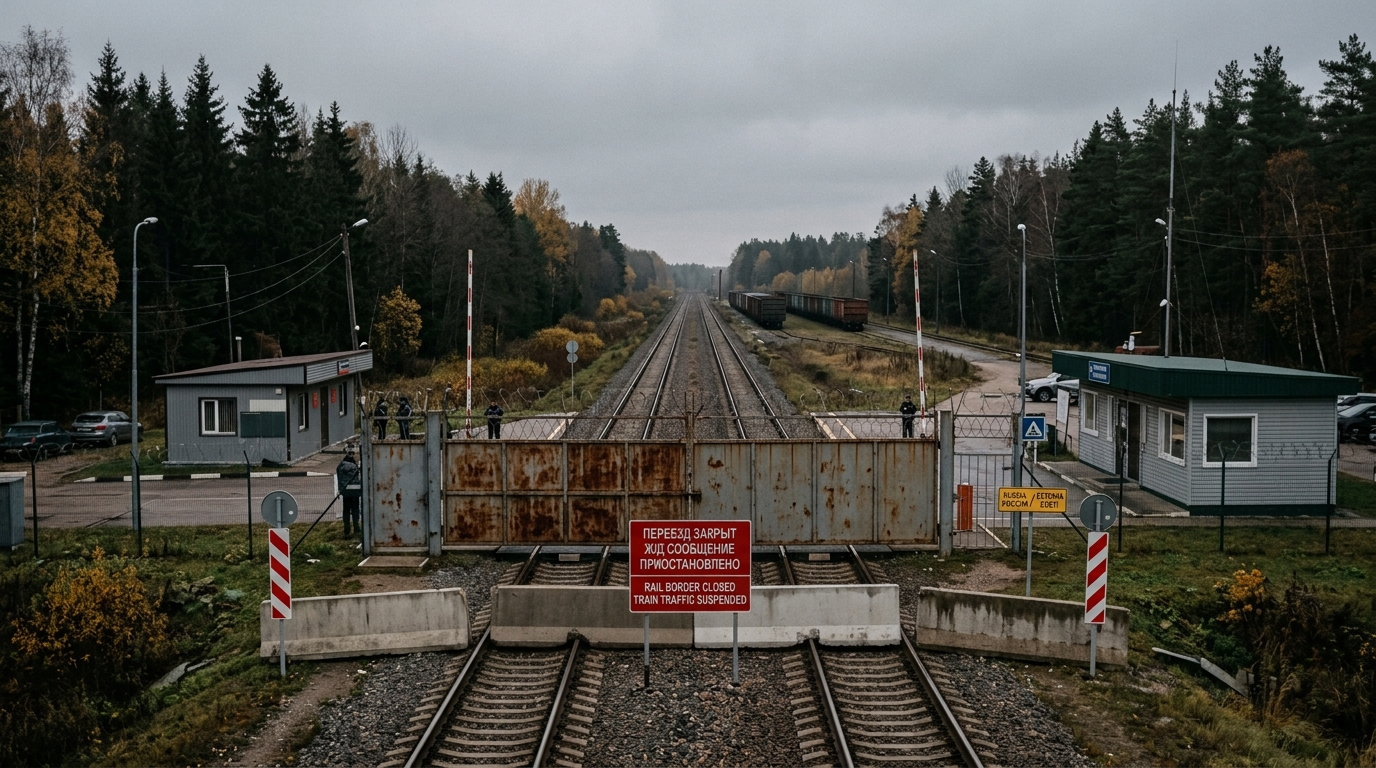
Moscow Orders Closure of Seven Railway Checkpoints as Questions Grow Over Security and Trade Impact
Russia has temporarily suspended operations at several railway border crossings connecting the country with Finland, Estonia, and Latvia, a decision that has attracted significant attention across Europe and sparked debate over its potential economic and security implications.
The measure came into effect on July 1 after the Russian government issued an official decree ordering the suspension of movement through seven railway checkpoints located along Russia’s northwestern borders. The decision affects the movement of people, vehicles, goods, and cargo through designated rail crossings and has raised fresh questions about Moscow’s intentions at a time of continuing tensions between Russia and Western nations.
The development has quickly become a major topic among policymakers and analysts, with many closely monitoring the consequences of the Russia Rail Border Closures and what they could signal for regional relations in the months ahead.
Seven Border Checkpoints Affected
According to the Russian government decree, five railway checkpoints along the Finnish border have been included in the suspension.
The affected locations include Vyborg and Svetogorsk in Russia’s Leningrad region, Vyartsilya and Lyuttya in Karelia, as well as the St. Petersburg–Finlyandsky railway checkpoint. In addition, Russia suspended operations at the Pechory-Pskovskiye railway checkpoint on the Estonian border and the Pytalovo checkpoint on the Latvian border.
The official order states that all movement of passengers, vehicles, freight, and cargo through these crossings will be temporarily halted. Russia’s Foreign Ministry was also instructed to formally notify the governments of Finland, Estonia, and Latvia about the decision.
The broad scope of the Russia Rail Border Closures has led observers to examine whether the measure is connected to broader geopolitical developments in Northern and Eastern Europe.
No Official Reason Provided
One of the most notable aspects of the announcement is the lack of an official explanation.
Russian authorities have not publicly stated why the checkpoints are being closed, nor have they specified how long the suspension will remain in place. Government documents released alongside the order contain procedural details but do not provide a justification for the move.
This absence of information has fueled speculation among analysts, although experts caution against drawing conclusions without official confirmation.
Several observers note that transportation infrastructure has increasingly become part of wider political and security discussions since the start of the war in Ukraine. Border controls, trade routes, and logistics networks have all faced increased scrutiny as governments reassess their strategic priorities.
Changing Security Environment
The railway suspension comes during a period of heightened security awareness across the Baltic and Nordic regions.
Finland’s entry into NATO significantly altered the security landscape in Northern Europe, while Estonia and Latvia have continued strengthening border surveillance and Defense preparedness. Governments throughout the region have invested in monitoring technologies and infrastructure designed to improve border security and respond to evolving threats.
Recently, Estonian authorities announced the deployment of fixed and mobile anti-drone monitoring systems along sections of the country’s border with Russia. Officials described the equipment as part of broader efforts to improve situational awareness and protect critical infrastructure.
Although Moscow has not linked the railway suspension to security concerns, the timing has inevitably led analysts to view the Russia Rail Border Closures within the context of wider regional developments.
Potential Effects on Trade and Transport
The closure of multiple railway crossings could also affect transportation and logistics networks.
Historically, rail routes have played an important role in moving goods between Russia and neighboring European countries. While trade volumes have decreased significantly due to sanctions and economic restrictions, certain freight operations have continued through selected border points.
Transportation experts note that any disruption to railway infrastructure can create challenges for supply chains, freight planning, and regional logistics operations. Businesses that rely on rail transport may need to adjust routes or seek alternative transportation methods if the suspension remains in place for an extended period.
At the same time, analysts point out that several of the affected crossings had already experienced limited activity due to previous restrictions and border policies introduced by neighboring countries.
Nevertheless, the Russia Rail Border Closures remain significant because they represent another reduction in cross-border connectivity between Russia and members of the European Union.
European Governments Monitoring Developments
Officials in Finland, Estonia, and Latvia have yet to announce major policy responses to the closures.
However, authorities across the region are expected to continue monitoring the situation closely. Transportation ministries, border agencies, and security officials are likely to assess whether the measure could have broader implications for regional cooperation and infrastructure planning.
European policymakers have increasingly focused on strengthening transportation resilience and reducing vulnerabilities in strategic supply networks. The latest development is expected to feature in those discussions as governments evaluate potential risks and future scenarios.
Looking Ahead
For now, uncertainty remains the defining feature of the situation.
Russia’s decision to suspend operations at seven railway border crossings marks another notable development in its relationship with neighboring European countries. While the practical impact may vary from crossing to crossing, the announcement has generated widespread interest because it comes without a clear explanation and affects multiple international border points simultaneously.
As officials and analysts continue assessing the implications, the Russia Rail Border Closures are likely to remain an important topic in European political and security discussions. Whether the measure proves temporary or signals a longer-term shift in regional transportation policy will become clearer in the weeks ahead.