
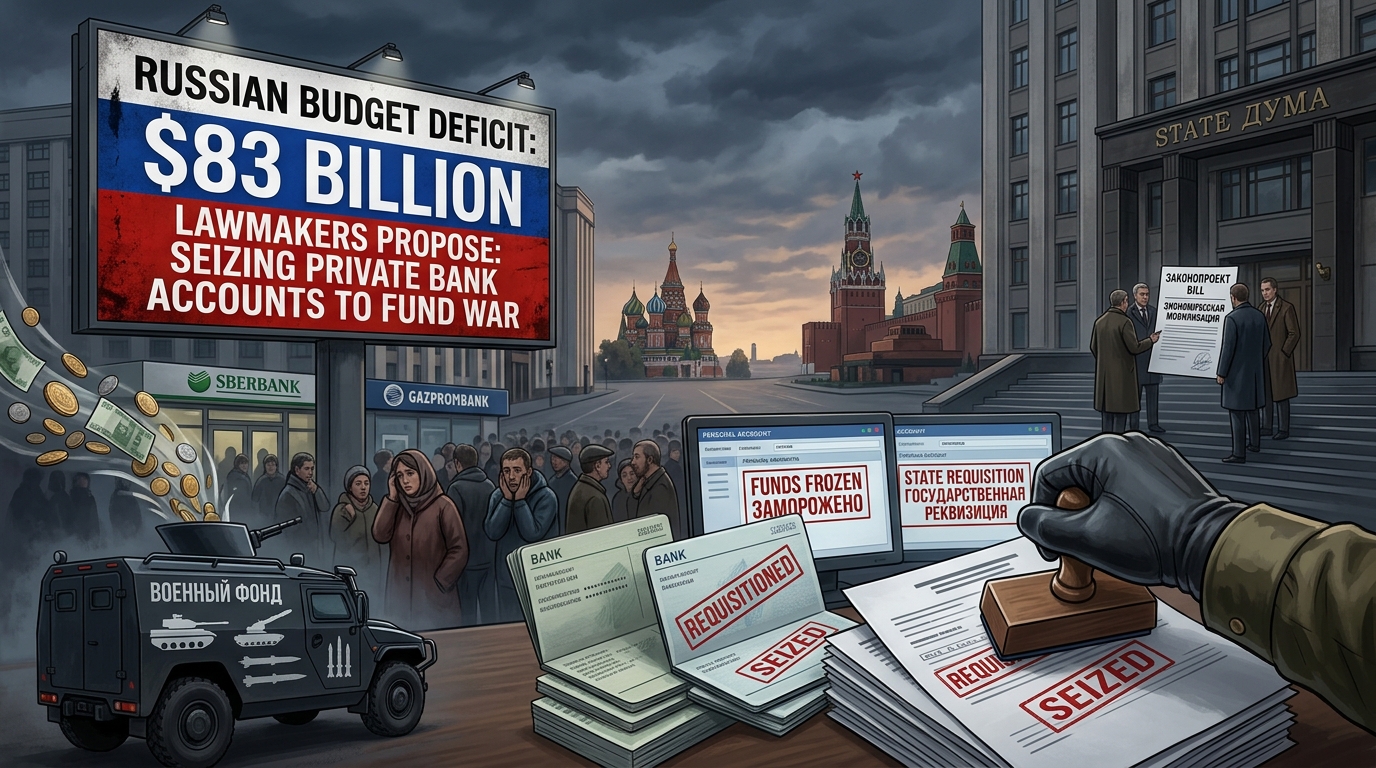
Controversial Proposal Sparks Debate as Russia Faces Growing Financial Pressure from Wartime Spending
Russia is facing mounting financial challenges as the cost of its war effort continues to rise, and a new proposal from several lawmakers has ignited widespread debate. According to recent reports, Russian legislators have suggested allowing the state to access dormant or inactive private bank accounts as part of efforts to address a budget deficit estimated at approximately $83 billion.
The proposal comes at a time when Moscow is struggling to balance increasing military expenditures with declining revenues from key sectors of the Economy. While the idea has not yet become law, it has drawn significant attention from economists, financial experts, and ordinary citizens concerned about the security of personal savings.
Russia Budget Deficit Drives New Funding Discussions
The growing Russia budget deficit has become one of the Kremlin’s most pressing economic challenges. Since the start of the war in Ukraine, military spending has surged, forcing authorities to search for additional sources of funding.
Russian lawmakers behind the proposal argue that billions of rubles remain untouched in inactive accounts for years. They claim these funds could potentially be redirected toward state priorities if account holders cannot be located or fail to claim the money within a specified period.
Supporters of the initiative describe it as a practical financial measure rather than a direct seizure of active personal savings. However, critics warn that any move allowing government access to private funds could undermine public trust in the banking system.
The debate highlights the growing pressure created by the Russia budget deficit, which continues to expand as wartime expenses consume a larger share of government resources. Reports indicate that authorities have already explored various options, including increased borrowing and tax adjustments, to stabilize state finances.
Economic Strains Continue to Build
Russia’s economy has shown resilience in some sectors despite international sanctions and trade restrictions. Nevertheless, economists note that prolonged military spending has placed increasing stress on government finances.
Recent analyses suggest that Defense-related expenditures have become one of the largest components of federal spending. As a result, policymakers face difficult decisions about how to finance future obligations without triggering additional economic instability.
The proposed use of dormant bank accounts reflects the government’s search for unconventional funding mechanisms. Financial experts say such discussions would have been unlikely before the conflict, when budget revenues were supported by stronger energy income and more stable economic conditions.
The Russia budget deficit has become a central issue in policy discussions as officials attempt to maintain military operations while also funding social programs and infrastructure projects.
Public Concerns Over Financial Security
News of the proposal has generated concern among many Russian citizens. Critics argue that even if only inactive accounts are targeted, the move could create uncertainty about property rights and personal financial security.
Banking specialists caution that confidence is one of the most important foundations of any financial system. If people fear their savings may become vulnerable to government intervention, they may choose to withdraw funds or move assets elsewhere.
Some analysts believe authorities will face strong resistance if the proposal advances beyond the discussion stage. Others suggest lawmakers may modify the idea significantly before introducing any formal legislation.
Public reaction has also been influenced by broader concerns about the economy. Rising costs, inflationary pressures, and ongoing uncertainty surrounding the war have increased sensitivity to policies affecting personal finances.
Wartime Spending Reshapes Economic Priorities
The discussion surrounding dormant bank accounts reflects a broader transformation of Russia’s economic priorities since the conflict began. Government resources have increasingly been directed toward defense and security needs.
Economic observers note that wartime conditions often force governments to make difficult financial decisions. However, they also emphasize the importance of maintaining public confidence and ensuring that emergency measures do not damage long-term economic stability.
The Russia budget deficit has become a symbol of the financial burden associated with sustaining large-scale military operations. As expenditures continue to rise, authorities are expected to explore additional methods for generating revenue and reducing fiscal pressure.
What Happens Next?
At present, the proposal remains under discussion and has not been formally implemented. Any attempt to move forward would likely require legal review, parliamentary approval, and detailed regulations governing how dormant funds could be identified and managed.
Financial analysts will be closely watching developments in the coming months. The outcome could provide important insights into how Russia plans to address its growing budget challenges while continuing to finance military operations.
For now, the debate highlights the difficult choices facing policymakers as the economic costs of war continue to accumulate. Whether the proposal advances or not, it underscores the significant fiscal pressures confronting the Russian government and the ongoing search for new sources of funding.
As attention remains focused on the Russia budget deficit, the discussion over private bank accounts is likely to remain a major topic in Russia’s economic and political landscape.