
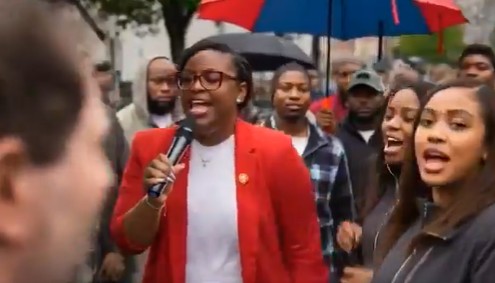
Congresswoman Pleads Not Guilty as Prosecutors Pursue Three Counts Linked to New Jersey Immigration Facility Incident
A major legal and political controversy is unfolding in the United States after federal prosecutors announced the LaMonica McIver Indictment, accusing the New Jersey congresswoman of interfering with federal law enforcement officers during an incident outside an immigration detention facility earlier this year.
The case has quickly attracted national attention because it involves a sitting member of Congress, federal immigration enforcement, and allegations of political motivation. Prosecutors argue that McIver unlawfully interfered with federal officers during a confrontation at the Delaney Hall immigration detention center in Newark, New Jersey. McIver, however, has strongly denied the allegations and has vowed to fight the charges in court.
The legal battle is expected to become one of the most closely watched political cases in the country as questions emerge about law enforcement authority, congressional oversight responsibilities, and the boundaries of political protest.
Federal Grand Jury Issues Indictment
The LaMonica McIver Indictment was announced on June 10, 2025, by former U.S. Attorney Alina Habba. According to federal prosecutors, a grand jury returned a three-count indictment against McIver following an investigation into events that occurred on May 9, 2025.
The charges stem from a confrontation outside the Delaney Hall immigration detention facility during a congressional oversight visit that coincided with a public immigration protest.
Prosecutors allege that McIver interfered with federal officers who were attempting to arrest Ras Baraka, the mayor of Newark, during the incident. According to court filings, authorities claim that her actions impeded and interfered with law enforcement officers performing their official duties.
The indictment includes two felony counts and one misdemeanor count, making the case particularly significant from both legal and political perspectives.
What Prosecutors Are Alleging
Federal prosecutors argue that the events unfolded as officers attempted to take Baraka into custody during the demonstration outside the detention center.
According to the indictment, McIver allegedly obstructed federal officers during the arrest process. Prosecutors contend that her actions crossed legal boundaries and constituted interference with federal law enforcement operations.
Authorities have emphasized that the charges are based on evidence reviewed by a federal grand jury and are not related to McIver’s political views or legislative activities.
The LaMonica McIver Indictment focuses specifically on the events that occurred during the confrontation and whether her conduct violated federal law.
As with all criminal cases, the allegations contained in the indictment remain accusations unless proven in court.
Potential Penalties If Convicted
One of the aspects of the case drawing significant public attention is the potential sentence attached to the charges.
Federal prosecutors stated that the combined maximum penalty could reach 17 years in prison if McIver were convicted on all counts and if a judge imposed maximum sentences consecutively.
Legal experts note, however, that maximum penalties are often cited in indictments but do not necessarily reflect likely outcomes. Sentencing decisions depend on numerous factors, including the nature of the offenses, criminal history, sentencing guidelines, and judicial discretion.
As a result, any potential sentence would only be determined after a conviction and subsequent sentencing proceedings.
The possibility of a lengthy prison term has added to the national attention surrounding the LaMonica McIver Indictment.
McIver Rejects the Charges
McIver has firmly denied any wrongdoing and entered a plea of not guilty.
The congresswoman has argued that the prosecution is politically motivated and has accused authorities of targeting her because of her involvement in immigration oversight and advocacy efforts.
Supporters of McIver have echoed those concerns, claiming that elected officials should be able to conduct oversight activities without fear of criminal prosecution.
Critics, however, argue that public officials must still comply with the law regardless of their position or intentions.
The disagreement has transformed the legal case into a broader political debate about accountability, immigration enforcement, and congressional authority.
Political Reactions Across the Country
The case has generated strong reactions from both major political parties.
Some lawmakers and advocacy groups have rallied behind McIver, describing the charges as an attempt to intimidate elected officials involved in immigration-related oversight activities.
Others have defended the actions of federal prosecutors, arguing that no individual is above the law and that allegations involving interference with law enforcement deserve thorough investigation.
The LaMonica McIver Indictment has therefore become more than a courtroom matter. It has evolved into a national conversation about the balance between political activism and legal accountability.
Political analysts expect the case to remain a prominent topic in national media as court proceedings move forward.
Immigration Policy Remains at the Center
The incident occurred against the backdrop of ongoing national debates over immigration policy and detention facilities.
Immigration enforcement continues to be one of the most divisive issues in American politics. Supporters of stricter enforcement argue that federal agencies must be allowed to perform their duties without obstruction. Advocates for immigration reform, meanwhile, often emphasize oversight and transparency regarding detention operations.
Because the confrontation took place during an immigration-related event, the legal proceedings are likely to remain intertwined with broader policy discussions.
Many observers believe the case could influence future interactions between lawmakers and federal agencies during oversight visits.
What Happens Next?
The next phase of the case will unfold in federal court, where prosecutors will attempt to prove their allegations and Defense attorneys will challenge the government’s evidence.
McIver has pledged to continue fighting the charges and maintain her innocence throughout the legal process.
For now, the LaMonica McIver Indictment remains one of the most closely watched political and legal stories in the United States. As court proceedings advance, the outcome could have significant implications not only for the congresswoman involved but also for future debates surrounding congressional oversight, immigration policy, and the limits of political protest.