
Kyiv Calls for Stronger Export Controls as Officials Highlight Foreign Technology in Russian Weapons
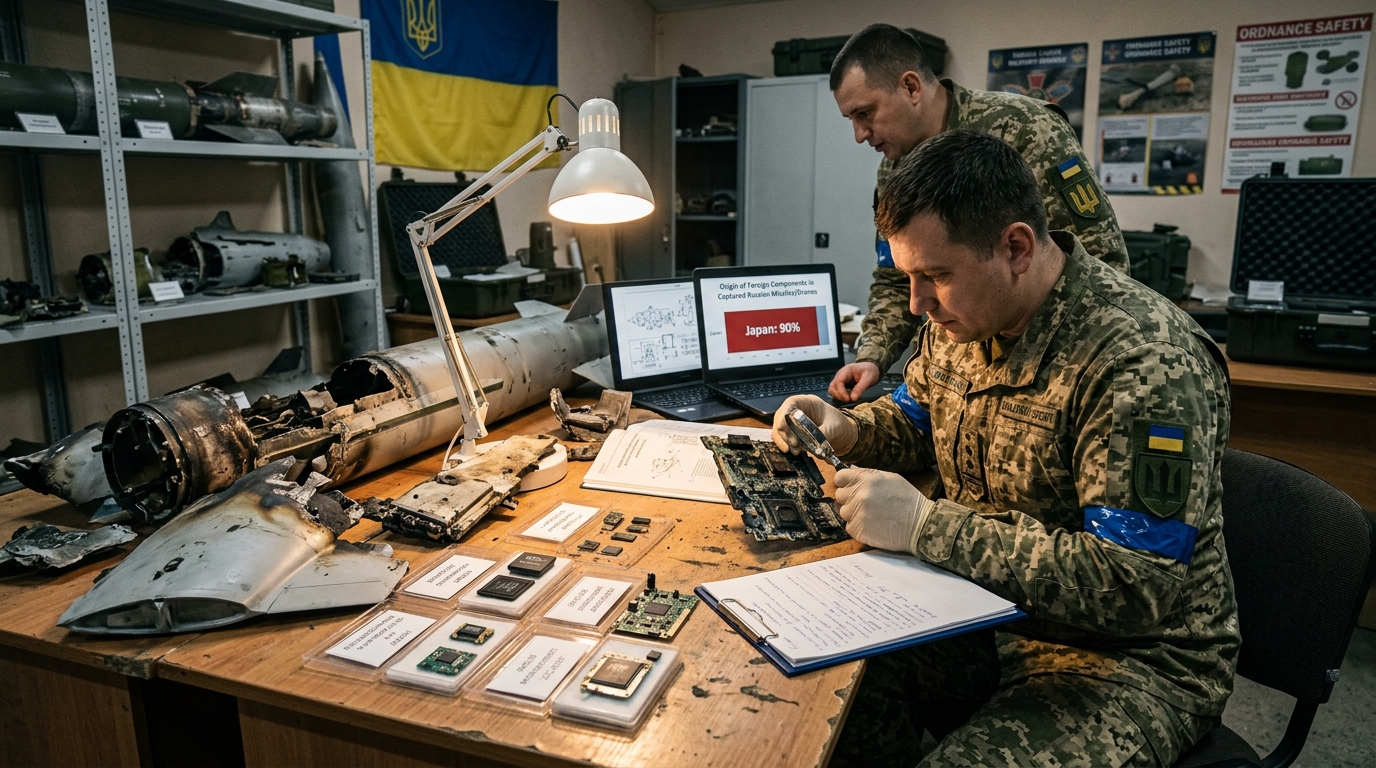
Ukraine has claimed that Japanese-made components are present in approximately 90% of the missiles and drones used by Russia in its ongoing war against Ukraine, raising fresh concerns about how foreign technology continues to reach Russia’s military-industrial complex despite international sanctions.
The statement was made by Vladyslav Vlasiuk, an adviser in Ukraine’s Presidential Office and one of Kyiv’s leading sanctions experts. Speaking about the findings, he urged Japan and other international partners to strengthen export controls and close loopholes that allow sensitive technologies to be diverted into Russian weapons production.
The issue has become increasingly important as Ukraine continues to investigate the origins of electronic components recovered from downed missiles, drones, and other military equipment used by Russian forces. The latest claims have placed the spotlight on the growing debate surrounding Japanese Components in Russian Missiles and the effectiveness of international sanctions.
Ukrainian Officials Highlight Widespread Use of Foreign Technology
According to Ukrainian officials, investigations into Russian weapons have repeatedly uncovered foreign-made electronic parts, including semiconductors, microchips, navigation systems, and other dual-use technologies.
Vlasiuk stated that internal Ukrainian assessments indicate Japanese-made components appear in roughly 90% of the missile and drone types deployed by Russia during the conflict. The findings were reportedly shared with Japanese media and international partners as part of ongoing efforts to strengthen sanctions enforcement.
Officials say many of these components are not military products themselves. Instead, they are commercially available technologies originally designed for civilian industries such as automotive manufacturing, communications systems, and consumer electronics.
The discovery has intensified discussions about Japanese Components in Russian Missiles and how commercial products can eventually find their way into military systems through complex international supply chains.
Sanctions Challenges Continue
Since the start of the full-scale invasion of Ukraine in 2022, Western countries and their allies have imposed extensive sanctions aimed at limiting Russia’s access to advanced technologies.
However, Ukrainian officials argue that Russia continues to acquire critical electronic components through intermediary countries, third-party distributors, and alternative procurement networks. These channels can make it difficult for manufacturers to track where products ultimately end up.
According to Ukrainian authorities, even highly restricted components have occasionally appeared in weapons recovered from the battlefield, suggesting that sanctions circumvention remains a significant challenge.
The debate surrounding Japanese Components in Russian Missiles reflects broader concerns shared by many governments regarding the enforcement of export controls and the monitoring of global supply chains.
Japanese Companies Respond
Reports indicate that Ukrainian documents identified multiple Japanese companies whose products allegedly appeared in Russian weapons systems.
Some companies contacted by journalists stated that they could not independently verify whether the components in question originated from their manufacturing lines. Others noted that available information was insufficient to determine how the parts may have reached Russia. Several companies reportedly did not immediately comment on the claims.
At this stage, there is no indication that Japanese manufacturers knowingly supplied products for Russian military use. Instead, the focus remains on how components may have been rerouted through third-party channels after leaving their original distribution networks.
Analysts note that tracing the exact path of individual microchips and electronic components can be extremely difficult due to the complexity of modern global trade.
Russia’s Dependence on Imported Electronics
Ukraine has repeatedly argued that Russia’s missile and drone production remains heavily dependent on imported electronics.
President Volodymyr Zelenskyy previously stated that Russian missiles and drones cannot be produced without components sourced from abroad. Ukrainian authorities have released assessments claiming that thousands of foreign-made parts are used across Russia’s weapons programs.
Investigations conducted by Ukrainian agencies and independent researchers have identified components originating from numerous countries, including the United States, Germany, Switzerland, the Netherlands, Taiwan, China, South Korea, and Japan.
The latest findings concerning Japanese Components in Russian Missiles add another layer to ongoing international efforts aimed at disrupting Russia’s access to advanced technology.
Growing Calls for Stronger Controls
Following the release of the findings, Ukrainian officials renewed calls for tighter international cooperation on sanctions enforcement.
They argue that manufacturers, governments, and customs authorities need stronger monitoring systems to identify suspicious transactions and prevent sensitive technologies from reaching sanctioned entities.
Experts say the challenge extends beyond any single country because modern electronics often involve multinational supply chains. A single component may be designed in one country, manufactured in another, assembled elsewhere, and sold through multiple intermediaries before reaching an end user.
This complexity makes enforcement difficult but also highlights the importance of international coordination.
International Attention on Supply Chains
The issue of foreign-made components in Russian weapons has received increasing attention from policymakers and security experts worldwide.
Several governments have already introduced additional export restrictions and expanded monitoring measures aimed at preventing technology diversion. At the same time, investigations continue into networks suspected of helping sanctioned goods reach Russia.
For Ukraine, reducing access to critical technologies remains a key objective. Officials believe that limiting the supply of advanced electronics could slow Russian weapons production and reduce the intensity of future attacks.
Looking Ahead
As the war continues, scrutiny of international supply chains is likely to increase. Ukraine’s latest findings have drawn attention to the role that globally sourced electronics play in modern warfare and the challenges governments face in enforcing sanctions.
The debate over Japanese Components in Russian Missiles is expected to remain part of broader discussions about export controls, sanctions enforcement, and global security. While investigations continue, Ukrainian officials are urging partners to strengthen oversight and close remaining loopholes that allow sensitive technologies to enter Russia’s military production networks.