
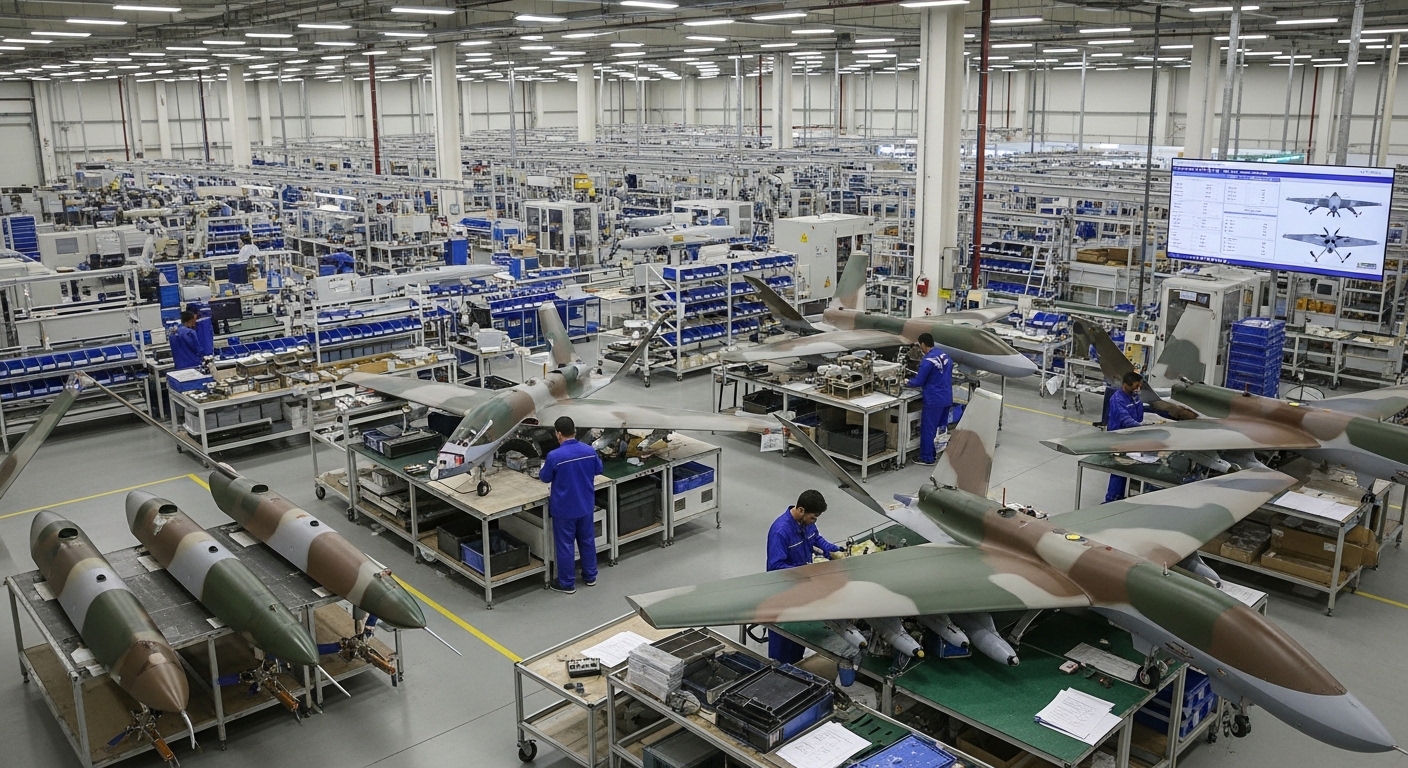
Iran Shahed-136 Drone Production Increase Reportedly Surges Tenfold Amid Rising Tensions
Iran is now making a huge push to build more of its famous “suicide drones,” especially the Shahed-136. According to Defense reports, the country is increasing production nearly ten times compared to before. This is one of the biggest expansions of its drone program so far. This move is happening at a time when tensions are high in the Middle East, and drone warfare has become a major part of modern fighting.
Massive increase in drone making
Iran is focusing on low-cost but very effective attack drones, especially the Shahed-136 model. Why the big boost? Because recent wars have shown that these drones can get past even advanced air defense systems. The Shahed-136 is what’s called a “loitering munition” – basically a drone that flies toward a target and blows itself up on impact. It’s much cheaper than regular missiles, which makes it perfect for what experts call “asymmetric warfare” – where you use low-cost weapons to force your enemy to spend huge amounts of money on defense. So the thinking is simple: even if the enemy shoots down your cheap drone, they’ve spent a fortune on the missile that took it out.
More factories, including underground ones
Reports say Iran is expanding both above-ground and underground factories to speed up production. They’re focusing on making key parts like navigation systems, engines, and guidance systems right inside the country. By doing this, Iran wants to rely less on foreign supplies and keep making drones even under sanctions. The plan also includes using automated assembly lines so they can build drones faster and meet their strategic goals.
What this means for the military
Experts say this big increase could change the balance of power in the region. The Shahed-136 has already been used in war zones, often in swarms designed to overwhelm air defenses. If Iran really builds this many drones, they could send wave after wave of them, challenging even the advanced defense systems of countries like the US and Israel. One big advantage of these drones is that they fly low and are hard to spot on radar. And when you send many at once, defense systems get overwhelmed, and some drones are bound to get through.
A political message too
This isn’t just about military power. Analysts say Iran is also sending a message: sanctions and international pressure are not stopping us from building our defense capabilities. But this also worries other countries. Cheap but powerful drones like the Shahed-136 could end up in the hands of Iran’s allies or non-state groups, making unstable regions even more dangerous.
The big picture: warfare is changing
What we’re seeing here is a bigger shift toward drone-based warfare. Drones are becoming central to modern battle plans because they’re cheap, can be used in large numbers, and are quite accurate. If Iran meets its production targets, this could mark a turning point. Future wars might be less about who has the most expensive jets and missiles, and more about who can send the most drones. Experts call this moving from “high-cost precision warfare” to “low-cost saturation warfare” – where quantity starts to matter as much as quality.
Final thoughts
Even though Iran hasn’t officially confirmed everything, the reports of this huge production increase show how important drones have become in global military strategy. The Shahed-136 build-up isn’t just a small change – it’s a big strategic move based on asymmetry, deterrence, and being able to keep going despite sanctions.
As tensions in the region keep rising, drones like the Shahed-136 will likely play an even bigger role in future conflicts – and traditional defense systems may struggle to keep up.