
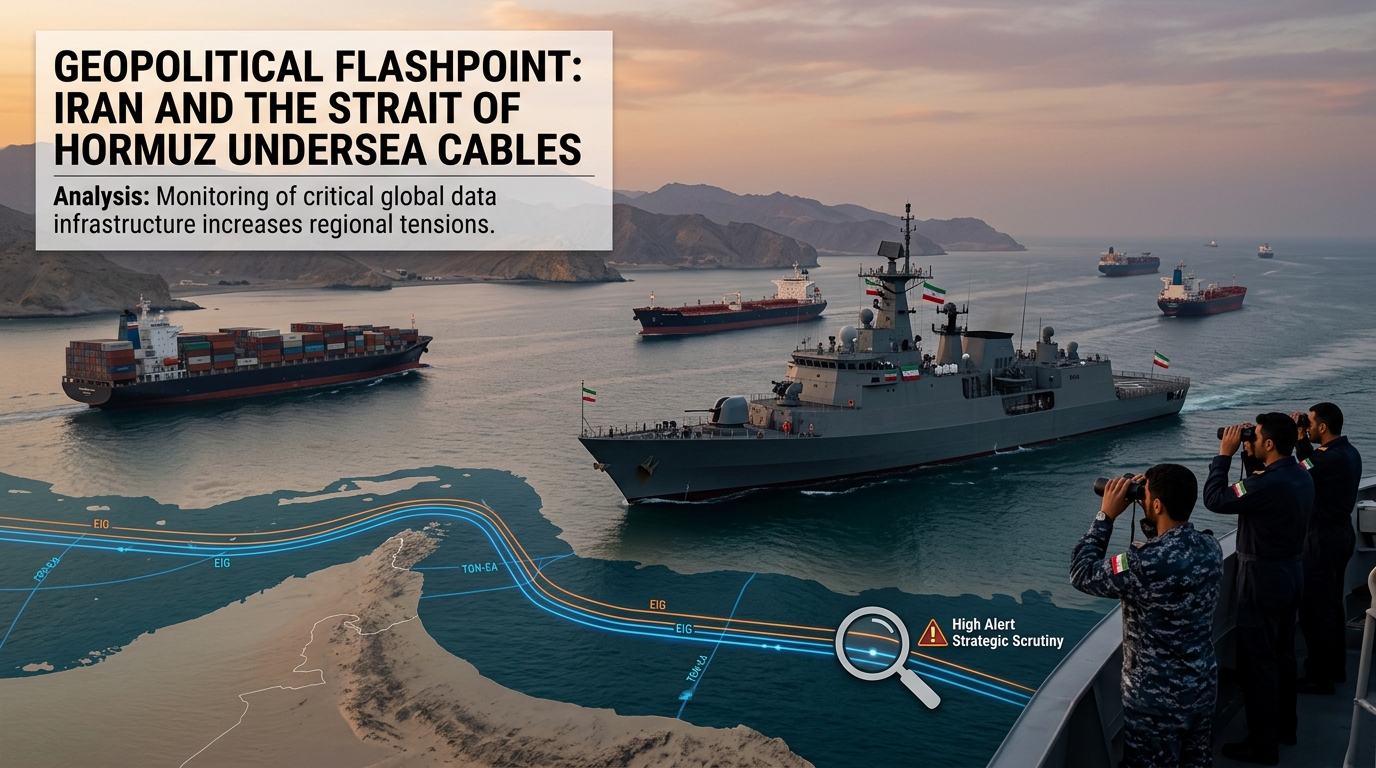
So, you’ve probably heard about the Undersea Cables in the Strait of Hormuz before. It’s that narrow stretch of water between Iran and Oman where a huge chunk of the World’s oil tankers pass through.
But here’s something you might not know.
Underneath all that water, there’s another kind of traffic. Not oil tankers. Data. Trillions of dollars worth of financial transactions. The backbone of the global internet.
And Iran is reportedly eyeing these undersea fiber-optic cables as a new source of leverage.
Let me explain why that matters — a lot.
First, What Are These Cables and Why Should You Care?
Look, most people think the internet runs on satellites. It doesn’t. Not really.
Over 95% of global internet traffic travels through undersea fiber-optic cables. These things are laid on the ocean floor, connecting continents. They handle everything — your Netflix stream, your work emails, your bank transfers.
And the financial numbers are staggering. We’re talking about an estimated $10 trillion in daily financial transactions flowing through these cables.
Ten. Trillion. Dollars. Every single day.
So when someone starts talking about having control over those cables in a strategic chokepoint like the Strait of Hormuz? That gets everyone’s attention.
Iran’s Geographic Advantage (or Weapon, Depending on Your View)
Here’s the thing about Iran. It sits right along the northern edge of the Strait of Hormuz. That means they’re physically close to key cable routes.
And physical proximity, in the world of undersea infrastructure, can translate into real leverage.
Analysts are saying Tehran could potentially:
- Influence global data flows (scary thought, right?)
- Disrupt or monitor digital infrastructure
- Use that threat to extract economic or political concessions
In other words, the same way Iran has historically threatened to block oil tankers, they could now theoretically mess with the pipes that carry the internet.
What Might Iran Actually Do? (A Three-Step Idea)
Nothing is officially confirmed. But analysts and experts have been piecing together a possible multi-step strategy. Think of it as a concept, not a confirmed plan.
Step One: Control and Monitoring
Iran establishes some kind of security presence or oversight around where these cables land or pass nearby. Maybe they call it “protection.” Maybe they call it “regulation.”
Step Two: Monetization
This is the money part. Iran could charge fees for “safe passage” or maintenance. Basically, a toll for data traveling through their neighborhood.
Step Three: Strategic Leverage
This is the big one. Iran uses control over cables as a bargaining chip in broader geopolitical negotiations. Sanctions relief? Nuclear talks? Regional influence? All of it could be on the table.
Why This Scares People
Let me be blunt. Undersea cables are surprisingly vulnerable. They’re not heavily guarded. Most of them are just… sitting there on the ocean floor.
If Iran decided to act on this leverage, the consequences could be immediate and global.
We’re talking about:
- Major internet disruptions across continents
- Financial transaction delays or complete breakdowns
- Stock markets freezing
- Banking systems going offline
- Cloud services like Google, Amazon, Microsoft getting hit
Even a minor disruption in the Strait could ripple across the entire global Economy. That’s not hyperbole. That’s just how dependent we’ve become on these cables.
This Isn’t Just About Oil Anymore
For decades, the Strait of Hormuz has been famous for one thing: oil. About 20% of the world’s petroleum passes through it.
But now, there’s a new frontier. Digital infrastructure.
And strategically, controlling data pipes might eventually be just as powerful — if not more — than controlling energy routes.
Think about it. What hurts more? A spike in gas prices, or the entire internet going down for a week?
Yeah. That’s what I thought.
A Sign of Things to Come?
This reported Iranian interest isn’t happening in a vacuum. It’s part of a much bigger trend.
Around the world, countries are realizing that digital infrastructure is strategic infrastructure. It’s not just commercial. It’s geopolitical.
We’re seeing:
- Cyber warfare expanding into physical attacks on cables and data centers
- Economic power becoming tied to who controls data flows
- Hybrid warfare where threats aren’t just bombs, but undersea sabotage
Iran looking at the Strait’s cables is just one piece of that puzzle.
Bottom Line
Iran is reportedly exploring how to monetize or control the undersea fiber-optic cables in the Strait of Hormuz. And with $10 trillion in daily financial transactions flowing through those routes, that’s not a small thing.
Is this an imminent crisis? Not yet. But it’s a warning sign.
The future of geopolitics isn’t just about who controls oil. It’s about who controls data. And Iran just signaled they understand that better than most people realize.
Watch this space.