
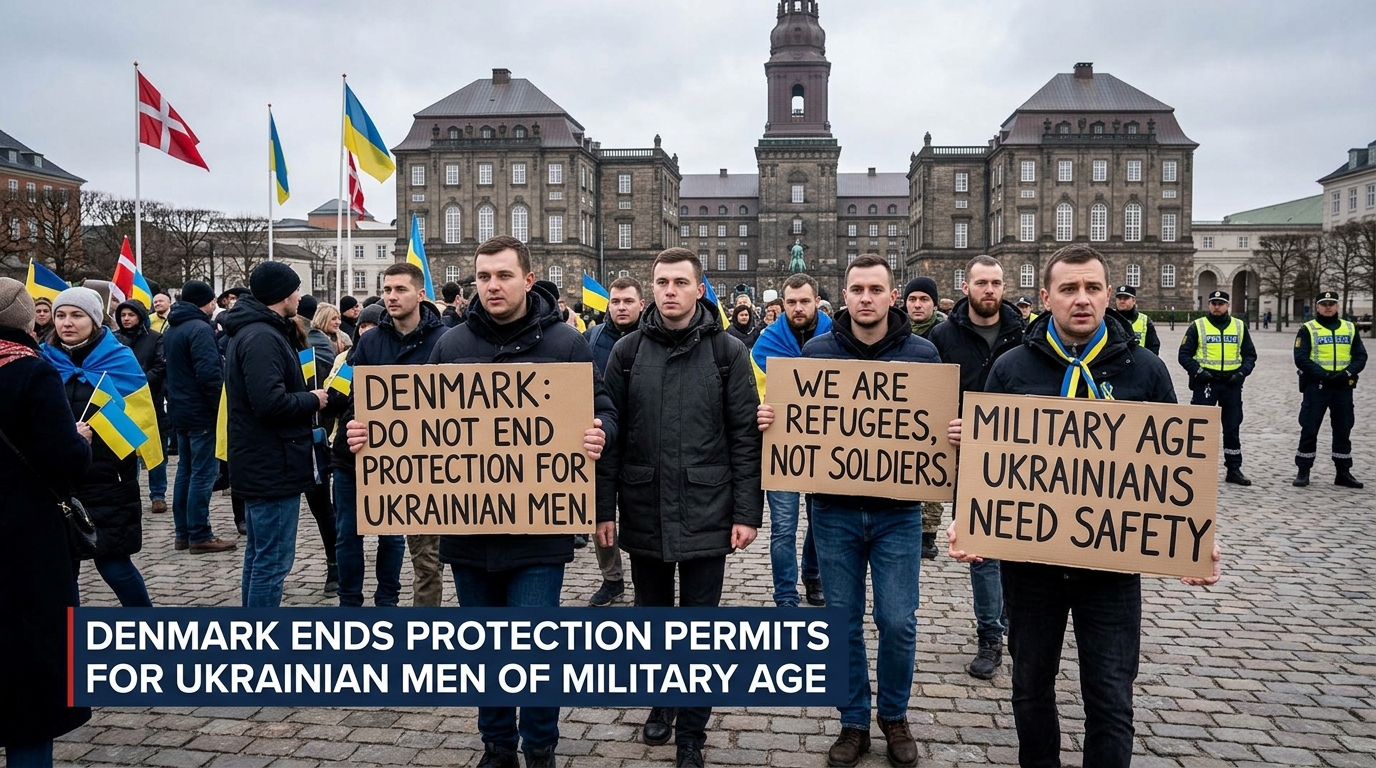
New Policy Aims to Prevent Temporary Residence Rules From Being Used to Avoid Mobilisation
Denmark is preparing to introduce major changes to its temporary protection program for Ukrainians, a move that could significantly affect Ukrainian men of military age seeking residence in the country. According to the Danish government, the new policy is designed to ensure that temporary protection measures are not used to avoid military mobilisation in Ukraine as the country continues to defend itself against Russia’s ongoing invasion.
The decision has sparked discussion across Europe as governments continue to evaluate refugee policies more than four years after the start of the Russia-Ukraine war. While Denmark has been among the countries offering support to displaced Ukrainians since 2022, officials now argue that the circumstances surrounding military-age men require a different approach.
The new measures are expected to affect future applicants but will not impact Ukrainians who have already been granted residence permits under existing rules.
Why Denmark Is Changing Its Policy
The Danish government announced that men between the ages of 23 and 60 who are not exempt from military service will no longer qualify for temporary residence permits under the country’s Special Act on Ukraine. Officials say the goal is to prevent Denmark’s protection system from being used as a way to avoid mobilisation obligations in Ukraine.
The Denmark Protection for Ukrainian Men policy change comes amid continued efforts by Ukraine to maintain military readiness while facing ongoing Russian attacks and battlefield challenges.
Danish Immigration and Integration Minister Morten Bødskov stated that Denmark remains committed to supporting Ukraine but emphasized that residence rules were never intended to help individuals avoid participating in the Defense of their country. According to the minister, allowing such use of the program could weaken Ukraine’s ability to defend itself.
Supporters of the policy argue that countries assisting Ukraine should ensure their refugee programs do not unintentionally undermine Ukraine’s military capacity during wartime.
Background of the Special Act on Ukraine
After Russia launched its full-scale invasion of Ukraine in 2022, Denmark adopted the Special Act on Ukraine, providing temporary residence rights to people displaced by the conflict. The law allowed Ukrainians fleeing the war to access housing, employment opportunities, education, and social services while staying in Denmark.
The legislation became part of a broader European effort to assist millions of Ukrainians forced to leave their homes because of the conflict.
Since its introduction, the program has provided protection to tens of thousands of Ukrainian citizens. Danish authorities reported that approximately 47,600 displaced Ukrainians were living in Denmark under the Special Act as of May 2026.
The latest Denmark Protection for Ukrainian Men decision represents one of the most significant adjustments to the program since its creation.
What the New Rules Mean
Under the proposed changes, military-age Ukrainian men who are eligible for service will no longer be able to obtain new temporary residence permits through the special protection system.
However, individuals who already hold valid residence permits will not lose their status. Danish authorities have confirmed that the policy applies only to future cases and does not affect previously approved applicants.
Government officials also indicated that they will continue monitoring the situation and may consider additional changes to refugee regulations if circumstances evolve.
The Denmark Protection for Ukrainian Men announcement reflects a broader European conversation about balancing humanitarian obligations with the realities of a prolonged conflict.
Debate Across Europe
The Danish decision is likely to attract attention from other European countries facing similar questions regarding Ukrainian refugees and military-age men.
Since the war began, European nations have generally maintained open-door policies for displaced Ukrainians. However, as the conflict continues into another year, governments are reassessing long-term strategies related to temporary protection programs.
Some policymakers argue that military-age men should contribute to Ukraine’s defense efforts if they are eligible for service. Others emphasize that humanitarian protections should remain available regardless of military status.
The debate has become increasingly relevant as refugee programs originally designed for short-term emergencies evolve into long-term support systems.
The Denmark Protection for Ukrainian Men policy may influence discussions in other countries considering how to manage future refugee applications from Ukraine.
EU Refugee Policy Under Review
The decision also comes as the European Union continues evaluating the future of protections granted to Ukrainian refugees.
The EU’s Temporary Protection Directive, introduced in March 2022, allowed millions of Ukrainians to live, work, and study across member states without going through traditional asylum procedures. The measure was originally intended as an emergency response but has been extended multiple times. It currently remains in effect until March 2027.
European leaders are expected to continue discussing the long-term future of Ukrainian refugee policies in the coming months. Reports indicate that additional decisions regarding refugee status and protection frameworks may be considered later this year.
Impact on Ukrainian Communities
The announcement has generated interest among Ukrainian communities across Europe, particularly among those directly affected by military service requirements.
Many displaced Ukrainians have built new lives in European countries while maintaining close ties to family members who remain in Ukraine. Any changes to residency policies therefore carry personal, social, and economic implications.
While supporters view Denmark’s move as a demonstration of solidarity with Ukraine’s defense efforts, critics may argue that it creates uncertainty for individuals seeking protection from a continuing conflict.
Looking Ahead
As Denmark moves forward with implementing the new rules, attention will focus on how the policy is applied and whether other countries adopt similar approaches.
For now, the Denmark Protection for Ukrainian Men decision highlights the difficult balance governments face between humanitarian assistance, immigration policy, and support for Ukraine’s ongoing defense against Russian aggression.
With the war continuing and refugee programs under review across Europe, the discussion surrounding military-age Ukrainians and temporary protection is likely to remain an important issue in the months ahead.