
Ukrainian Investigators Say Safety Checks Are Essential as Repatriated War Dead Undergo Identification
Ukrainian forensic specialists and police investigators have reported repeatedly finding explosive devices during examinations of soldiers’ bodies returned from Russia under wartime repatriation agreements, highlighting the difficult and sensitive process of identifying fallen service members.
The issue came to light after Ukrainian law enforcement officials described how forensic teams conduct safety inspections before beginning identification procedures. According to investigators, potentially dangerous objects, including grenades and other explosive devices, have been discovered on multiple occasions during examinations of returned remains.
The findings have raised concerns among forensic experts who work daily to identify fallen soldiers and return them to their families. As a result, specialized safety protocols have become a standard part of the examination process.
The latest revelations have placed the spotlight on the Explosives Found in Returned Ukrainian Soldiers investigation, which continues to draw international attention amid ongoing exchanges of war dead between Ukraine and Russia.
Forensic Teams Conduct Mandatory Safety Inspections
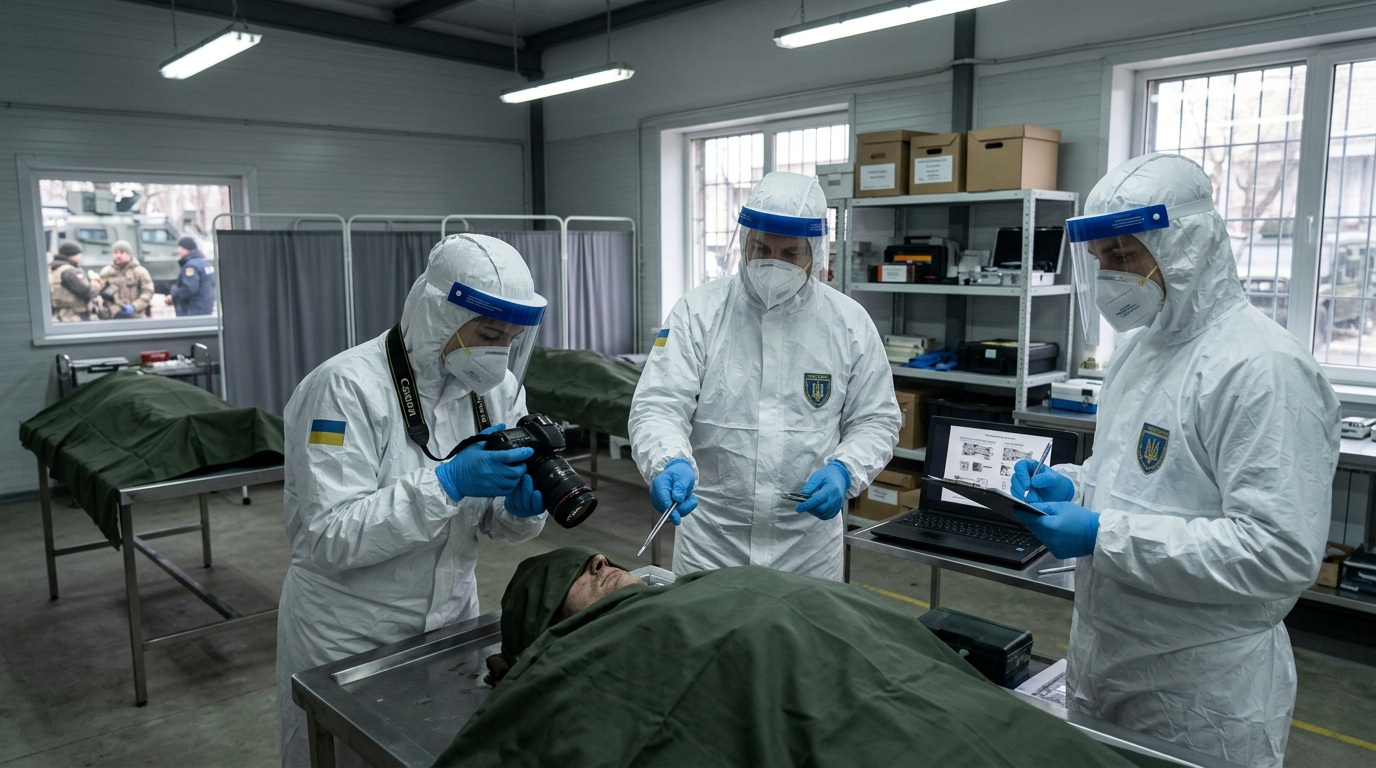
According to Taras Tarasenko, a senior official in Ukraine’s National Police, every repatriated body undergoes a careful preliminary inspection before detailed forensic work begins.
Investigators first search for anything that could pose a danger to personnel handling the remains. Tarasenko stated that explosive devices, grenades, and other hazardous objects have been found repeatedly, making caution an essential part of the identification process.
After safety checks are completed, specialists look for items that may help establish identity, including military tags, documents, mobile phones, bank cards, and personal belongings. They then document physical characteristics, tattoos, clothing, and other identifying features.
The repeated discoveries linked to the Explosives Found in Returned Ukrainian Soldiers reports have reinforced the importance of these safety measures across forensic facilities in Ukraine.
Identification Process Can Take Months
Officials say identifying returned remains is often a complex and lengthy procedure.
Many bodies arrive in poor condition after prolonged exposure to battlefield environments. In some cases, forensic experts discover that remains from multiple individuals have been mixed together, requiring extensive DNA analysis to separate and identify them correctly.
Investigators work closely with forensic pathologists and genetic laboratories to establish identities with the highest possible accuracy. The process can take months and occasionally even longer when DNA samples must be compared with relatives.
Authorities emphasize that despite the challenges, the goal remains the same: ensuring every fallen soldier is identified and returned to their family with dignity.
Earlier Grenade Discovery Shocked Experts
Concerns surrounding explosive devices in repatriated remains gained widespread attention earlier this year after a highly unusual discovery in western Ukraine.
In March, forensic specialists in the city of Chernivtsi found an unexploded grenade during an autopsy of a soldier whose body had been returned from Russia as part of a repatriation exchange. The discovery forced authorities to evacuate the morgue while bomb disposal specialists safely removed the device.
According to local forensic officials, explosives had previously been found among personal belongings or clothing, but the discovery of a grenade lodged within a body was described as unprecedented. The explosive was later safely detonated by specialists away from the facility.
That incident contributed to increased attention on the broader issue of Explosives Found in Returned Ukrainian Soldiers and the safety risks faced by forensic personnel.
Body Exchanges Continue Despite Conflict
Although Ukraine and Russia remain engaged in active warfare, the repatriation of fallen soldiers has remained one of the few areas where humanitarian cooperation continues.
Over the course of the conflict, both sides have conducted numerous exchanges involving the bodies of service members killed in combat. These operations are typically coordinated through official channels and involve the transfer of hundreds of remains at a time.
The latest reported exchange took place in June, when Ukraine received hundreds of bodies identified by Russia as Ukrainian soldiers. Ukrainian authorities subsequently began the lengthy process of verification, identification, and notification of relatives.
Officials note that repatriation efforts remain an important humanitarian task despite the ongoing conflict.
Challenges Facing Forensic Specialists
The work carried out by forensic teams extends far beyond simple identification.
Specialists must document evidence, preserve records, collect DNA samples, and ensure that remains are handled respectfully and safely. The possibility of encountering dangerous objects adds another layer of complexity to an already demanding process.
Because of these risks, emergency services and explosive ordnance experts are often involved in initial screening procedures before medical examinations proceed. Authorities say these precautions help protect forensic personnel while ensuring investigations can continue without interruption.
The continued reports concerning Explosives Found in Returned Ukrainian Soldiers have underscored the importance of maintaining rigorous safety standards throughout the identification process.
International Attention on Repatriation Efforts
The issue has attracted growing attention from international observers, human rights organizations, and governments monitoring developments in the war.
Experts note that repatriation and identification efforts play a critical role in providing closure for families affected by the conflict. Accurate identification also helps maintain official records and supports broader humanitarian initiatives.
As exchanges continue, Ukrainian authorities say they remain committed to ensuring that every returned body is carefully examined, properly identified, and handled according to established procedures.
Looking Ahead
Forensic teams across Ukraine are expected to maintain strict inspection protocols as additional repatriation operations take place in the future.
The reports of Explosives Found in Returned Ukrainian Soldiers highlight both the dangers and the responsibilities faced by investigators working behind the front lines. While identification efforts remain challenging, officials say their mission remains clear: protect forensic personnel, preserve evidence, and provide answers to families waiting for News about their loved ones.
As the war continues, the work of these specialists remains a vital part of Ukraine’s broader humanitarian response and commitment to honoring those who have lost their lives.