
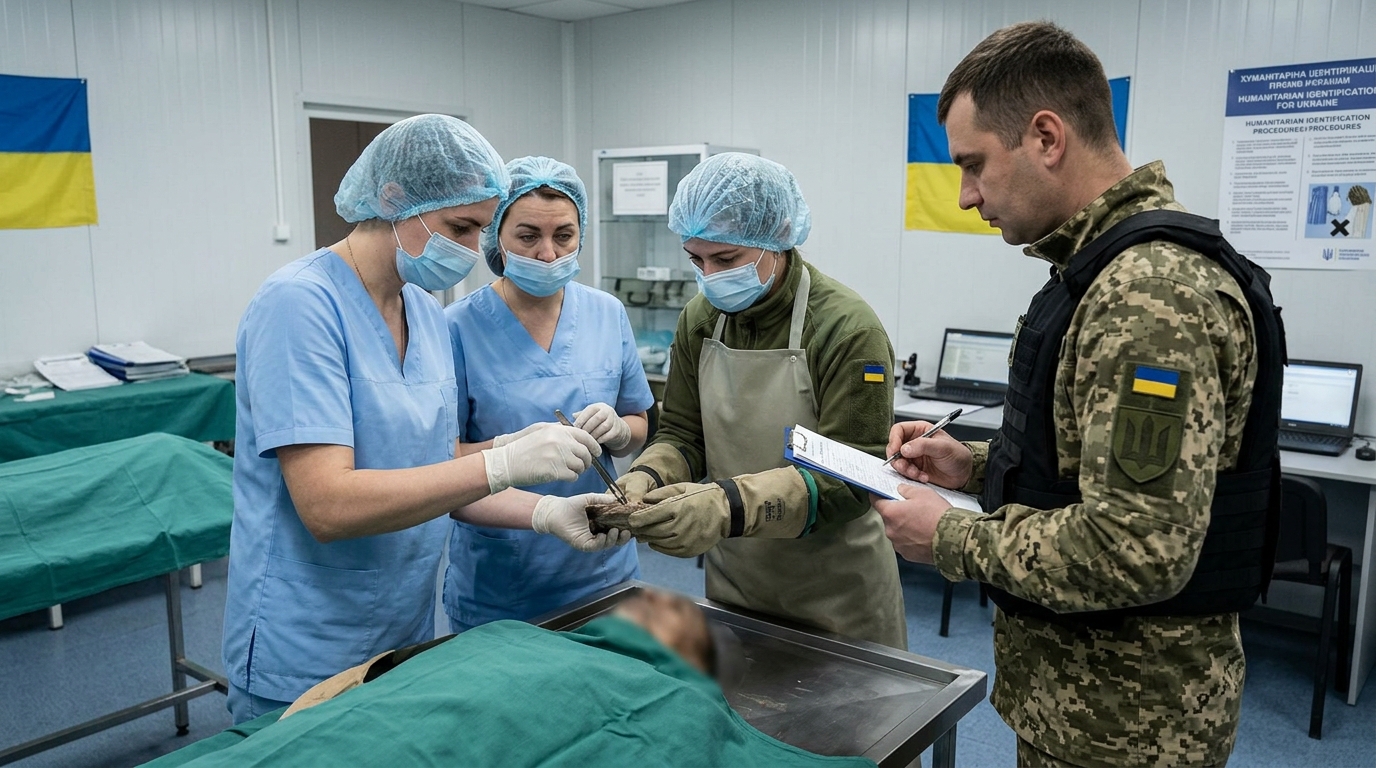
Police and Forensic Experts Increase Safety Measures as Returned Remains Undergo Detailed Examination
Ukrainian police officials have reported that explosive devices are being discovered with concerning frequency during examinations of repatriated bodies returned from Russia, adding another layer of complexity to the already difficult process of identifying fallen soldiers.
The revelation came from Ukrainian law enforcement officials involved in forensic investigations and identification efforts. According to authorities, specialists handling returned remains have repeatedly encountered dangerous objects, including grenades and other explosive devices, requiring heightened security procedures before forensic examinations can proceed.
The issue has drawn significant attention because Ukraine has carried out multiple large-scale repatriation operations since the start of the war, bringing home thousands of bodies believed to belong to Ukrainian service members. The latest findings have intensified discussions surrounding the Explosives in Repatriated Ukrainian Bodies investigation and the challenges facing forensic teams working to identify the dead.
Police Describe Repeated Discoveries
The information was disclosed by Taras Tarasenko, a senior investigator with Ukraine’s National Police, who said forensic experts regularly inspect returned bodies for potentially dangerous objects before beginning identification procedures.
According to Tarasenko, explosive items including grenades have been discovered on multiple occasions during examinations of repatriated remains. Because of these risks, every body is subjected to a preliminary safety inspection before more detailed forensic work begins.
Authorities explained that these inspections are essential not only for preserving evidence but also for protecting medical examiners, police officers, and forensic specialists working in morgues and identification centers.
The growing number of cases has placed the spotlight on the Explosives in Repatriated Ukrainian Bodies issue, which officials say requires constant vigilance from investigative teams.
Safety Checks Now a Critical Step
Before identification procedures begin, specialists carefully examine returned remains for any objects that could pose a threat.
Officials say investigators search for documents, identification tags, mobile phones, bank cards, and personal belongings that may help establish a person’s identity. At the same time, they must ensure that no dangerous items are hidden within clothing, equipment, or the remains themselves.
Once safety checks are completed, forensic experts begin documenting physical characteristics, clothing details, tattoos, and other identifying features. DNA testing is often used when visual identification is not possible.
The discovery of Explosives in Repatriated Ukrainian Bodies has made these preliminary inspections even more important, according to law enforcement officials involved in the process.
Previous Case Raised Alarm Among Experts
The latest report follows an earlier incident that attracted widespread attention among forensic professionals.
In March 2026, specialists in the western Ukrainian city of Chernivtsi discovered an unexploded grenade inside the body of a returned Ukrainian soldier during an autopsy. According to local forensic officials, the device had become lodged inside the body without detonating. The discovery forced the evacuation of personnel from the facility while bomb disposal experts were called to safely remove and destroy the explosive.
Forensic officials described the incident as unprecedented. While explosive objects had occasionally been found in clothing or personal effects during previous examinations, finding an unexploded device inside a body represented a unique challenge for investigators.
The incident became one of the most widely discussed examples related to the broader Explosives in Repatriated Ukrainian Bodies investigation.
Challenges in Identifying Returned Remains
The discovery of explosive devices is only one of several difficulties facing Ukrainian forensic teams.
Officials say that repatriated remains often arrive in extremely poor condition. In some cases, body parts belonging to multiple individuals are mixed together, requiring extensive forensic analysis and DNA testing before identification can be completed.
Experts must carefully separate remains, document evidence, and coordinate with medical specialists to ensure accurate identification. The process can take weeks or even months depending on the condition of the remains and the availability of genetic samples.
Large-scale repatriation operations have increased the workload for forensic teams across Ukraine. Authorities have repeatedly emphasized the importance of identifying every individual and returning confirmed remains to families whenever possible.
Thousands of Bodies Returned Through Exchanges
Ukraine and Russia have conducted multiple repatriation operations throughout the war.
Recent exchanges have involved hundreds of bodies at a time, with Ukrainian authorities receiving remains that Russia claims belong to Ukrainian service members. Following each transfer, law enforcement agencies, forensic institutions, and other government bodies begin detailed identification procedures.
Officials say these operations require extensive coordination among the military, police, emergency services, forensic laboratories, and organizations responsible for prisoner-of-war and repatriation matters.
The scale of the effort highlights the enormous challenge facing investigators tasked with determining identities while also addressing safety concerns connected to the Explosives in Repatriated Ukrainian Bodies cases.
Growing Focus on Forensic Security
The latest revelations have prompted renewed attention to safety protocols within forensic facilities.
Experts say the presence of explosive devices, regardless of how they arrived, creates serious risks for personnel conducting examinations. As a result, specialized inspection procedures are being maintained before any autopsy or forensic analysis takes place.
Authorities continue to stress that protecting forensic workers is essential to ensuring that identification efforts can continue safely and effectively.
Looking Ahead
As repatriation operations continue, Ukrainian investigators are expected to maintain heightened security measures when examining returned remains.
The ongoing Explosives in Repatriated Ukrainian Bodies investigation underscores the difficult conditions faced by forensic teams working to identify fallen soldiers and provide answers to grieving families. While authorities continue gathering evidence and conducting examinations, officials say their priority remains ensuring safety, preserving evidence, and returning identified remains to their loved ones with dignity.