
Russia Expands Military Training in Sch
New Education Policy Increases Military Instruction for Russian Students Amid Ongoing Security Concerns
Russia is significantly expanding military-focused education in its schools, introducing more hours of practical Defense training for students as young as 11. The move comes as the country continues to prioritize national security education amid the ongoing war in Ukraine and rising tensions with Western nations.
Under new rules announced by Russia’s Education Ministry, students from grades 6 through 11 will spend a much larger portion of their mandatory homeland security classes on military-related instruction. The changes are scheduled to take effect at the beginning of the new academic year in September.
The decision has attracted international attention because it marks one of the most substantial expansions of military education in Russian schools since the collapse of the Soviet Union. Supporters say the program helps prepare young people for emergencies and national defense, while critics argue it reflects the growing militarization of Russian society.
Military Training Hours More Than Double
According to Russian Education Minister Sergei Kravtsov, military training will now account for 50 percent of the classroom time allocated to the compulsory subject known as “Fundamentals of Homeland Security and Defense.” Previously, military-focused instruction represented about 20 percent of the course.
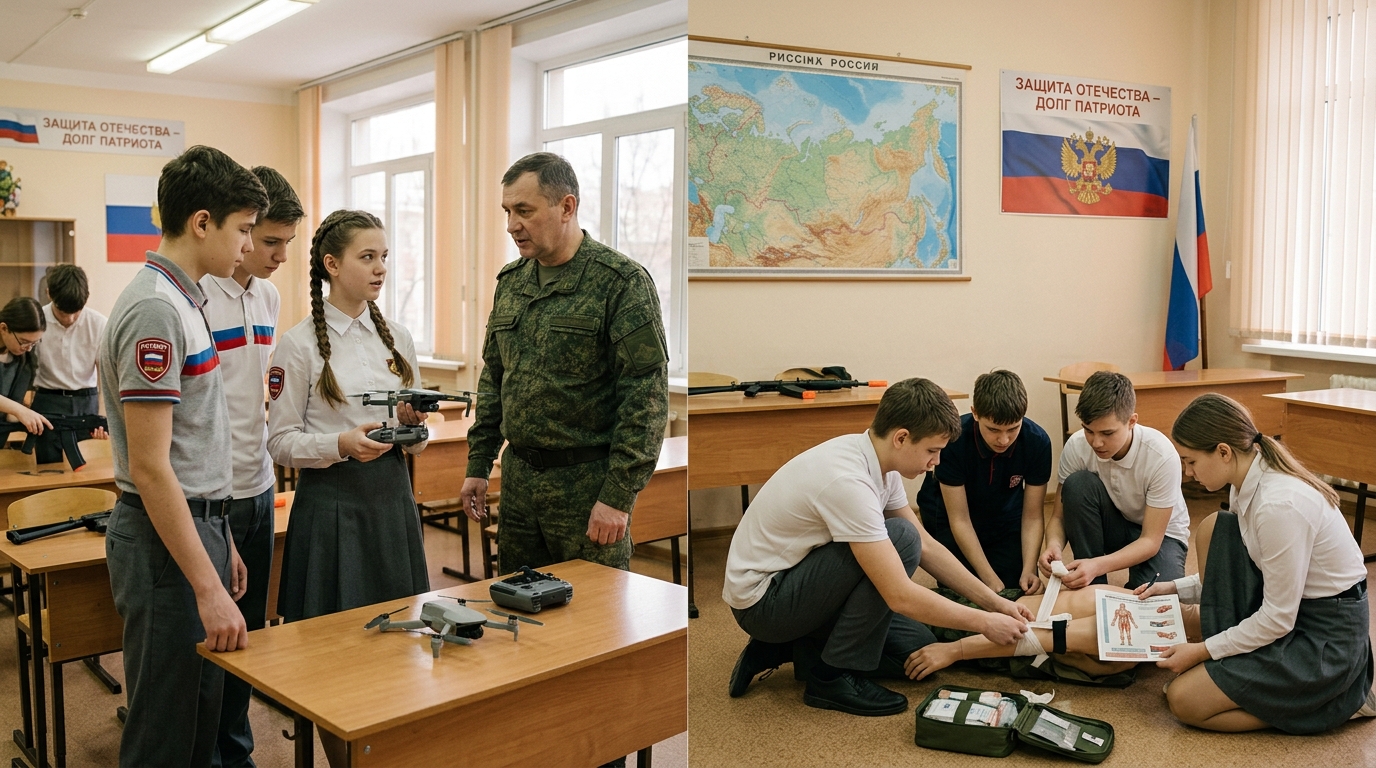
The full course consists of 34 hours annually, meaning students will receive at least 17 hours of military instruction each year. The expanded curriculum includes practical exercises, field training, and lessons involving modern technologies such as unmanned aerial vehicles, commonly known as drones.
The new Russia military training schools policy is part of a broader effort to strengthen defense awareness among younger generations and familiarize students with skills considered important during emergencies and national crises.
What Students Will Learn
The updated curriculum covers a range of subjects connected to defense and emergency preparedness.
Students will receive instruction in first aid, emergency response procedures, field exercises, and the operation of drones. Older students will also study topics related to military organization, national defense, and practical survival skills. Reports indicate that some lessons include firearms safety education, wartime preparedness concepts, and military drills.
Russian officials argue that these subjects provide valuable knowledge that can help citizens respond effectively during emergencies and contribute to national resilience.
The expansion of the Russia military training schools program reflects the growing importance Moscow places on defense-related education as geopolitical tensions continue to shape government policy.
Return of a Soviet-Era Tradition
Many observers have noted similarities between the new curriculum and Soviet-era military education programs.
During the Soviet period, older students participated in a course known as Initial Military Training, which included drill exercises, first aid, rifle familiarization, and field activities. That program was abolished after the collapse of the Soviet Union in the early 1990s.
However, military education gradually returned to schools after Russia launched its full-scale invasion of Ukraine in 2022. In 2023, military training components were added to school safety classes, and a revised homeland defense course was introduced the following year.
The latest reforms represent the most significant expansion so far, further embedding defense-related instruction within the national education system.
Growing Focus on Drone Technology
One of the most notable aspects of the updated curriculum is the inclusion of drone education.
The war in Ukraine has highlighted the growing role of unmanned aerial systems on the modern battlefield. Both Russia and Ukraine have relied heavily on drones for reconnaissance, surveillance, and other military functions throughout the conflict.
As a result, Russian education officials have emphasized the importance of teaching students about drone technology as part of broader national defense awareness. The inclusion of drone studies reflects how rapidly technological developments are changing military and security planning worldwide.
The Russia military training schools initiative therefore combines traditional defense education with lessons focused on emerging technologies.
Infrastructure and Implementation Challenges
Implementing the expanded curriculum may present challenges for some schools.
Reports indicate that Russian authorities have pushed educational institutions to develop facilities capable of supporting practical military instruction. Schools are expected to provide spaces and resources necessary for training exercises and other activities connected to the revised program.
Government investment in military-patriotic centers and youth training programs has also increased in recent years. These centers often host camps, educational events, and activities designed to promote defense awareness among students.
Officials say these investments are intended to ensure that schools have the infrastructure required to implement the new curriculum effectively.
International Reactions
The expansion of military education in Russia has generated discussion among international observers.
Some analysts view the reforms as part of a broader effort to strengthen national preparedness amid ongoing geopolitical tensions. Others see them as evidence of increasing militarization within Russian society as the conflict in Ukraine continues.
The policy has also attracted attention because it affects students beginning in middle school, exposing younger generations to defense-related instruction earlier than in previous years.
Looking Ahead
As the new academic year approaches, schools across Russia are preparing to implement the expanded curriculum. The initiative represents a major shift in how defense education is taught and highlights the growing role of national security themes within the country’s educational system.
Whether the program succeeds in achieving its stated goals will likely be closely watched both inside Russia and internationally. What is already clear is that the Russia military training schools policy marks a significant development in Russian education and reflects the broader security challenges shaping the country’s future.