Democrats and Republicans Face Rising Pressure From Their Own Voters as Foreign Policy Debates Reshape American Politics
The ongoing tensions surrounding Israel, Gaza, and Iran are creating unexpected challenges for both major political parties in the United States. What began as a foreign policy debate has increasingly become a domestic political issue, influencing primary elections, voter attitudes, and internal party dynamics.
Political analysts say the conflict has exposed growing disagreements between party leaders and their grassroots supporters. While Democratic and Republican leadership figures continue to defend long-standing foreign policy positions, many voters appear to be questioning traditional assumptions about military involvement, foreign aid, and America’s role in the Middle East.
As a result, the Israel Iran political divide has emerged as one of the most significant forces shaping political discussions ahead of future elections.
Democratic Party Faces Growing Progressive Pressure
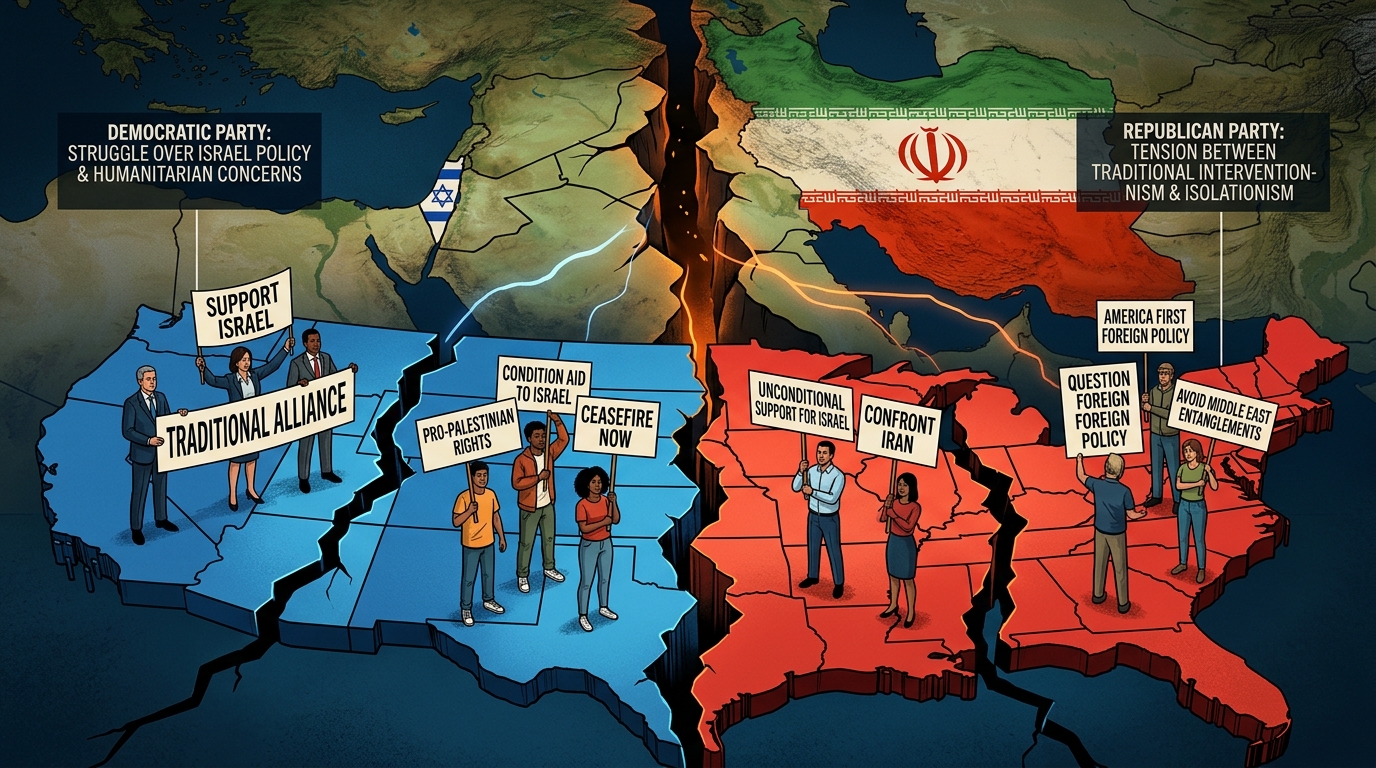
Within the Democratic Party, debates over Israel and Gaza have become increasingly visible.
Recent primary elections in New York highlighted the growing strength of progressive candidates who openly criticized U.S. support for Israel and called for stronger support for Palestinian rights. Several challengers defeated incumbent Democrats after campaigning on positions that were more critical of Israeli government policies than those traditionally supported by party leadership.
These victories have sparked discussion about whether progressive voices could gain even greater influence within the Democratic Party in the coming years.
Party strategists remain divided. Some believe the shift reflects changing attitudes among younger voters and urban communities. Others worry that positions popular in heavily Democratic districts may prove less effective in competitive swing states where economic concerns often dominate voter priorities.
The growing Israel Iran political divide has therefore become not only a foreign policy issue but also a test of how far Democratic leaders are willing to adapt to changing views within their own coalition.
Republicans Confront Questions About America First
Republicans are facing their own internal disagreements.
Former President Donald Trump built much of his political appeal around promises to reduce U.S. involvement in overseas conflicts and prioritize domestic concerns. However, debates surrounding Israel and Iran have complicated that message.
Some conservative voters and commentators have expressed concern about the possibility of deeper American involvement in Middle Eastern conflicts. Others continue to support strong U.S. backing for Israel and view military deterrence as essential to regional stability.
These differences have created tension within parts of the Republican coalition, particularly among younger voters and anti-interventionist conservatives who question long-term foreign military commitments.
Political observers note that the Israel Iran political divide is revealing competing visions of what the America First movement should represent in practice.
Foreign Policy Becomes a Domestic Election Issue
Historically, foreign policy has often played a secondary role in many U.S. elections compared with economic issues such as inflation, jobs, and healthcare.
However, recent developments suggest that international conflicts can quickly influence domestic political debates when they become tied to questions about government spending, military involvement, and national priorities.
Some progressive Democrats argue that foreign aid decisions should be scrutinized more closely alongside domestic spending needs. At the same time, some conservative voters question whether military commitments abroad align with promises to focus on challenges at home.
These discussions have broadened the scope of the Israel Iran political divide, transforming it into a larger debate about the role of American power in the modern World.
Leaders Struggle to Balance Competing Demands
One challenge facing both parties is managing increasingly diverse coalitions of voters.
Democratic leaders are attempting to balance support for Israel with growing criticism from progressive activists who want significant changes in U.S. policy toward the region. Meanwhile, Republican leaders must navigate tensions between traditional national security conservatives and newer populist factions skeptical of foreign interventions.
Political experts say both parties are trying to avoid alienating key voter groups ahead of future elections.
This balancing act has become more difficult as social media and alternative News platforms amplify voices that may not always align with official party positions. As a result, grassroots movements often gain visibility and influence much faster than in previous election cycles.
The Israel Iran political divide illustrates how rapidly foreign policy disagreements can evolve into broader political challenges for party leadership.
Could New Political Coalitions Emerge?
While progressive Democrats and MAGA conservatives differ sharply on most issues, analysts have noted that some voters from both groups express skepticism toward prolonged military engagements and large-scale foreign commitments.
These similarities do not suggest a formal political alliance. However, they do highlight changing attitudes toward interventionist policies that were once widely accepted across the political spectrum.
Some experts believe these shifts could reshape future debates about Defense spending, military action, foreign aid, and America’s international responsibilities.
Whether those changes remain limited to activist circles or spread more broadly among voters could influence future presidential campaigns and congressional elections.
Looking Ahead
As conflicts involving Israel and Iran continue to dominate international headlines, their political impact inside the United States is likely to remain significant.
Both Democrats and Republicans face pressure from voters who increasingly expect elected officials to explain how foreign policy decisions connect to domestic priorities. At the same time, party leaders are attempting to maintain coalitions that include voters with widely differing views on international affairs.
For now, the Israel Iran political divide serves as a reminder that foreign policy debates rarely stay overseas for long. Instead, they often become powerful forces shaping political identities, election strategies, and the future direction of America’s two major parties.
As the next election cycle approaches, the debates surrounding Israel, Iran, military intervention, and national priorities are expected to remain at the center of American political discussion.