
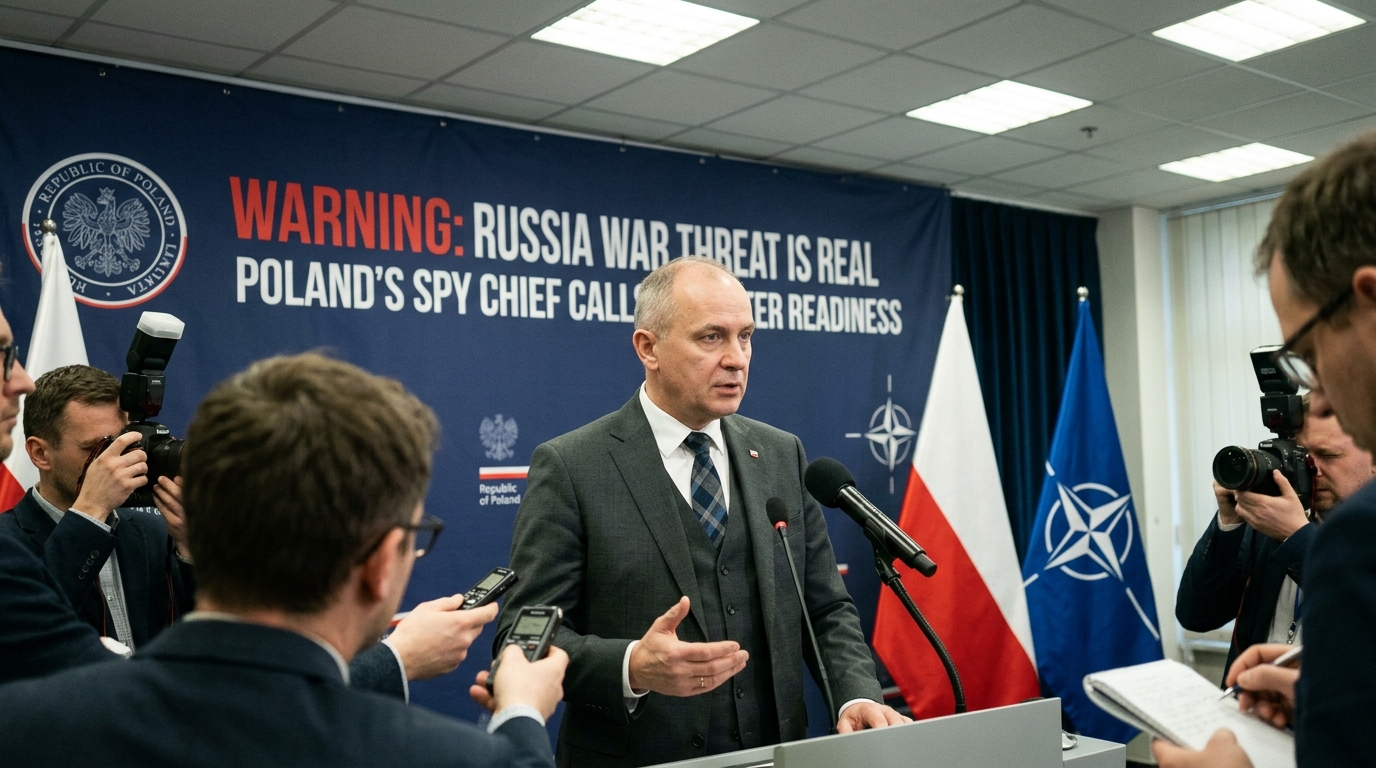
Polish Intelligence Chief Says Europe Must Prepare for Possible Russian Escalation
Poland’s top foreign intelligence official has issued a stark warning about the growing threat posed by Russia, saying that Europe can no longer ignore the possibility of future military confrontation. The warning comes as the war in Ukraine continues and concerns rise about Moscow’s long-term ambitions in Eastern Europe.
Speaking in a rare interview, Poland’s foreign intelligence chief Paweł Szota said the country must operate as if the risk of conflict with Russia is real and not merely theoretical. His comments reflect growing anxiety among NATO members located on the alliance’s eastern border, where officials have repeatedly warned about Russian military and hybrid activities.
Russia War Threat Remains a Major Concern
According to Szota, Russia continues to view Poland and other NATO eastern flank nations as obstacles to its strategic goals. He argued that the Kremlin remains willing to accept economic hardship and domestic challenges in pursuit of its geopolitical objectives.
The Russia war threat has become one of the most significant security concerns for Poland in recent years. As a key NATO member and one of Ukraine’s strongest supporters, Poland has invested heavily in Defense and military preparedness.
Szota suggested that Russian leadership may continue escalating tensions because the war in Ukraine has not produced the quick victory Moscow expected. He noted that Russian authorities have repeatedly tested Western reactions through various forms of pressure and intimidation.
Concerns Over Hybrid Warfare
Polish intelligence officials are particularly worried about hybrid threats. These activities can include cyberattacks, disinformation campaigns, sabotage operations, and attempts to create political instability.
Security experts have warned that Russia often uses methods that stop short of full-scale military confrontation while still creating pressure on neighboring countries. Such actions are designed to test political resolve and expose weaknesses within NATO.
The Russia war threat is therefore not limited to tanks and missiles. Officials believe modern conflicts increasingly involve information warfare, cyber operations, and covert activities aimed at undermining public confidence.
Recent reports from Polish and European security agencies have highlighted growing concerns over Russian-linked influence campaigns and sabotage attempts across Europe. These developments have strengthened calls for greater vigilance and cooperation among NATO members.
Baltic States and Poland in Focus
One of the key concerns raised by Polish intelligence involves potential provocations targeting the Baltic states or Poland. Officials are evaluating various scenarios that could challenge NATO without immediately triggering a large-scale military response.
Szota indicated that Moscow may continue probing alliance defenses and political unity. Analysts argue that such actions could be intended to test how quickly NATO members respond to emerging security threats.
The Russia war threat is especially important for countries located near Russia and Belarus. These nations have increased defense spending, expanded military training programs, and strengthened border security measures in response to growing regional tensions.
Poland has emerged as one of Europe’s leading voices calling for stronger deterrence measures. Government officials repeatedly stress that preparation and readiness remain essential to preventing future aggression.
NATO Watches Closely
NATO leaders continue monitoring developments along the alliance’s eastern border. The organization has increased troop deployments, conducted military exercises, and enhanced intelligence-sharing efforts among member states.
Poland’s warning comes amid broader discussions about European security and defense readiness. Several military leaders have suggested that Russia may retain the ability to sustain military pressure for years despite economic sanctions and battlefield challenges.
Many experts believe maintaining unity among NATO members is critical. They argue that clear signals of collective defense help reduce the likelihood of miscalculation and discourage potential provocations.
The Russia war threat remains a central topic in European security planning, particularly as the conflict in Ukraine continues to reshape the continent’s defense landscape.
Europe Faces a New Security Reality
The latest comments from Poland’s intelligence chief underline how dramatically Europe’s security environment has changed since Russia launched its full-scale invasion of Ukraine.
While officials emphasize that no immediate large-scale conflict is expected, they argue that preparedness remains essential. Governments across Europe are investing in military modernization, cybersecurity, intelligence capabilities, and civil defense planning.
For Poland, the message is clear: the risks cannot be ignored. Authorities believe that staying prepared, strengthening alliances, and maintaining vigilance are the best ways to protect national security and regional stability.
As tensions between Russia and the West continue, Poland’s warning serves as another reminder that security concerns on NATO’s eastern flank remain far from resolved.