
Investigators Search for Answers After Aircraft Carrying Skydivers Crashes Shortly After Takeoff
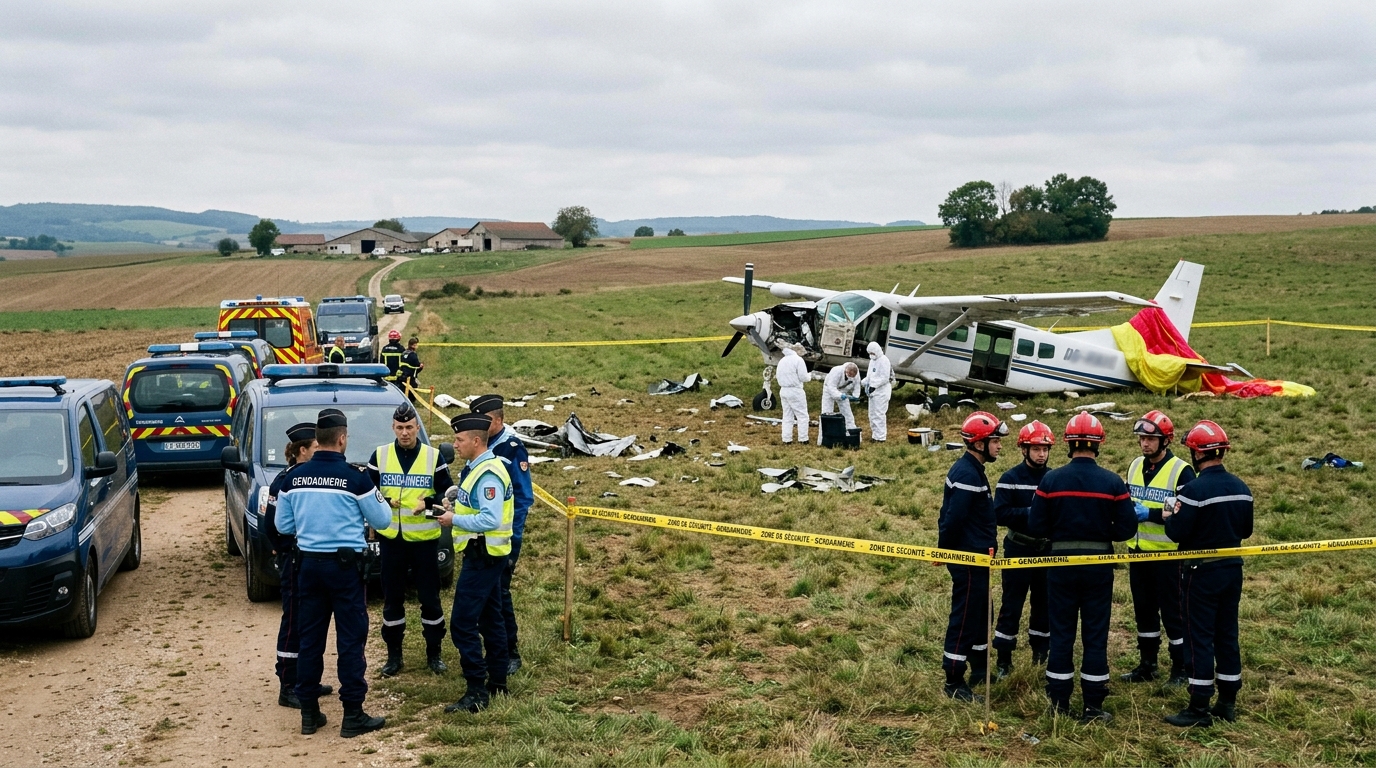
A devastating aviation tragedy has struck northeastern France after a skydiving aircraft crashed shortly after takeoff, killing all 11 people on board. The accident occurred near the town of Tomblaine, close to the city of Nancy, and has become one of the deadliest light-aircraft disasters in France in recent years.
French authorities confirmed that the victims included five skydiving instructors, five people preparing for parachute jumps, and the pilot. Emergency crews rushed to the scene, but there were no survivors. The incident has shocked local communities and prompted a full-scale investigation into what caused the aircraft to fall from the sky.
The France Skydiving Plane Crash happened on Sunday morning shortly after the aircraft departed from Nancy-Essey airfield. According to regional officials, the plane appeared to suffer a serious malfunction moments after takeoff before plunging almost vertically to the ground.
Authorities said the aircraft crashed only a short distance from the runway, narrowly avoiding homes, roads, and commercial buildings. Officials noted that the outcome could have been even worse if the plane had come down only a few meters away from its actual crash site.
Emergency responders, police officers, aviation investigators, and medical teams quickly arrived at the location. The area was secured as rescue teams worked through the wreckage and began gathering evidence to determine what happened during the flight’s final moments.
The France Skydiving Plane Crash has generated widespread attention across Europe because of the tragic loss of life and the unusual nature of the accident. Skydiving flights are generally conducted under strict safety regulations, making fatal incidents involving entire groups of passengers relatively rare.
Officials identified the aircraft as a single-engine Pilatus PC-6, a model commonly used for parachuting operations due to its ability to carry jumpers and operate from smaller airfields. The aircraft reportedly belonged to a skydiving organization that regularly conducted training and recreational jumps in the region.
Witnesses described a frightening scene.
According to accounts collected by investigators, the aircraft appeared to be climbing normally before suddenly losing power. One witness reported hearing the engine noise stop unexpectedly before the plane descended rapidly. Authorities have not yet confirmed whether engine failure played a role in the accident, but investigators are examining all possible causes.
Among the victims were five first-time participants who had signed up for tandem skydives. Several reports indicated that some of the passengers worked in healthcare and had planned the experience as a recreational outing. Family members and friends who had accompanied them to the airfield reportedly witnessed the crash, adding to the emotional impact of the tragedy.
The France Skydiving Plane Crash has prompted an outpouring of condolences from government officials, local leaders, and members of the aviation community.
French Interior Minister Laurent Nunez and other senior officials traveled to the area to assess the situation and offer support to affected families. Psychological assistance teams were deployed to help relatives and witnesses cope with the trauma caused by the disaster.
Local authorities described the accident as one of the most serious civilian light-aircraft crashes seen in France in decades. While commercial aviation remains among the safest forms of transportation, smaller aircraft accidents continue to present challenges for aviation safety agencies around the World.
Investigators from France’s aviation safety authorities have launched a formal inquiry. Specialists will examine maintenance records, weather conditions, pilot communications, engine components, and flight operations data to identify the factors that led to the crash. Officials emphasized that determining the exact cause may take weeks or even months.
The weather at the time of the accident has also become part of the investigation. The region had recently experienced unusually high temperatures as a major heatwave affected parts of France. Authorities have not suggested that weather was responsible, but experts are reviewing all available information.
The France Skydiving Plane Crash has reignited discussions about aviation safety standards for recreational flights and parachuting operations. While such activities are generally considered safe when conducted according to regulations, accidents involving small aircraft often raise questions about maintenance procedures, pilot training, and operational oversight.
Aviation experts note that the Pilatus PC-6 has a long operational history and is widely used around the world. Investigators will therefore focus on the specific circumstances surrounding this flight rather than making assumptions based solely on the aircraft model.
Residents of Tomblaine and Nancy have expressed shock at the tragedy. Many described the accident as a heartbreaking event that has deeply affected the local community. Memorial tributes have begun appearing near the crash site as people gather to honor the victims and support grieving families.
International aviation organizations are also monitoring the investigation closely. Findings from major accident inquiries often contribute to improved safety recommendations and operational procedures designed to prevent similar incidents in the future.
For now, authorities remain focused on supporting families and uncovering the facts behind the accident. The loss of eleven lives in a matter of moments has left a profound impact on the region and the broader aviation community.
As investigators continue their work, the France Skydiving Plane Crash stands as a tragic reminder of how quickly an ordinary recreational activity can turn into a devastating disaster. The results of the investigation will be crucial in understanding what caused the crash and what lessons can be learned to improve aviation safety moving forward.