
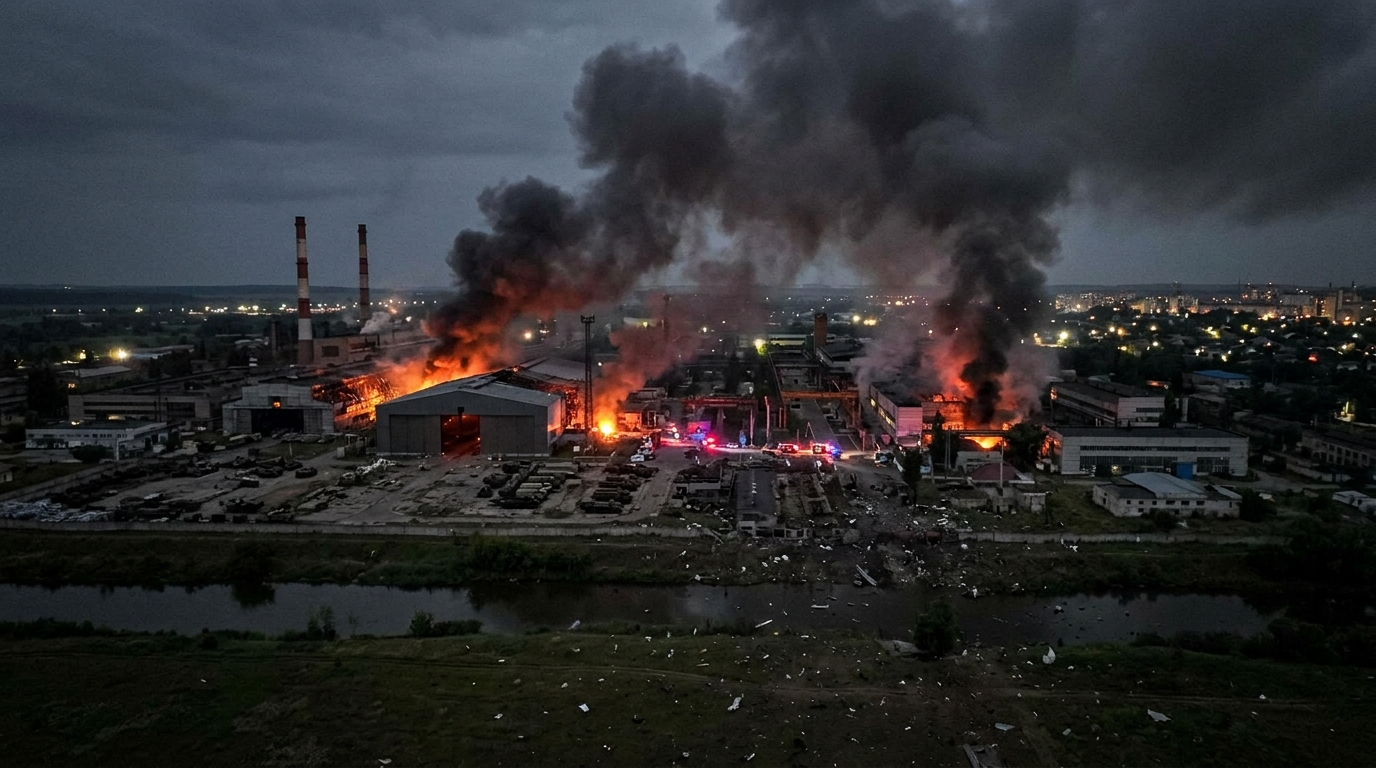
Long-Range Drone and Missile Campaign Targets Key Military Production Sites Across Russia
Ukraine has intensified its long-range military campaign against Russia, carrying out a record number of strikes on Defense industry facilities during June 2026. The attacks mark a significant escalation in Kyiv’s strategy of targeting military production centers deep inside Russian territory, aiming to weaken Moscow’s ability to sustain its war effort.
According to recent reports, June became the most active month of the year for Ukrainian attacks on Russia’s military-industrial complex. Multiple defense plants, electronics facilities, missile component factories, and military production centers were targeted as Ukraine expanded its reach beyond the battlefield.
The Ukraine Strikes Russia Defense Industry campaign reflects Kyiv’s growing reliance on long-range drones and domestically developed missile systems capable of reaching targets hundreds of kilometers from the front lines.
Analysts say the strategy is designed to increase pressure on Russia by disrupting the factories and infrastructure that support weapons production. Rather than focusing solely on frontline military units, Ukraine is increasingly seeking to reduce Russia’s capacity to manufacture missiles, drones, armored vehicles, and other critical military equipment.
Reports indicate that at least 13 military-industrial facilities were struck during June alone, making it the busiest month for such operations since the start of 2026. Targets reportedly included missile electronics factories, drone component manufacturers, defense production plants, and other strategic facilities linked to Russia’s military sector.
One of the most notable attacks occurred in Voronezh, where Ukrainian forces claimed to have struck a facility involved in manufacturing electronic systems used for missile production. Ukrainian military officials described the site as an important element in Russia’s defense supply chain. Regional authorities in Russia confirmed significant damage and casualties following the attack.
The Ukraine Strikes Russia Defense Industry effort is part of a broader strategy announced by Ukrainian President Volodymyr Zelenskyy, who has spoken about increasing pressure on Russian military infrastructure through a sustained campaign of long-range operations.
Ukraine has increasingly invested in drone warfare and precision strike technologies. Military experts note that improvements in domestic drone production have allowed Ukrainian forces to launch larger and more sophisticated attacks than in previous years.
Data collected by defense analysts suggests that the number of confirmed long-range Ukrainian strikes nearly tripled during June compared with May. At the same time, Russian authorities reported intercepting hundreds of drones during several large-scale attacks, highlighting the growing intensity of the campaign.
According to military observers, Ukraine’s tactics increasingly resemble a strategy of overwhelming air defenses through volume. Large numbers of drones are launched simultaneously, creating challenges for Russian defensive systems tasked with protecting vast territories and numerous military installations.
The Ukraine Strikes Russia Defense Industry campaign has also focused on energy infrastructure that supports military operations. Oil facilities, fuel depots, and logistics centers have been targeted in an effort to reduce the resources available to Russian forces.
Several major energy sites have experienced disruptions following Ukrainian strikes this month. Analysts believe these attacks are intended not only to affect military logistics but also to increase economic pressure on Moscow’s wartime Economy.
In addition to drones, Ukraine has reportedly expanded the use of domestically developed long-range missile systems. Recent operations have demonstrated an ability to strike targets far from the front line, including facilities located hundreds of kilometers inside Russian territory.
Military analysts argue that these capabilities represent a major shift in the conflict. Earlier stages of the war were dominated by artillery exchanges and localized offensives. Today, both sides increasingly rely on long-range precision strikes to target critical infrastructure and strategic assets.
For Russia, defending against these attacks presents a significant challenge. The country’s air defense network must protect not only military bases and frontline positions but also industrial facilities, transportation networks, energy infrastructure, and major cities spread across a vast geographic area.
Some experts suggest that Russia’s size, once considered a strategic advantage, has become a vulnerability when facing large-scale drone operations. Covering such an extensive territory requires substantial resources and creates opportunities for attackers to identify gaps in defensive coverage.
The Ukraine Strikes Russia Defense Industry strategy has drawn attention from governments and military observers around the World. Supporters argue that targeting military production facilities is a legitimate effort to reduce Russia’s ability to continue offensive operations. Critics warn that deeper strikes could contribute to further escalation of the conflict.
Meanwhile, Russia has continued launching its own missile and drone attacks against targets inside Ukraine. Both countries have increasingly relied on long-range capabilities as the conflict evolves into a contest of industrial production, technological innovation, and strategic endurance.
The growing role of drones has become one of the defining features of the war. Ukrainian officials report hundreds of thousands of recorded drone strikes against Russian targets over the past year, reflecting the rapid expansion of unmanned warfare.
As June comes to a close, the scale and frequency of Ukrainian attacks on Russia’s defense sector highlight a new phase in the conflict. Rather than focusing exclusively on battlefield positions, Ukraine is increasingly attempting to weaken the industrial foundations that support Russia’s military operations.
Whether these strikes will significantly affect Russia’s long-term war capabilities remains uncertain. However, the record-breaking pace of attacks during June demonstrates Kyiv’s determination to expand the conflict beyond the front lines and place growing pressure on key elements of Russia’s military-industrial complex.
With both sides continuing to develop new technologies and adapt their strategies, the battle over military production capacity may become just as important as developments on the battlefield itself in shaping the future course of the war.