Planned Negotiations Frozen After Escalating Military Activity Raises New Concerns Across the Gulf
A growing dispute over control and navigation in the Strait of Hormuz has triggered a new diplomatic crisis between the United States and Iran, while also claiming a civilian life in the Gulf region.
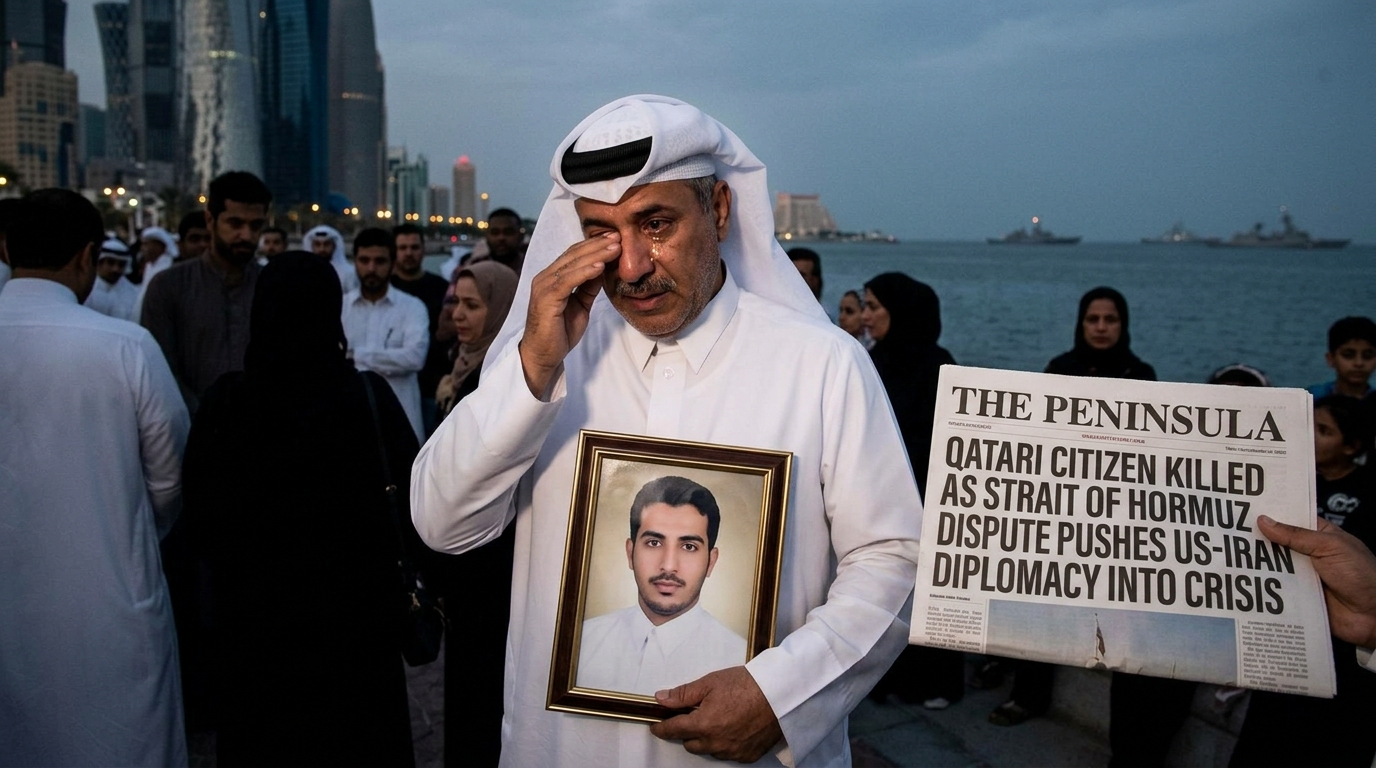
Qatari authorities confirmed that one of their citizens was killed after being struck by shrapnel linked to ongoing military activity in the area. The incident occurred as tensions between Washington and Tehran escalated once again, forcing the suspension of planned technical talks that were expected to take place in Switzerland.
The latest developments have increased concerns about regional stability and raised fresh questions about the future of diplomatic efforts aimed at preventing a wider conflict.
The Strait of Hormuz Dispute has now become one of the most important geopolitical issues in the Middle East, affecting not only regional security but also global trade and energy markets.
According to Qatar’s Interior Ministry, the incident began when a vessel carrying two individuals failed to return on schedule. Security and maritime authorities launched an immediate search operation and located the vessel the following morning.
Officials reported that the Qatari citizen had died after being hit by shrapnel resulting from military operations in the region. A second individual, described as an Arab national, was injured but survived and was transported for medical treatment. Authorities stated that his condition was stable.
The death represents one of the first publicly reported civilian casualties connected to the latest escalation and highlights the growing risks faced by civilians and commercial operators working near the strategic waterway.
The Strait of Hormuz Dispute comes at a particularly sensitive moment because diplomatic channels between the United States and Iran had recently shown signs of progress.
Reports indicated that technical discussions involving representatives from both countries were expected to take place in Switzerland with the support of international mediators. The talks were intended to strengthen communication and reduce the risk of future military confrontations.
However, the recent escalation forced negotiators to suspend those plans. According to reports, discussions have been frozen until the security situation becomes clearer.
At the center of the disagreement is a major dispute regarding the interpretation of a memorandum of understanding reached between Washington and Tehran.
Iranian Foreign Minister Abbas Araghchi argued that understandings reached during negotiations granted Tehran primary responsibility for managing movement through the Strait of Hormuz. Iranian officials have stated that no other country or organization should exercise authority over navigation arrangements in the waterway.
The United States strongly rejects that interpretation.
American officials maintain that the Strait of Hormuz remains an international maritime route that must remain open to global commercial traffic. Washington argues that the agreement does not give Iran Exclusive authority over the passage and that freedom of navigation remains a fundamental principle of international commerce.
The disagreement has transformed the Strait of Hormuz Dispute into a broader confrontation involving military operations, diplomatic tensions, and competing interpretations of existing agreements.
Recent events have further intensified the situation.
Reports indicate that Iran targeted a vessel attempting to travel near the coast of Oman rather than follow a route Tehran preferred. In response, U.S. forces reportedly carried out strikes against Iranian communications infrastructure, drone-related facilities, radar systems, and missile-linked sites positioned near the strait.
The U.S. military stated that the strikes were intended to respond to what it described as continued threats against commercial shipping. American officials also accused Iranian forces of attacking a tanker carrying more than two million barrels of crude oil.
Iran denied those accusations and responded with its own criticism of Washington’s actions.
Iranian authorities argued that American strikes violated previous understandings between the two sides and accused the United States of escalating tensions. Tehran subsequently announced retaliatory actions targeting U.S. military facilities in the Gulf region.
The Strait of Hormuz Dispute is particularly significant because the waterway plays a critical role in the global Economy.
A substantial percentage of the World’s oil exports pass through the narrow shipping corridor each day. Any disruption to maritime traffic can quickly influence global energy prices, shipping costs, and investor confidence.
Energy analysts note that even limited military incidents can affect international markets because traders closely monitor developments in the Gulf. Concerns about potential disruptions often lead to volatility in oil prices and increased uncertainty among shipping companies and insurers.
Beyond economic concerns, the latest escalation also places additional pressure on regional governments.
Countries throughout the Gulf have attempted to avoid becoming directly involved in the confrontation while simultaneously supporting efforts to maintain stability. Qatar, in particular, has played an important role in facilitating dialogue between the United States and Iran.
The death of a Qatari citizen therefore adds a new and sensitive dimension to the crisis.
Regional observers say the incident could increase calls for stronger measures to protect civilians and commercial vessels operating near conflict zones. It may also encourage renewed diplomatic efforts aimed at preventing further escalation.
International reaction has largely focused on the need for restraint.
Governments and diplomatic organizations have urged both Washington and Tehran to return to negotiations and avoid actions that could further destabilize the region. Many officials fear that continued military exchanges could undermine years of diplomatic work and increase risks to global trade.
For now, the future of the planned Switzerland talks remains uncertain.
The suspension of discussions demonstrates how fragile the current diplomatic process has become. While neither side appears eager for a larger conflict, fundamental disagreements over maritime authority and regional security remain unresolved.
As tensions continue, the Strait of Hormuz remains at the center of one of the world’s most important geopolitical disputes.
The death of a civilian, the freezing of negotiations, and the ongoing disagreement over control of the strategic waterway have combined to create a challenging situation for diplomats and policymakers alike.
Whether negotiations can be revived will depend largely on the ability of both sides to reduce tensions and find common ground on one of the most strategically important waterways in the world. Until then, the Strait of Hormuz Dispute is likely to remain a major source of uncertainty for the Middle East and the international community.