Analysts Debate Whether Ceasefire Represents Strategic Success or Recognition of War’s Limits
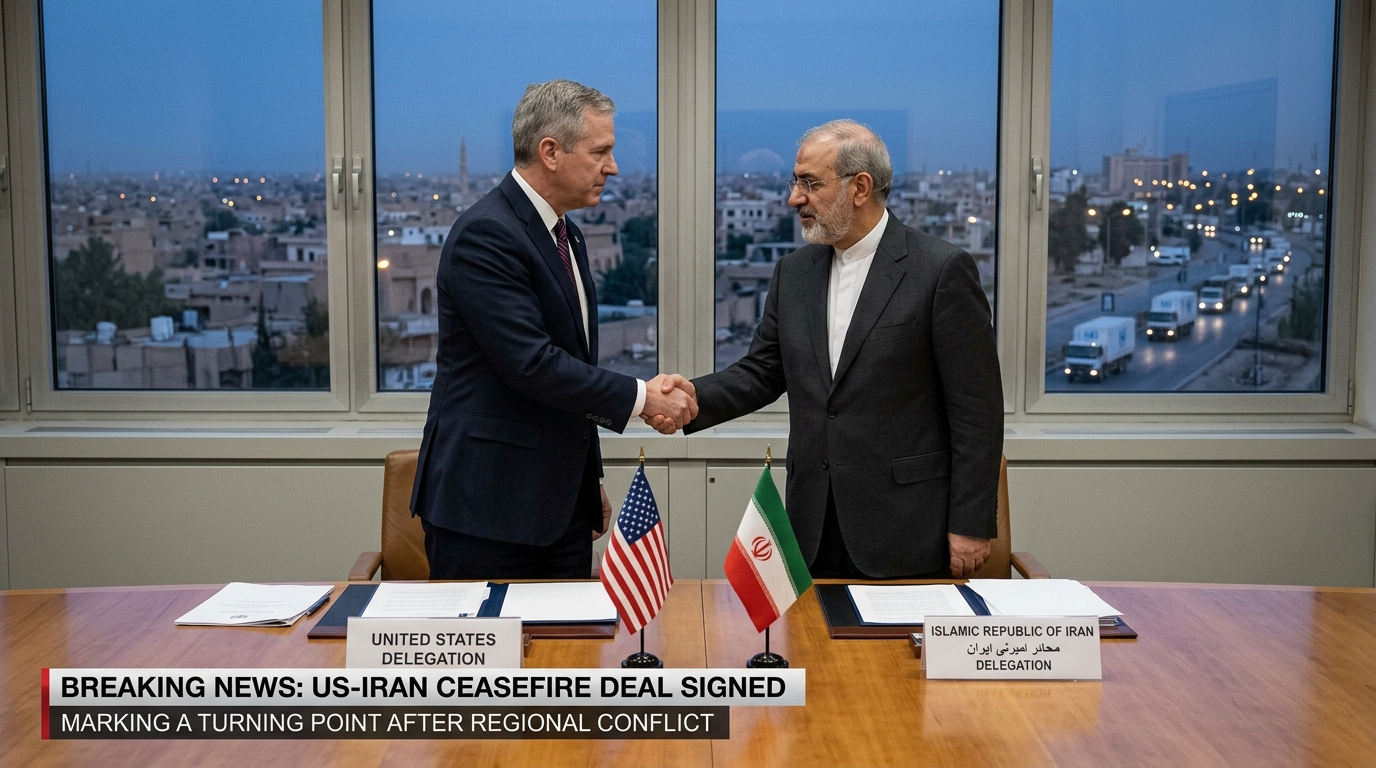
US Iran Ceasefire Deal : The ceasefire agreement between the United States and Iran is being viewed by many analysts as more than just an effort to stop fighting. For some observers, it represents a major strategic turning point after months of costly military confrontation that failed to produce several of Washington’s most ambitious objectives.
The conflict began with expectations that American military power could significantly weaken Iran’s military capabilities, disrupt its regional network of allies and proxies, and create enough pressure to force a new political and security arrangement favorable to Washington. However, as the war continued, the costs of achieving those goals increased dramatically.
The US Iran Ceasefire Deal has therefore become the focus of a broader debate about the effectiveness of military power in modern conflicts and the limits of strategic pressure in the Middle East.
Throughout the conflict, the United States maintained that its military operations were designed to protect regional stability, defend international shipping routes, and deter future threats. American officials argued that military action was necessary to respond to attacks on commercial vessels, regional allies, and strategic infrastructure.
Yet as fighting expanded, the financial and military burden grew. Reports indicated that the conflict required significant expenditures, increased military deployments, and extensive logistical support across the region. At the same time, tensions affected key shipping routes, energy markets, and diplomatic relationships with regional partners.
Supporters of the ceasefire argue that it prevents further escalation and creates an opportunity for diplomacy. Critics, however, contend that the agreement reflects the reality that military action alone could not deliver the sweeping political outcomes initially envisioned.
The US Iran Ceasefire Deal includes measures aimed at reducing hostilities, reopening critical maritime routes, and establishing mechanisms to prevent accidental escalation. It also recognizes existing realities on the ground rather than attempting to impose a decisive military outcome.
One of the most closely watched aspects of the agreement involves the Strait of Hormuz. The strategic waterway handles a significant share of global energy shipments, making stability in the area a priority for governments and markets around the World. The ceasefire framework seeks to ensure continued navigation and reduce risks to commercial shipping.
Analysts note that such provisions often emerge when both sides conclude that continued fighting offers diminishing returns. Rather than pursuing total victory, governments may choose arrangements that limit losses and stabilize conditions.
The US Iran Ceasefire Deal has also sparked discussion about the broader balance of power in the region. Some experts argue that the conflict demonstrated America’s ability to project force and inflict significant costs on adversaries. Others believe it highlighted the challenges of achieving long-term political transformation through military means alone.
Iran emerged from the conflict with substantial damage to military infrastructure and economic assets. However, the country’s political leadership and core state institutions remained intact. This outcome has led some observers to argue that the original goals of fundamentally reshaping Iran’s strategic position were not fully achieved.
For Washington, the ceasefire presents both opportunities and challenges. Politically, U.S. leaders are expected to emphasize achievements such as protecting maritime trade, limiting escalation, and bringing Iran into negotiations. These arguments are likely to form a central part of the administration’s public messaging.
At the same time, critics point to the high costs associated with the conflict. They argue that if major objectives such as regime change, complete military disarmament, or long-term deterrence were not achieved, questions will remain about the overall effectiveness of the campaign.
The US Iran Ceasefire Deal is therefore being interpreted differently by various audiences. Allies may view it as a practical decision to avoid a prolonged regional war. Adversaries may see it as evidence that sustained resistance can eventually lead to negotiations even after extensive military pressure.
The conflict has also contributed to a larger conversation about the future of military intervention in the Middle East. Over the past two decades, policymakers have repeatedly faced questions about the costs, risks, and long-term outcomes of military campaigns in the region.
Many analysts believe the latest war reinforces a growing lesson: modern conflicts often produce outcomes that are more complex than initial expectations. Military superiority can deliver tactical victories, but achieving lasting political change remains significantly more difficult.
Economic considerations have also played a major role. Rising military expenditures, disruptions to trade routes, and uncertainty in energy markets added pressure on decision-makers seeking a path toward de-escalation. As costs mounted, the incentive to negotiate increased for all parties involved.
International reactions to the ceasefire have generally been positive. Governments across Europe, Asia, and the Middle East have welcomed efforts to reduce tensions and prevent further instability. Business leaders and energy markets have also responded favorably to signs that shipping routes may remain open and secure.
The US Iran Ceasefire Deal may ultimately be remembered less for the document itself and more for what it reveals about the changing nature of global power. Many experts argue that modern conflicts are increasingly shaped by economic resilience, political endurance, technological adaptation, and international diplomacy rather than military force alone.
Whether the agreement becomes a foundation for lasting peace or merely a pause in a longer confrontation remains uncertain. Much will depend on how both sides implement their commitments and whether future negotiations can address the deeper disputes that fueled the conflict.
For now, the ceasefire stands as a significant milestone. It marks the end of a costly chapter in regional tensions while opening a new phase of diplomatic engagement. At the same time, it has reignited debate about the limits of military power and the challenges of achieving ambitious political goals through force.
As policymakers, analysts, and allies assess the aftermath, one conclusion appears increasingly clear: the conflict has reshaped perceptions of strategy, deterrence, and power in the Middle East, and its lessons are likely to influence regional policy for years to come.