Historic Vote Marks Major Shift in Israeli Policy and Sparks International Attention
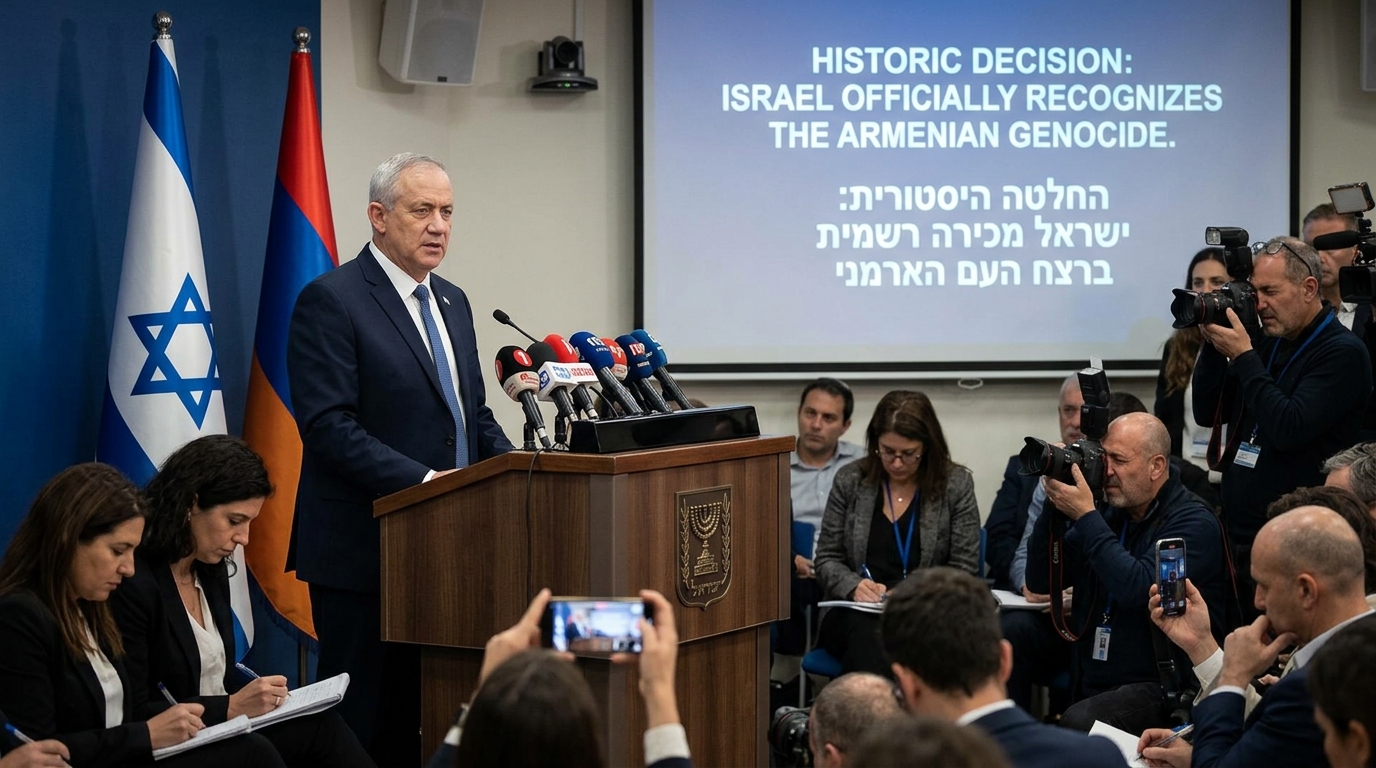
In a historic move that could reshape regional diplomacy and international discussions about historical accountability, the Israeli government has voted to formally recognize the Armenian Genocide. The decision ends decades of reluctance by successive Israeli governments and represents one of the most significant changes in Israel’s approach to a sensitive historical issue.
The government approved the resolution following a proposal submitted by Foreign Minister Gideon Sa’ar. Shortly after the vote, Sa’ar described the decision as a moral responsibility and an important step toward recognizing historical truth.
The announcement immediately attracted global attention because Israel had long avoided officially recognizing the Armenian Genocide despite repeated calls from historians, lawmakers, and human rights advocates. The issue has remained politically sensitive for years due to Israel’s diplomatic and strategic relationship with Turkey.
The Israel Recognizes Armenian Genocide decision comes more than a century after the mass killings, deportations, and persecution of Armenians in the final years of the Ottoman Empire. Historians widely estimate that approximately 1.5 million Armenians died during the events that took place between 1915 and 1917. Many countries and international organizations have formally recognized those events as genocide.
Speaking after the vote, Sa’ar said it is never too late to do what is right and emphasized that acknowledging historical facts is an important moral duty. He noted that the tragedy not only caused immense loss of life but also led to the destruction of a rich cultural and historical heritage.
The resolution is expected to be presented to the Knesset for further consideration, marking the next stage in the recognition process. While the government vote is significant, parliamentary approval would further strengthen the official status of the decision within Israeli policy.
The Israel Recognizes Armenian Genocide announcement represents a major turning point in a debate that has existed within Israeli politics for decades. Previous governments often expressed sympathy toward Armenian suffering but stopped short of formal recognition. Critics argued that political considerations frequently outweighed historical and humanitarian concerns.
Turkey has consistently rejected the characterization of the events as genocide. Turkish officials maintain that the deaths occurred during a period of war and instability and dispute the use of the term genocide. Because of these disagreements, many governments have faced diplomatic challenges when considering recognition.
Israel’s previous reluctance to recognize the genocide was often linked to its complex relationship with Turkey. Although ties between the two countries have experienced periods of cooperation and tension, policymakers were frequently cautious about taking actions that could affect diplomatic relations.
The Israel Recognizes Armenian Genocide decision now places Israel alongside numerous countries that have already formally acknowledged the genocide. According to international records, more than 30 United Nations member states, including the United States, Canada, Germany, and Russia, have recognized the Armenian Genocide. The European Parliament and the Holy See have also adopted official recognition.
Armenian organizations and advocacy groups welcomed the announcement, describing it as a significant step toward historical justice. Many supporters argue that official recognition helps preserve historical memory and combats efforts to deny or minimize documented events.
Human rights experts often emphasize that recognition of historical atrocities plays an important role in education and prevention. They argue that acknowledging past crimes helps societies learn from history and reinforces commitments to protecting human rights.
The decision has also generated discussion inside Israel. Supporters view recognition as consistent with the country’s commitment to remembering historical suffering and confronting crimes against humanity. They argue that recognizing the experiences of the Armenian people reflects universal principles of justice and remembrance.
The Israel Recognizes Armenian Genocide vote arrives during a period of changing geopolitical dynamics in the Middle East and beyond. Analysts believe the move could influence Israel’s diplomatic relationships while also strengthening ties with Armenia and communities that have long advocated for recognition.
Observers note that the issue has been debated in Israeli political circles for many years. Various lawmakers introduced proposals in the past, but those efforts often failed to gain sufficient political support. The latest vote therefore represents the culmination of a long-running campaign that spanned multiple governments and political administrations.
Beyond its diplomatic significance, the decision carries symbolic weight. Recognition by Israel is viewed by many observers as particularly meaningful because of the country’s strong emphasis on historical memory, education, and remembrance of mass atrocities.
International reaction is expected to continue in the coming days as governments, historians, and advocacy organizations assess the implications of the announcement. Turkey may also respond formally, given its longstanding opposition to genocide recognition efforts around the World.
For Armenia and Armenian communities worldwide, the vote is likely to be seen as an important acknowledgment of historical suffering and a step toward broader international understanding of the events that occurred more than a century ago.
As the resolution moves to the Knesset, attention will remain focused on how the decision shapes Israel’s foreign policy and international relationships. Regardless of future diplomatic reactions, the government’s action has already secured a place in the country’s Political History.
The Israel Recognizes Armenian Genocide decision stands as one of the most consequential historical and diplomatic announcements made by the Israeli government in recent years, highlighting the continuing importance of historical memory in shaping modern international relations.