Massive Crowds Fill Hungarian Capital as LGBTQ+ Community and Supporters Mark a New Political Chapter
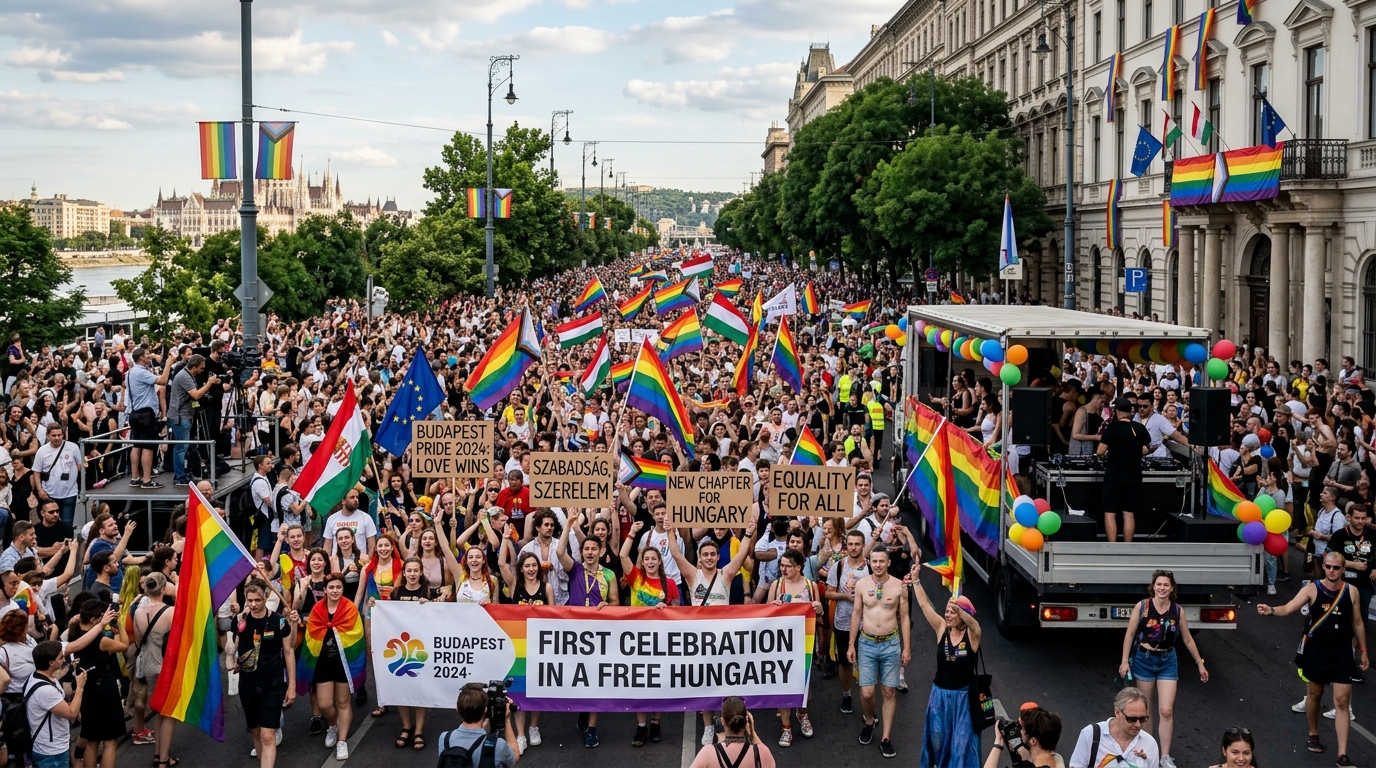
Thousands of people filled the streets of Hungary’s capital on June 27 as Budapest hosted its first Pride march since the electoral defeat of former Prime Minister Viktor Orban. The event, marked by rainbow flags, music, and public celebrations, attracted participants from across Hungary and neighboring European countries, making it one of the most closely watched public gatherings of the year.
The annual event carried added significance this time because it came during a period of political transition. Organizers described the march as both a celebration of LGBTQ+ rights and a demonstration of hope for greater inclusion and equality under Hungary’s new political leadership.
The Budapest Pride March quickly became a symbol of changing political dynamics in the country, drawing international attention and widespread media coverage.
Large Crowds Gather Across the Capital
Participants began gathering early in the day before marching through central Budapest. Colorful banners, rainbow flags, and messages promoting equality filled the streets as thousands of people joined the event.
One of the most memorable moments came when marchers crossed the iconic Elizabeth Bridge carrying large rainbow flags while spectators lined nearby streets and public spaces. The atmosphere remained peaceful, with participants celebrating diversity and expressing support for equal rights.
Organizers reported strong turnout numbers, although official attendance estimates varied. Many attendees described the event as one of the largest Pride celebrations held in Budapest in recent years.
The scale of the Budapest Pride March reflected growing public interest in discussions surrounding civil rights, social inclusion, and democratic participation.
Significance of the Event
This year’s march held particular political importance because it was the first Pride celebration since Viktor Orban’s defeat in national elections.
For years, Hungary’s LGBTQ+ community faced political and legal challenges under policies introduced by Orban’s government. Critics argued that several measures limited LGBTQ+ visibility and representation, while supporters of the former government maintained that those policies reflected traditional family values.
The election result earlier this year marked a significant change in Hungary’s political landscape. Many participants viewed the Pride event as an opportunity to celebrate not only LGBTQ+ identity but also what they saw as a new era of openness and dialogue.
The Budapest Pride March therefore became more than a cultural event; it also served as a reflection of broader social and political developments within the country.
International Attention Focuses on Hungary
The march attracted visitors, activists, diplomats, and journalists from across Europe.
Several international organizations praised the peaceful gathering and highlighted the importance of protecting freedom of assembly and equal rights. European lawmakers and human rights advocates closely monitored the event, viewing it as an indicator of how Hungary’s political climate may evolve in the coming years.
International media coverage emphasized the symbolic significance of the gathering, particularly given the country’s recent political changes.
Observers noted that Pride events often serve as important public expressions of social values and democratic freedoms. As a result, the Budapest Pride March gained attention well beyond Hungary’s borders.
Voices from the Crowd
Participants shared a wide range of motivations for attending the march.
Some joined to support LGBTQ+ friends and family members, while others wanted to promote equality and acceptance. Many attendees described feelings of optimism regarding Hungary’s future and expressed hope that public discussions surrounding human rights would become more constructive.
Families, students, professionals, and community organizations were all represented among the crowd. Several participants emphasized the importance of visibility and representation, saying that public events help foster understanding between different groups within society.
For many, the march provided an opportunity to celebrate identity while also engaging in broader conversations about inclusion and respect.
Political Transition and Public Expectations
Hungary’s recent election outcome has generated considerable discussion regarding future government policies.
While the country’s new leadership has not announced major legislative changes specifically related to LGBTQ+ issues, many citizens are watching closely to see whether social policies evolve in the coming months.
Political analysts suggest that expectations remain high among groups seeking greater protections and recognition. At the same time, Hungary continues to host diverse viewpoints on cultural and social issues, ensuring that public debate is likely to continue.
The visibility of the Budapest Pride March may influence future discussions about civil rights and social policy as the country adjusts to its changing political environment.
Economic and Tourism Impact
Large public events often generate economic benefits for host cities, and this year’s Pride celebration was no exception.
Hotels, restaurants, transportation services, and local businesses reported increased activity as visitors traveled to Budapest for the event. Tourism officials have increasingly highlighted the city’s reputation as a destination for cultural events, festivals, and international gatherings.
The influx of visitors also provided an opportunity to showcase Budapest’s historic architecture, vibrant cultural scene, and hospitality industry.
Many local business owners welcomed the additional economic activity generated by the celebrations.
A Broader European Context
Across Europe, Pride events continue to serve as platforms for advocacy, celebration, and community engagement.
While individual countries differ in their legal frameworks and social attitudes, Pride marches often encourage discussions about equality, representation, and human rights. Hungary’s event this year became particularly notable because of its timing within a period of political transition.
European observers noted that developments in Hungary could influence broader regional conversations regarding democracy, civil liberties, and minority rights.
The strong turnout at the Budapest Pride March demonstrated the continued importance of public participation in these discussions.
Looking Ahead
As the celebrations concluded, many participants reflected on the significance of the day and what it could mean for Hungary’s future.
Organizers described the event as a successful demonstration of unity, visibility, and peaceful civic engagement. They also expressed hope that the momentum generated by the gathering would encourage ongoing dialogue about equality and inclusion.
While political debates are likely to continue, the march highlighted the ability of public events to bring people together around shared values and aspirations.
For thousands who took part, the Budapest Pride March represented both a celebration of identity and a moment of reflection during an important chapter in Hungary’s evolving political story.
As the country moves forward, the event is likely to remain a significant symbol of civic participation, social change, and the ongoing conversation about rights and representation in modern Europe.