
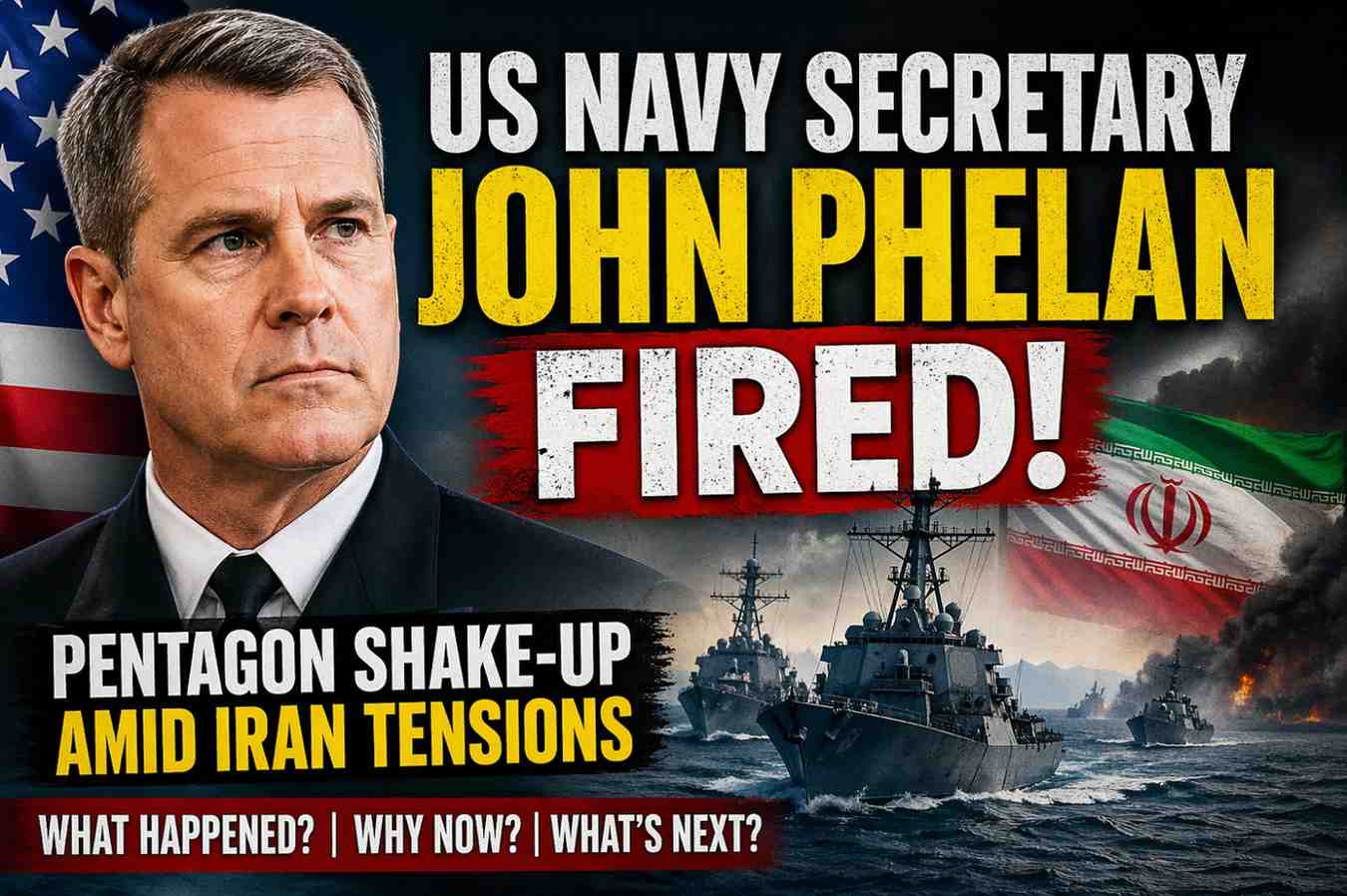
Washington, D.C. — US Navy Secretary John Phelan Fired – The sudden removal of John Phelan as U.S. Navy Secretary has caught many in Washington off guard, especially given the timing. With tensions between the United States and Iran still running high, the decision has quickly become a major talking point among Defense analysts and political observers.
There was no long statement, no detailed explanation—just confirmation that Phelan was out, effective immediately. That alone has fueled speculation. Leadership changes happen, of course, but doing it in the middle of a sensitive geopolitical situation is what’s raising eyebrows.
Timing That’s Hard to Ignore
Right now, the U.S. Navy is deeply involved in strategic operations linked to the broader Iran situation. Against that backdrop, removing a top civilian leader isn’t just a routine administrative move—it carries weight.
People familiar with defense operations say transitions like this can be managed, but they’re rarely ideal in tense moments. Even if everything continues smoothly on paper, shifts at the top can subtly affect how decisions are made and communicated.
Signs of Trouble Behind the Scenes
While officials have stayed tight-lipped, reports coming out of Washington suggest this didn’t happen overnight. There had apparently been friction for some time between Phelan and senior leadership, including Pete Hegseth.
The disagreements weren’t over one small issue either. They touched on bigger questions—how the Navy should position itself, what priorities should come first, and how closely military decisions should align with political direction.
At some point, those differences seem to have reached a breaking point.
Part of a Bigger Shift?
What makes this more interesting is that Phelan’s exit doesn’t appear to be an isolated case. There’s been a noticeable churn in top Pentagon roles recently, with several senior figures moving out or being replaced.
That’s led to a broader conversation: is this just routine reshuffling, or is there a deeper shift underway in how the U.S. defense system is being run?
Global Ripples
Moves like this don’t stay confined to Washington. Allies watch closely for signs of stability, while rivals look for any hint of distraction or division.
For now, officials insist that nothing changes operationally. The Navy continues its work, missions remain on track, and command structures are intact. But perception matters too—and sudden leadership changes can create uncertainty, even if only temporarily.
What Happens Now
An acting replacement is expected to handle responsibilities in the short term, but attention will quickly turn to who steps in permanently. In moments like this, continuity and clarity become just as important as strategy.
Conclusion
The exit of John Phelan isn’t just another headline—it’s happening at a time when every decision carries extra weight. Whether this turns out to be a simple leadership reset or part of something larger is still unclear.
What is clear, though, is that in a tense global climate, even internal changes can have far-reaching implications.