Alexander Lukashenko defends dialogue with Washington while reaffirming strong ties with Moscow and Beijing
Introduction
Lukashenko Slams West: Belarusian President Alexander Lukashenko has made it clear that his country’s engagement with the United States is not directed against its key allies, Russia and China.
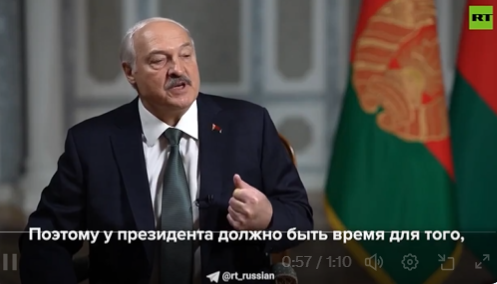
In an interview with RT, Lukashenko addressed criticism over ongoing Belarusian-American talks, emphasizing that Minsk’s foreign policy remains aligned with its long-standing strategic partners.
“Not Against Russia or China”
Responding to criticism, especially from voices in Russia, Alexander Lukashenko said:
“If someone in Russia accuses me of negotiating with the Americans, I can ask them: aren’t you in dialogue with the Americans? Yes, you are. But I’m not in dialogue with the Americans against Russia or China.”
He stressed that Belarus’s diplomatic outreach is balanced and pragmatic, not aimed at undermining its closest allies.
Gratitude Toward Allies
Lukashenko highlighted the role of Russia and China in supporting Belarus during difficult times, particularly when Western nations imposed sanctions.
According to him:
- Russia and China opened economic and political doors for Belarus
- Their support was crucial in helping the country navigate sanctions pressure
- These partnerships are long-term and strategic, not temporary
He questioned why Belarus would act against such allies after receiving significant support.
Union State and Strategic Alignment
The Belarusian leader also pointed to the Union State Treaty, a key framework defining close relations between Belarus and Russia.
He reaffirmed that:
- Belarus remains committed to deep integration with Russia
- The partnership is well known internationally, including to Western nations
- Minsk continues to operate within the framework of this agreement
A Multi-Vector Foreign Policy
Despite strong ties with Russia and China, Belarus maintains a multi-vector foreign policy, balancing relations with different global players.
Lukashenko explained that:
- Belarus has an open, export-driven Economy
- Over half of its goods and services are sold internationally
- Engagement with the West, Africa, and other regions is driven by economic necessity
“Our interest is to live—not just survive,” he said, emphasizing the practical need for diversified international relations.
Distrust of the West
At the same time, Lukashenko expressed deep skepticism toward Western intentions, stating bluntly:
“No matter what negotiations the West conducts with me, I understand perfectly well that I am not their ‘son of a b****.’ They would happily chew me up and spit me out.”
This remark reflects ongoing tensions between Belarus and Western countries, despite limited diplomatic engagement.
His statements underline Belarus’s attempt to navigate a complex geopolitical landscape, where economic needs, strategic alliances, and political realities all play a crucial role.
Brief About Alexander Lukashenko
Alexander Lukashenko is the long-serving President of Belarus, having been in power since 1994. He is one of the longest-ruling leaders in Europe, known for his strong centralized style of governance and firm control over the country’s political system.
Early Life and Rise to Power
Lukashenko was born in 1954 and worked in various roles, including in agriculture and the military, before entering politics. He gained national attention as an anti-corruption campaigner and was elected president in Belarus’s first direct presidential election in 1994.
Leadership Style
He is often described as a strongman leader, emphasizing stability, state control over key industries, and national sovereignty. His leadership has been marked by:
- Tight government control over media and political opposition
- Focus on maintaining internal stability
- Resistance to rapid Western-style political reforms
Foreign Policy
Under Lukashenko, Belarus has maintained:
- Close ties with Russia, including economic and security cooperation
- Growing relations with China
- Periodic engagement with Western countries, often influenced by geopolitical tensions
Controversies
His presidency has faced criticism from Western nations and human rights groups over:
- Election processes
- Treatment of opposition figures
- Restrictions on media freedom
Despite this, he has remained a dominant figure in Belarusian politics for decades.
Current Role
Today, Alexander Lukashenko continues to lead Belarus while navigating complex relations between East and West, focusing on economic survival, strategic alliances, and maintaining political control.