
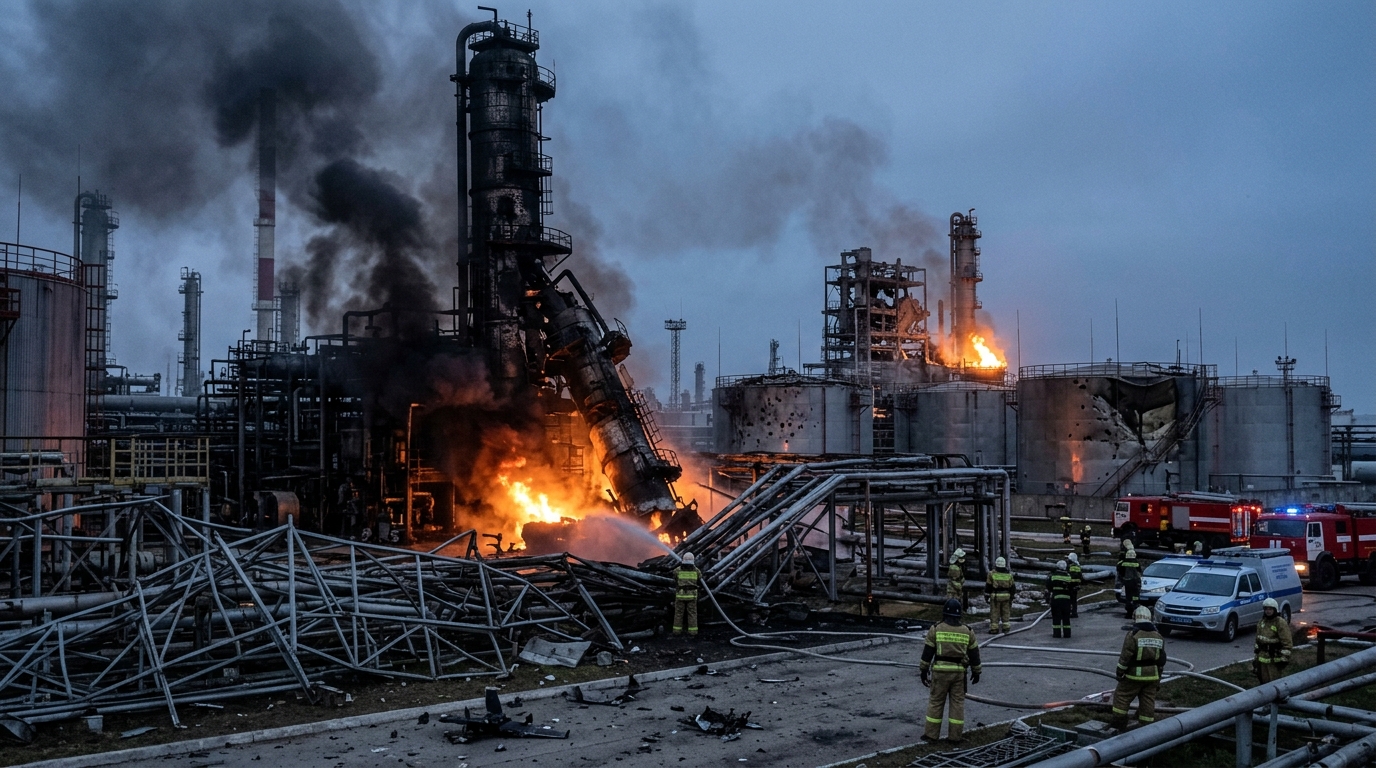
Ukraine claims a sustained campaign against Russian energy infrastructure has disabled 43% of the country’s refining capacity, causing billions in losses and worsening fuel shortages.
Ukraine says its long-running campaign against Russia’s energy infrastructure has significantly weakened the country’s oil refining industry, with military officials claiming that nearly half of Russia’s refining capacity is now out of operation.
According to the General Staff of the Armed Forces of Ukraine, Ukrainian forces have disabled approximately 43% of Russia’s total projected oil refining capacity through a series of precision strikes carried out since August 2025. The assessment describes the campaign as one of the most damaging attacks on Russia’s energy sector since the full-scale war began.
The Ukrainian strikes disable 43% of Russian refining capacity campaign has focused on reducing Russia’s ability to process Crude Oil into fuel used for military operations, transportation, and industry. Ukrainian military officials believe these attacks have placed increasing pressure on Russia’s Economy while also creating logistical challenges for its armed forces.
The General Staff reported that the most recent phase of the operation intensified over the past month, during which eight Russian oil refineries were successfully targeted. Several of the facilities reportedly suffered extensive structural damage, limiting their ability to resume normal production in the near future.
In addition to refinery strikes, Ukrainian forces also targeted fuel storage infrastructure across multiple regions. Military officials said more than 60 storage reservoirs were either destroyed or critically damaged during the campaign. According to the assessment, around 58% of the affected tanks stored refined petroleum products such as gasoline and diesel, while the remaining 42% contained crude oil awaiting processing.
Ukrainian officials estimate that the overall financial impact on Russia’s oil refining industry has reached approximately $13.5 billion since the campaign began in August 2025. The estimate includes damage to refining facilities, storage infrastructure, interrupted production, and the expected cost of rebuilding affected sites.
The Ukrainian strikes disable 43% of Russian refining capacity campaign is also said to be creating operational problems beyond the direct physical damage. Ukrainian military officials argue that international sanctions have made it increasingly difficult for Russia to obtain specialized replacement parts and industrial equipment needed to repair complex refinery systems.
As a result, many damaged facilities reportedly remain partially or completely offline for extended periods. Officials say repair schedules continue to be delayed because essential components cannot be sourced quickly from international suppliers.
Ukraine also claims the reduction in refining capacity has contributed to a growing fuel shortage across Russia. According to the military statement, domestic fuel production has fallen sharply, affecting supplies for both civilian and government use.
Reports cited by Ukrainian officials indicate that some regional authorities have introduced temporary measures to manage limited fuel supplies. These measures reportedly include giving priority access to government and emergency vehicles at selected filling stations while restricting commercial distribution in certain areas.
The shortage is also believed to be affecting freight transportation and industrial logistics. Reduced fuel availability may increase transportation costs and slow the movement of goods across several Russian regions, placing additional pressure on businesses already dealing with wartime economic conditions.
The Ukrainian strikes disable 43% of Russian refining capacity assessment has not been independently verified by international organizations, and Russian authorities have not publicly confirmed the full extent of the reported damage. Throughout the conflict, both Ukraine and Russia have released competing battlefield claims that are often difficult to verify while fighting continues.
However, attacks on Russian energy infrastructure have become an increasingly important element of Ukraine’s broader military strategy over the past year. Rather than focusing solely on front-line combat, Ukrainian forces have expanded long-range strike operations against military-industrial facilities, ammunition depots, airfields, and fuel production sites deep inside Russian territory.
Military analysts have previously noted that damaging oil refineries can have strategic effects beyond immediate economic losses. Fuel shortages may complicate military logistics, increase maintenance costs, and reduce the efficiency of transportation networks supporting military operations.
Russia’s energy sector remains one of the country’s most important economic assets, generating significant government revenue through oil production and exports. While crude oil production may continue even when refineries are damaged, reduced domestic refining capacity can disrupt fuel supplies and require costly adjustments in production, storage, and transportation.
The latest Ukrainian assessment suggests the pressure on Russia’s refining industry is continuing to grow as additional strikes target critical infrastructure. If repairs remain slow and further facilities are damaged, Ukraine believes the campaign could continue to weaken Russia’s domestic fuel production in the coming months.
At the same time, the situation remains highly fluid, and independent verification of military claims from either side remains limited. As the conflict continues, energy infrastructure is expected to remain one of the central targets in the broader economic and military struggle between Ukraine and Russia.