
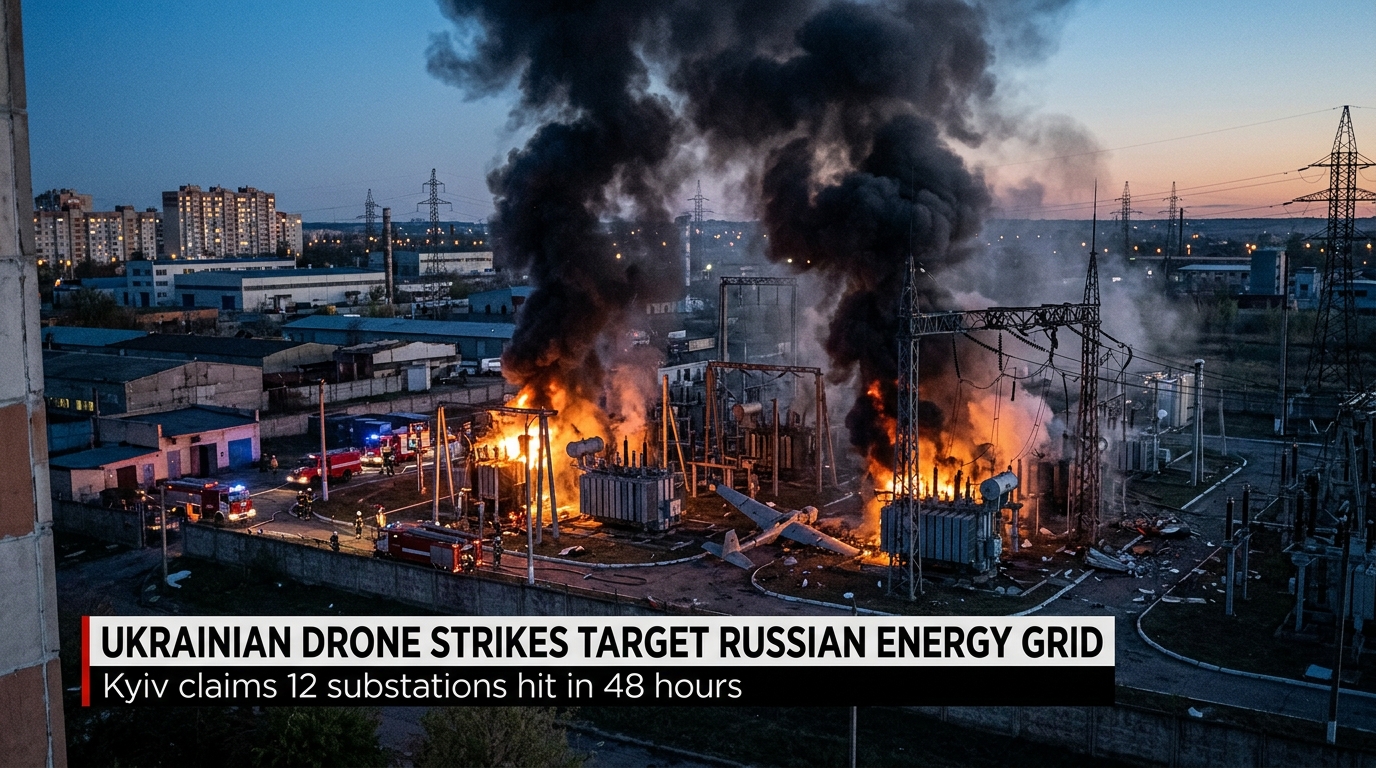
Ukrainian Drone Strikes
Ukraine says its drone forces struck critical energy infrastructure across occupied territories, while independent verification of the reported damage remains limited.
Ukraine’s military says it has intensified its campaign against Russian-controlled energy infrastructure, claiming that drone forces struck 12 electrical substations and one gas distribution facility across occupied territories within a 48-hour period. According to Ukrainian officials, the operation was designed to disrupt Russia’s military logistics and reduce its ability to support frontline operations.
The reported strikes took place on July 1 and July 2 and were announced by Colonel Robert “Madyar” Brovdi, commander of Ukraine’s Unmanned Systems Forces. Brovdi said Ukrainian drone operators targeted key elements of the electricity network in occupied Crimea, as well as parts of the Donetsk, Luhansk, and Zaporizhzhia regions.
According to Ukrainian military statements, the operation disabled 12 electrical substations and one gas distribution station. Officials described the campaign as part of a broader strategy to weaken Russian military infrastructure rather than targeting civilian populations. However, the reported results have not been independently verified, and Russian authorities have not provided a detailed public assessment of the claimed damage.
Military analysts have noted that electrical substations play an important role in supplying power to military bases, command centers, transportation networks, and logistics hubs. Damaging these facilities can disrupt communications, fuel distribution, railway operations, and industrial production that support military activities.
Ukraine has increasingly relied on long-range drone operations throughout 2026 to strike targets far behind the front lines. The country’s expanding unmanned systems program has become one of Kyiv’s primary tools for applying pressure on Russian military infrastructure while reducing risks to its own personnel.
Colonel Brovdi has previously reported a significant increase in long-range drone missions targeting fuel depots, radar systems, logistics centers, and energy facilities inside Russian-controlled territory. Ukrainian officials argue that these operations are intended to reduce Russia’s ability to sustain combat operations over an extended period.
The latest claims also come amid a broader campaign focusing on Crimea, which remains strategically important for Russia’s military operations in southern Ukraine. In recent days, monitoring groups and Ukrainian sources have reported fires and explosions at several power substations across occupied Crimea following overnight drone attacks. Satellite imagery and local monitoring channels indicated fires at multiple energy facilities, although the full extent of the damage has not been independently confirmed.
Energy infrastructure has become an increasingly important battlefield for both sides during the war. Since Russia launched its full-scale invasion, Moscow has repeatedly carried out large-scale missile and drone attacks against Ukraine’s electricity grid, resulting in widespread blackouts and damage to power generation facilities. Ukraine has responded by expanding its own capability to strike energy and logistics targets in Russian-controlled areas.
Security experts say attacks on electrical infrastructure can have both immediate and long-term military effects. High-voltage substations are often difficult to repair quickly because replacement equipment can be specialized and difficult to transport during wartime. Temporary power outages may also interrupt rail transportation, industrial production, communications, and military logistics.
At the same time, independent analysts caution that claims made by either side during an active conflict should be treated carefully until verified through multiple sources. Battlefield reports frequently emerge before satellite analysis or independent investigators can fully assess the extent of any damage.
Neither Russia’s Ministry of Defense nor occupation authorities in the affected regions immediately released detailed information confirming or denying Ukraine’s latest claims regarding the reported strikes on substations. Publicly available information remains limited, making it difficult to verify the exact operational impact.
The reported attacks also highlight the growing importance of drone warfare in the conflict. Compared with traditional missile strikes, drones often allow militaries to conduct repeated precision attacks at lower cost while forcing defenders to devote significant resources to air defense systems.
Ukraine has invested heavily in expanding domestic drone production over the past two years, with officials describing unmanned systems as one of the country’s key strategic advantages. Long-range drone operations have increasingly targeted oil refineries, fuel storage facilities, railway infrastructure, command centers, and electrical networks supporting Russian military operations.
The latest reported operation reflects Kyiv’s continued effort to pressure Russian logistics beyond the immediate battlefield. Whether the claimed damage will have a lasting operational effect remains unclear, but military analysts agree that infrastructure attacks have become an increasingly significant element of the broader conflict.
As fighting continues, both Ukraine and Russia are expected to maintain campaigns targeting critical infrastructure in an effort to weaken each other’s military capabilities. Independent verification of battlefield claims remains essential, as information from both sides often emerges before it can be fully confirmed.