
German Weather Service Issues Red Alerts Across Much of the Country Amid Intensifying Heatwave
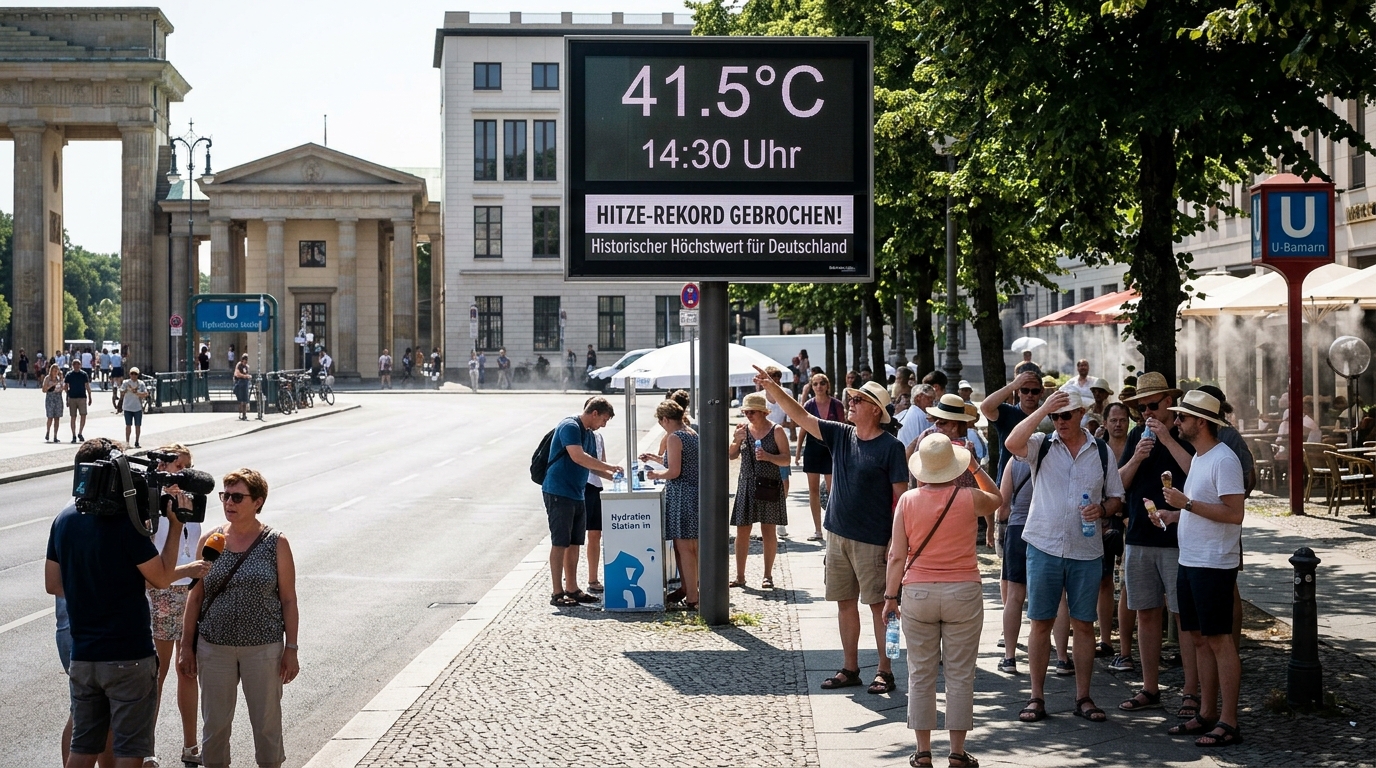
Germany has broken its all-time temperature record for the second consecutive day, as an intense heatwave continues to grip much of the country and large parts of Europe. According to preliminary data released by the German Weather Service (DWD), temperatures reached 41.5 degrees Celsius (106.7 degrees Fahrenheit) in the eastern town of Möckern-Drewitz, surpassing the previous national record set just one day earlier.
The extraordinary weather event has prompted red heat alerts across most of Germany, with meteorologists warning that temperatures could climb even higher in the coming days. Officials have urged residents to take precautions as the country faces one of the most severe heatwaves in its recorded history.
The latest Germany Heat Record has reignited discussions about climate change, extreme weather events, and the growing challenges European nations face during increasingly intense summers.
New Temperature Record Shocks Meteorologists
The German Weather Service reported that the preliminary reading of 41.5 degrees Celsius was recorded in Möckern-Drewitz on Saturday. The figure surpassed the previous day’s reading of 41.3 degrees Celsius in Saarbrücken, located in southwestern Germany.
Just a few years ago, Germany’s official heat record stood at 41.2 degrees Celsius, measured on July 25, 2019. The fact that the country has now exceeded that benchmark on two consecutive days has surprised weather experts and highlighted the exceptional nature of the current heatwave.
Meteorologists emphasized that the figures remain preliminary and could still be adjusted after further verification. However, even if slight revisions occur, the event is already being recognized as one of the hottest periods ever experienced in Germany.
The new Germany Heat Record demonstrates how rapidly temperatures can escalate during prolonged periods of extreme weather.
Red Alerts Issued Across the Country
As temperatures surged, the German Weather Service issued red alerts for large parts of the nation.
Authorities warned residents to avoid unnecessary outdoor activities during peak afternoon hours and encouraged people to stay hydrated. Hospitals, emergency services, and local governments also activated heat-response measures to protect vulnerable populations, including elderly individuals, young children, and people with pre-existing medical conditions.
In Berlin, residents sought relief from the heat in parks, public fountains, and cooling stations. Images from the German capital showed people gathering around water sprays and cooling areas as temperatures soared.
The ongoing heatwave has placed significant pressure on public services and infrastructure, with officials monitoring conditions closely as temperatures remain unusually high.
Heatwave Impacts Daily Life
The record-breaking temperatures have affected daily life across Germany.
Many schools adjusted schedules, while employers encouraged flexible working arrangements where possible. Outdoor workers faced difficult conditions, and local authorities advised limiting strenuous physical activity during the hottest parts of the day.
Transportation systems also experienced challenges. High temperatures can affect rail networks, road surfaces, and public infrastructure, creating additional concerns during extended heat events.
Businesses dependent on outdoor operations have been forced to adapt, while tourism destinations have seen mixed effects. Beaches, lakes, and public swimming areas experienced increased visitor numbers as residents searched for ways to cool down.
The latest Germany Heat Record has become a major topic of conversation nationwide as people adjust to conditions rarely experienced in the country.
Europe Faces Wider Heat Crisis
Germany is not alone in experiencing extreme temperatures.
Several European countries have reported unusually hot conditions during recent weeks. Meteorologists say a powerful high-pressure system has contributed to widespread heat across parts of Western and Central Europe.
Countries including France, Spain, Italy, and Poland have also issued heat warnings as temperatures continue to rise. Emergency services throughout the continent have been preparing for increased demand related to heat-related illnesses and wildfire risks.
Climate scientists note that Europe has become one of the fastest-warming regions in the World. Rising average temperatures have contributed to more frequent and intense heatwaves over the past several decades.
The current conditions in Germany reflect a broader pattern that many experts believe could become increasingly common in future years.
Climate Change Debate Intensifies
The record temperatures have once again fueled discussions about climate change and environmental policy.
Many climate researchers argue that global warming is increasing both the frequency and severity of extreme weather events. While no single heatwave can be attributed solely to climate change, scientists say long-term warming trends create conditions that make record-breaking temperatures more likely.
Environmental organizations have pointed to the latest Germany Heat Record as further evidence of the need for stronger efforts to reduce greenhouse gas emissions and improve climate resilience.
Government officials across Europe continue debating strategies to address climate-related challenges, including investments in renewable energy, infrastructure adaptation, and emergency preparedness.
Health Risks Increase During Extreme Heat
Health authorities have repeatedly warned that prolonged exposure to extreme temperatures can pose serious risks.
Heat exhaustion and heatstroke remain major concerns, particularly among vulnerable groups. Medical experts recommend drinking plenty of water, avoiding direct sunlight during peak hours, and checking on family members or neighbors who may need assistance.
Public health agencies have also emphasized the importance of recognizing symptoms such as dizziness, confusion, dehydration, and rapid heartbeat.
As temperatures remain elevated, emergency services continue encouraging people to follow safety recommendations.
The ongoing Germany Heat Record situation has highlighted the growing importance of heat preparedness in countries that historically experienced milder summers.
Could Temperatures Rise Even Higher?
Meteorologists have not ruled out the possibility of additional records.
The German Weather Service stated that temperatures approaching 42 degrees Celsius remain possible if current weather patterns persist. Such readings would represent another extraordinary milestone for a country more commonly associated with moderate summer conditions.
Weather experts are closely monitoring forecasts to determine whether cooler air will arrive in the coming days or whether the heatwave will continue.
The uncertainty surrounding future temperatures has kept authorities on high alert.
Looking Ahead
For now, Germany remains focused on managing the immediate impacts of the heatwave while preparing for the possibility of even higher temperatures.
Officials continue urging caution as residents cope with conditions rarely seen in the country’s modern weather records. Emergency services, health agencies, and local governments remain active in supporting communities affected by the extreme heat.
The latest Germany Heat Record serves as a reminder of how dramatically weather conditions can change and why climate resilience is becoming an increasingly important issue across Europe.
As the heatwave continues, millions of people will be watching closely to see whether Germany experiences yet another record-breaking day or finally receives relief from one of the most intense periods of heat in its history.