Libya’s ‘False Peace’ So, here’s the thing about Libya.
If you just glance at the headlines, you might think things are getting better. The big fighting stopped back in 2020. Politicians are making deals. Foreign diplomats are flying in and out. The US is even leading new mediation efforts.
Sounds like progress, right?
Not so fast.
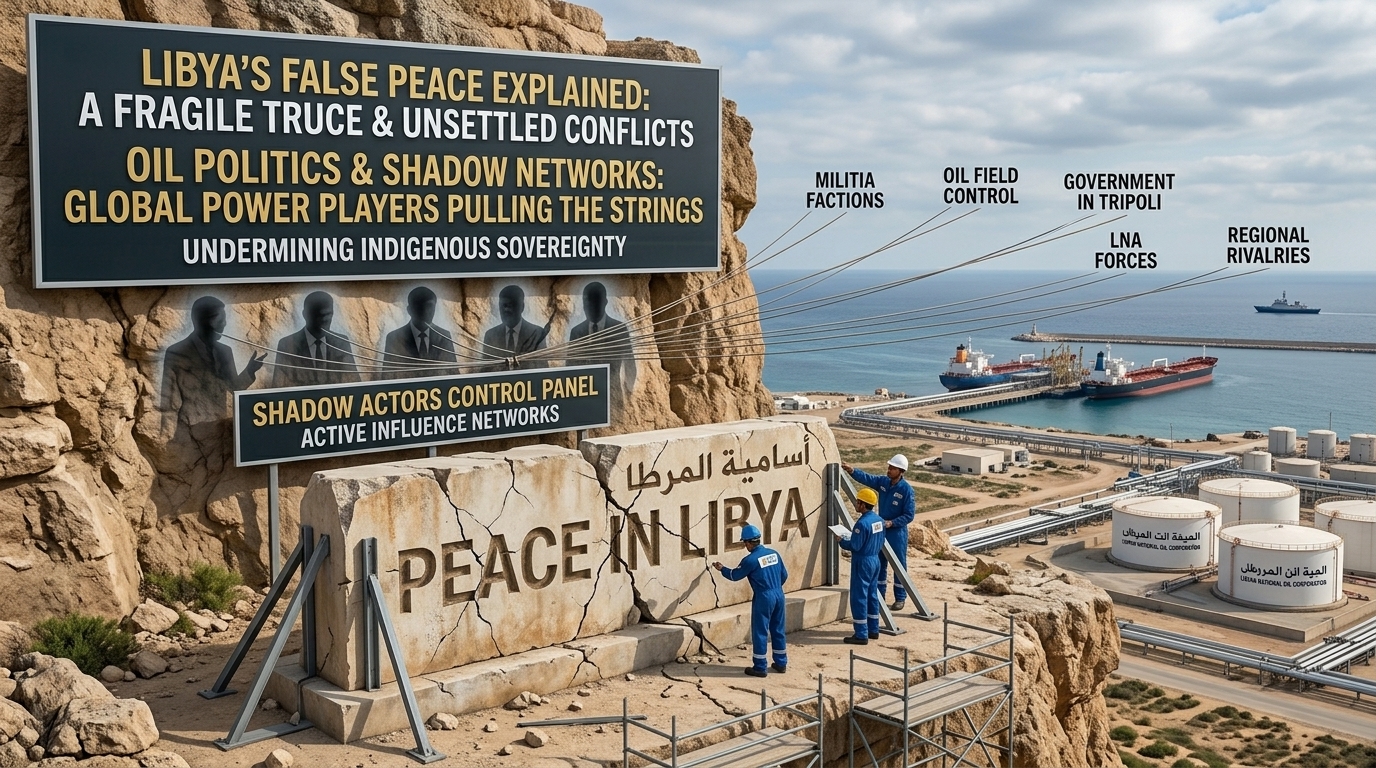
A lot of analysts are now saying something uncomfortable: Libya isn’t actually at peace. It’s just trapped in what they call a “managed stalemate.” The violence has dialed down, sure. But the country is still broken. And nobody is really fixing it.
Two Governments, One Country, Zero Trust
Let me give you the quick lay of the land.
On one side, you’ve got the internationally recognized government in the West, based in Tripoli, led by a guy named Abdulhamid Dabaiba.
On the other side, you’ve got the eastern forces controlled by Khalifa Haftar — a warlord-type figure who’s been trying to take control for years.
These two don’t like each other. They don’t trust each other. And they’re not working together. They’re just… not actively shooting at each other at the moment.
That’s not peace. That’s a timeout.
The Problem With ‘Progress’
Every now and then, you’ll see a News story about Libya making a deal. A unified national budget, maybe. Or an agreement on oil revenues.
Sounds good on paper. But here’s the catch.
These deals aren’t actually solving anything. They’re just temporary bandaids. The deep problems — failed governance, economic inequality, weak institutions — are all still there, festering underneath.
One expert put it pretty bluntly: Libya isn’t being run by strong institutions. It’s being held together by fragile agreements among powerful elites who all want a piece of the pie.
And who’s often backing those elites? Foreign countries with their own interests. Not exactly a recipe for lasting stability.
Oil Money: The Real Boss of Libya
Let’s be real. If you want to understand Libya, follow the oil.
Control over oil fields and export terminals is everything. It’s money. It’s power. It’s leverage.
And right now, Haftar’s forces in the East control most of the key oil infrastructure. That gives them an enormous hammer to swing whenever they want to make a point.
Remember 2024? Forces linked to Haftar imposed an oil blockade that lasted over six weeks. Exports stopped. The country lost nearly $3 billion. Just like that.
That’s not a government managing its resources. That’s armed factions using the Economy as a weapon.
The Economic Picture Is Ugly
Speaking of money — Libya’s finances are a mess.
- Hard-currency deficit? Around $9 billion.
- Inflation? Rising.
- National currency? Weakening.
And while the elites are jockeying for position, ordinary Libyans are dealing with rising prices and a government that can barely provide basic services.
Prestige projects get funded. Public services get ignored. Sound familiar?
Foreign Powers Aren’t Helping — At Least Not the Way You’d Think
The United States and other countries are actively involved in Libya. They’re brokering deals. Bringing factions together. Trying to keep things from exploding.
But here’s the criticism: they’re focused on short-term stability and commercial interests — like energy deals for international oil companies — instead of long-term institution-building.
In other words, they’re negotiating with the same warlords and elites who broke the country in the first place. That keeps the peace for now. But does it actually fix anything?
A lot of analysts say no. It just reinforces the same broken system.
Why This ‘Peace’ Probably Won’t Last
Here’s what’s happening behind the scenes while everyone talks about stability.
Both sides are quietly preparing for the next round. They’re using state funds (yes, the same ones meant for public services) to build up military capabilities. Patronage networks are getting stronger. Elections keep getting delayed with no clear roadmap.
So is the fighting over? For now. But is the conflict resolved? Not even close.
This is what a “managed stalemate” looks like. Everyone is strong enough to hurt the other side. Nobody is strong enough to win. So they just… sit there. Glaring at each other. Waiting.
What Would Actually Fix Libya?
I wish I had an easy answer, but I don’t.
Most experts agree on a few things though:
- Real institution-building, not just elite deals
- Transparent governance (good luck with that)
- Credible elections with a clear roadmap
- Economic reform that helps ordinary people, not just powerful factions
Without those things, Libya isn’t going anywhere. It’s just going to stay stuck — not at war, but not at peace either.
Bottom Line
Don’t let the quiet fool you. Libya isn’t stable. It’s just frozen.
Two rival governments. Oil as a weapon. Foreign powers cutting deals with warlords. And ordinary Libyans caught in the middle.
The fighting stopped. But the country is still broken. And until someone actually fixes the underlying problems, this “false peace” could shatter at any moment.