
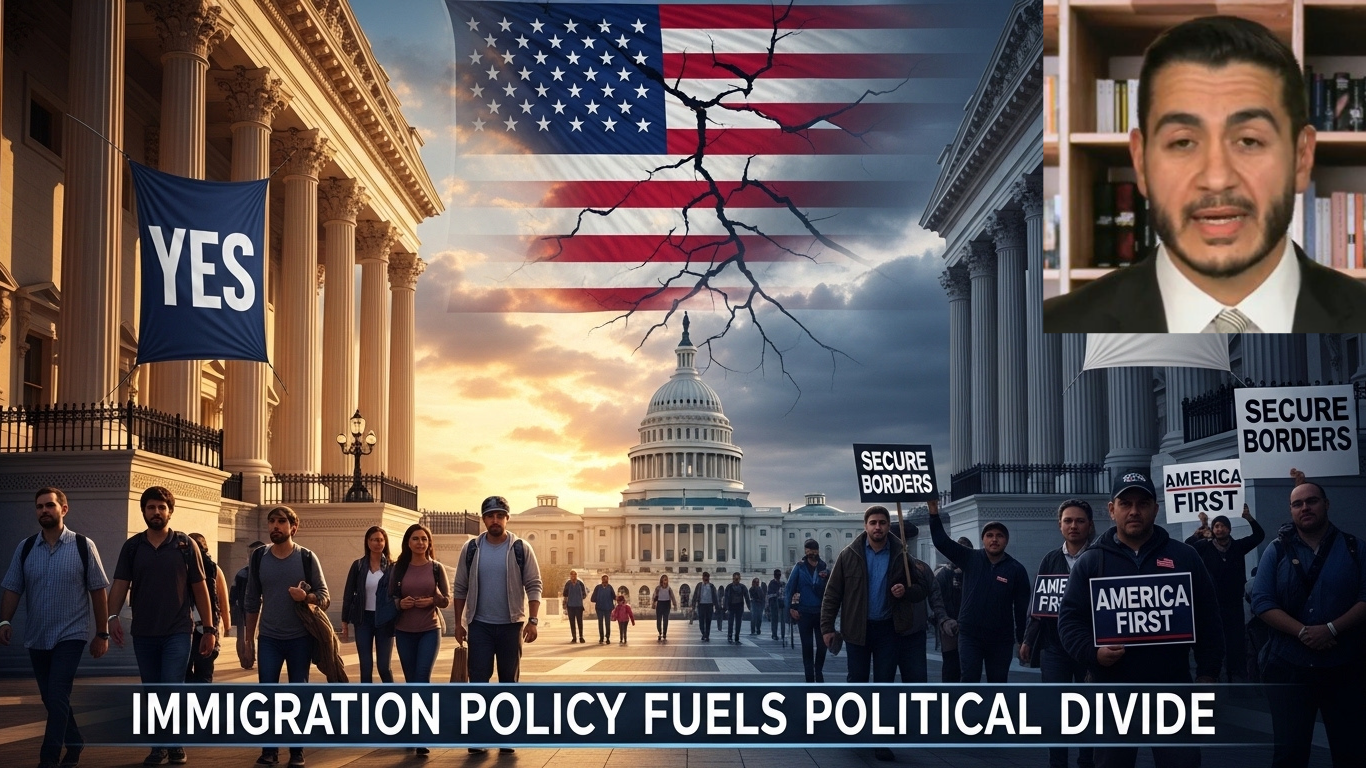
Immigration policy once again takes center stage as controversial proposal fuels political divide in the United States
A fresh political debate has emerged in the United States after Abdul El-Sayed, a Democratic Senate candidate from Michigan, reiterated his support for abolishing the country’s main immigration enforcement agency. His remarks, made during a recent interview, have quickly drawn attention from both supporters and critics, reigniting a long-standing national conversation about immigration policy and border enforcement.
At the center of the discussion is U.S. Immigration and Customs Enforcement (ICE), the federal agency responsible for enforcing immigration laws, detaining undocumented immigrants, and carrying out deportations. Since its creation in 2003, ICE has played a major role in U.S. immigration enforcement, but it has also faced increasing scrutiny and criticism over its practices.
What Abdul El-Sayed said
During the interview, El-Sayed expressed support for dismantling ICE as part of broader immigration reform. While the exact details of his plan were not fully outlined in the brief statement, his position aligns with a progressive movement within the Democratic Party that has, at times, called for rethinking or replacing the agency.
El-Sayed has previously focused his political messaging on healthcare, economic inequality, and social justice. His latest comments suggest that immigration reform could also become a central issue in his campaign.
Understanding the ‘Abolish ICE’ movement
The phrase “abolish ICE” gained national attention during the late 2010s, particularly amid debates over immigration enforcement and family separation policies at the U.S.-Mexico border. However, the term does not always mean the same thing to everyone.
For some politicians and activists, abolishing ICE means completely shutting down the agency and redistributing its responsibilities to other departments, such as the Department of Homeland Security or new, restructured agencies. For others, it represents a call for deep reform rather than complete elimination.
Supporters of the idea argue that ICE has been associated with controversial enforcement tactics, including large-scale detention operations and deportations that have separated families. They believe a new system could prioritize humane treatment, due process, and community-based solutions.
Criticism and concerns
Critics, however, strongly oppose the idea of abolishing ICE. They argue that the agency plays a critical role in maintaining immigration law, preventing illegal entry, and addressing issues such as human trafficking and cross-border crime.
Opponents warn that eliminating ICE without a clear replacement plan could create gaps in enforcement and weaken national security. Many conservative leaders and commentators have pointed to the importance of maintaining a structured immigration system with clear rules and enforcement mechanisms.
The debate has therefore become highly polarized, reflecting broader divisions in American politics.
Political reactions and public response
El-Sayed’s remarks have triggered strong reactions across the political spectrum. Some progressive groups have welcomed his stance, seeing it as a bold step toward reforming a system they consider broken.
On the other hand, critics have used his comments to question the broader direction of immigration policy within the Democratic Party. They argue that such proposals may alienate moderate voters and increase political tensions.
Social media platforms have amplified the debate, with users sharing clips and opinions that often lack full context. This has further intensified the discussion, making it one of the most talked-about political topics in recent days.
Immigration remains a key election issue
Immigration has consistently been one of the most important and controversial issues in U.S. elections. Policies related to border control, asylum, deportation, and citizenship pathways often shape voter opinions and campaign strategies.
In states like Michigan, where economic concerns and demographic changes influence political outcomes, candidates’ positions on immigration can play a significant role in shaping voter support.
El-Sayed’s statement is likely to become a key talking point in his campaign, as well as among his opponents.
Broader implications for US policy
The discussion around abolishing ICE also reflects a larger question: how should the United States manage immigration in the 21st century?
Experts say any major change to immigration enforcement would require careful planning, legislative approval, and coordination between multiple government agencies. Simply abolishing an agency without a clear framework could lead to confusion and operational challenges.
At the same time, there is growing recognition that the current system faces serious challenges, including backlogs in immigration courts, concerns over detention conditions, and the need for comprehensive reform.
Balancing enforcement and reform
One of the biggest challenges in the immigration debate is finding a balance between enforcement and humanitarian concerns. While some argue for stricter controls to ensure national security, others emphasize the importance of protecting the rights and dignity of migrants.
El-Sayed’s comments highlight this tension. By calling for the abolition of ICE, he is aligning himself with a viewpoint that prioritizes systemic change. However, the feasibility and impact of such a proposal remain subjects of debate.
Conclusion
The remarks by Abdul El-Sayed have once again brought immigration policy into the national spotlight. His call to abolish ICE reflects a growing push among some political leaders for significant changes to the current system, but it also underscores the deep divisions that exist on this issue.
As the election season continues, immigration is expected to remain a central topic, with candidates offering different visions for the future. Whether proposals like abolishing ICE gain broader support or face strong resistance will depend on how voters respond to the ongoing debate.
For now, El-Sayed’s statement has succeeded in one key way: it has reignited a critical conversation about the role of immigration enforcement in the United States and what reforms, if any, should come next.