
The Future of Cities: Robots Building in the Desert
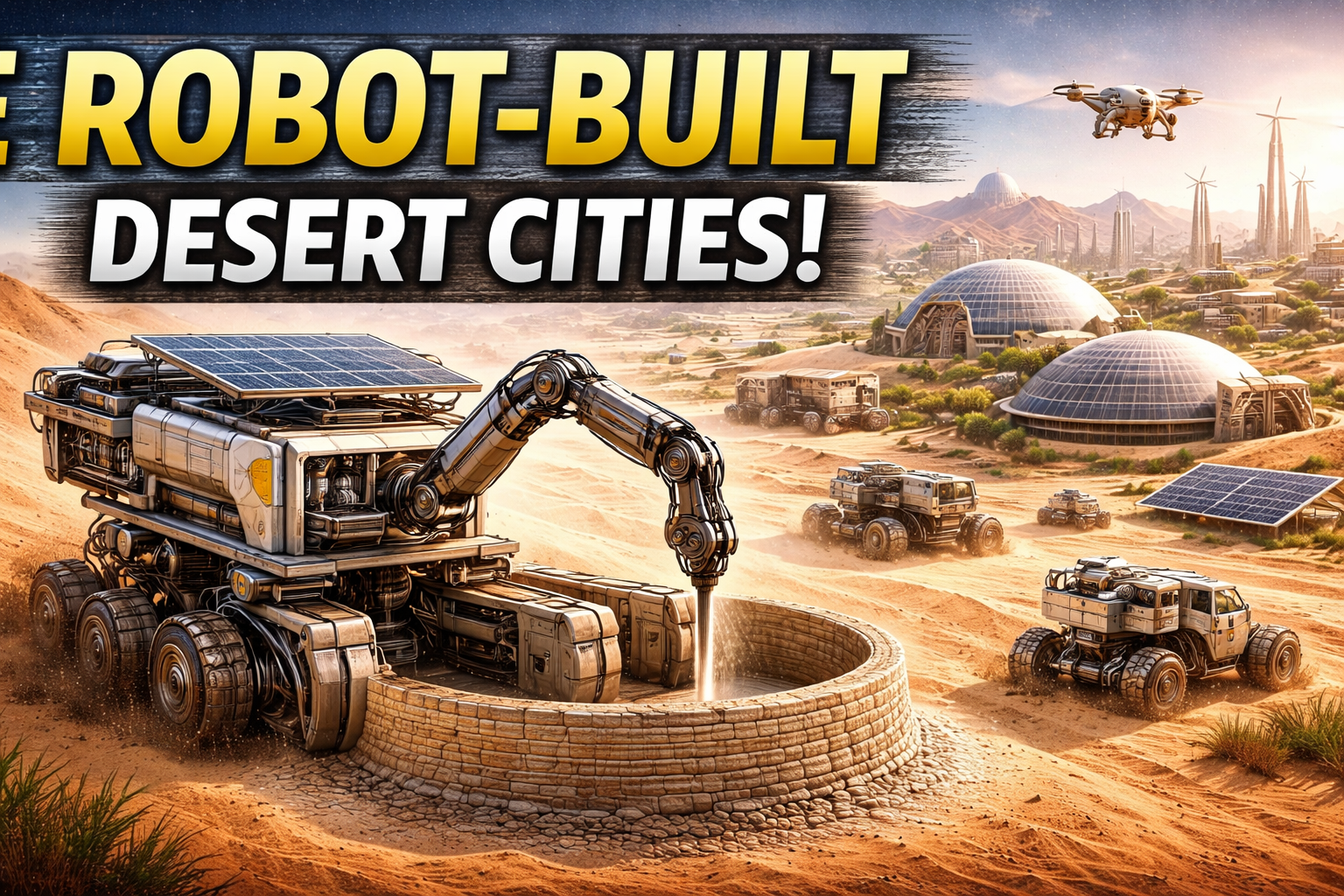
The deserts of the future may not be built by human workers, but by intelligent machines. Autonomous robots are being developed to turn empty desert land into sustainable cities by using sand, solar energy, and artificial intelligence. Experts believe that by 2030, fleets of 3D-printing robots could build entire urban areas in harsh environments like the American Southwest and the Middle East.
How Robot Construction Is Changing Everything
Traditional construction takes years, requires large labor forces, and depends on complex supply chains. But new robotic systems are changing this completely.
For example, machines like the PaveLink system can split into multiple units, each performing different tasks like digging, leveling, and compacting soil. These machines work together like a coordinated team, guided by drones that scan the land and send real-time data. Everything is electric, automated, and designed to work faster with less risk and fewer resources.
Turning Sand into Strong Building Material
One of the most exciting developments is the ability to build using desert sand itself. Scientists are working on robots that can convert sand into carbon-negative limestone—a material that is strong, durable, and even helps reduce carbon in the atmosphere.
These robots operate in groups, with each one handling a specific part of the construction process, such as laying foundations or building walls. Artificial intelligence ensures everything is built safely and efficiently without human involvement.
Smart Cooling Without Air Conditioners
These future buildings are not just strong—they are also smart. The materials and designs naturally keep interiors cool, even in extreme heat.
Robots can create complex structures with built-in airflow channels that allow air to circulate and cool buildings naturally. Combined with renewable energy and advanced cooling systems, these cities could reduce or even eliminate the need for traditional air conditioning.
Real Projects Already in Progress
Some major projects are already showing what this future could look like.
In the United States, a futuristic desert city called Telosa aims to house thousands of residents using sustainable energy and modern urban design. In Saudi Arabia, the ambitious NEOM project includes “The Line,” a massive linear city designed to run entirely on renewable energy with no cars or roads.
Challenges and Doubts
Despite the promise, there are still challenges. Desert conditions are harsh, with extreme heat and sandstorms. The cost of these projects is also extremely high, running into hundreds of billions of dollars.
Some experts also point to past failures of futuristic city projects, warning that not all ambitious ideas succeed in reality.
The Bottom Line
Even with these challenges, robotic construction technology is advancing quickly. By 2030, it’s possible that the first fully robot-built desert cities could become a reality.
If successful, this approach could be used around the world—from the Sahara to the Australian Outback—turning deserts into thriving, sustainable cities.
The future of construction may not rely on human hands, but on intelligent machines working together to build smarter, greener, and more resilient cities.