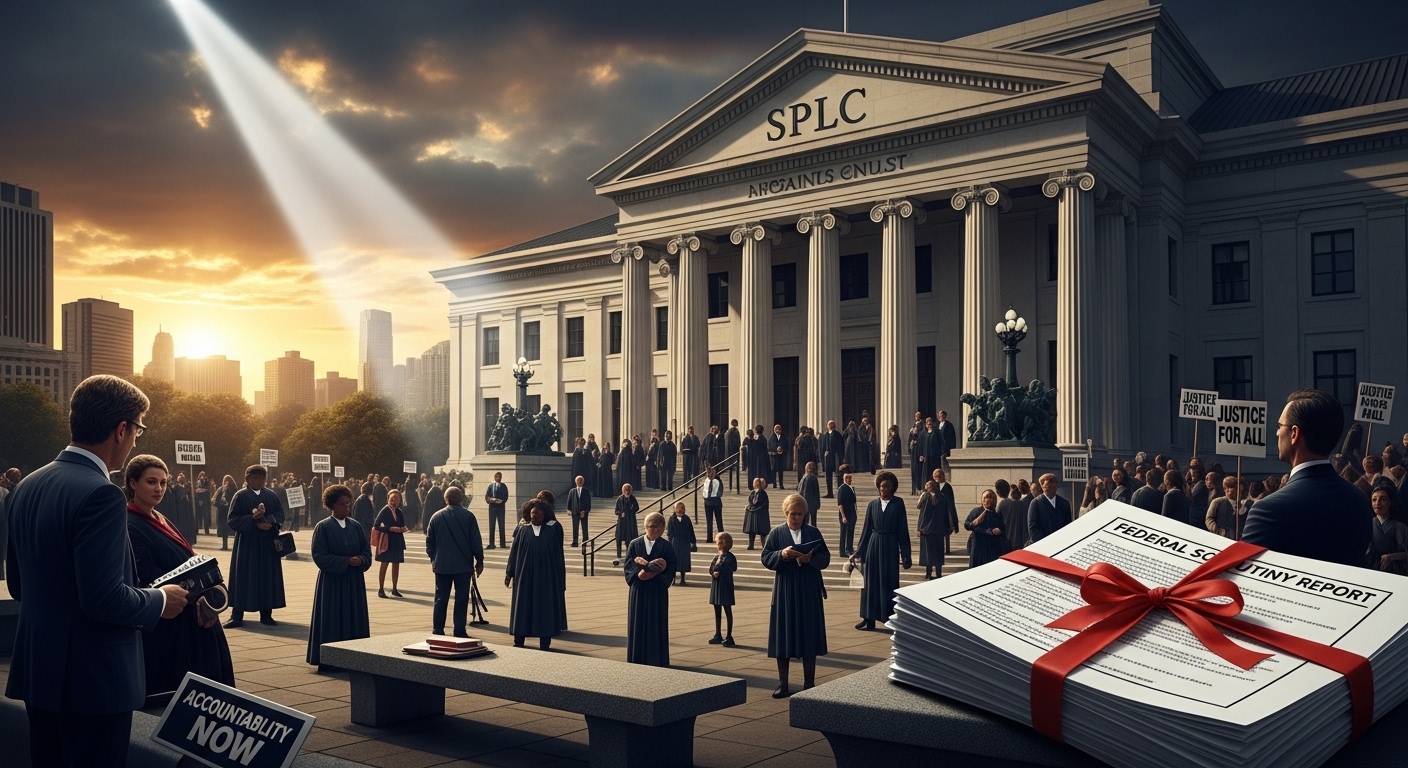
A Well-Known Civil Rights Group Is Under Federal Scrutiny
Montgomery, Alabama | April 2026
The Southern Poverty Law Center (SPLC), a famous civil rights group in the United States, is now in the middle of a legal and political storm. Reports say federal authorities are looking into its financial practices and how it spends donor money.
Nothing has been proven yet, and no final decision has been made. But this News has started a big conversation about the SPLC’s work, how it labels extremist groups, and the role of advocacy organizations in shaping public policy.
What Is the SPLC and Why Is It Important?
The SPLC is a non-profit civil rights group founded in 1971 in Alabama. It is known for two main things:
- Filing lawsuits to protect civil rights
- Tracking hate groups and extremist organizations across the US
Over the years, the SPLC has:
- Filed lawsuits against discrimination and civil rights violations
- Published research on hate groups
- Created educational programs to teach tolerance and civil rights
The group is based in Montgomery, and its work is often quoted by journalists, researchers, and policymakers.
How It Started
The SPLC was founded by civil rights lawyers, including Morris Dees and Joseph J. Levin Jr. It began as a small law practice focused on fighting racial discrimination in the American South. Later, it grew into a national organization working on civil rights and tracking extremism.
What the SPLC Does Today
The SPLC’s work can be divided into three main areas:
1. Civil Rights Lawsuits
They file big impact cases involving:
- Racial discrimination
- Prison conditions
- Voting rights
- Immigration enforcement
- Disability rights
These cases are often meant to bring big policy changes, not just solve one person’s problem.
2. Tracking Extremists
The SPLC is best known for tracking hate groups across America. It publishes reports and a “Hate Map” that lists groups based on their beliefs and actions.
3. Education Programs
Through a program called “Learning for Justice,” the SPLC provides teaching materials to help schools promote civil rights awareness and fight bias.
Why the SPLC Faces Criticism
The SPLC has also faced a lot of criticism over the years, especially about how it labels groups as “hate groups.”
What critics say:
- “Hate group” is not a legal term
- The SPLC uses its own rules, not court decisions
- Being labeled can destroy a group’s reputation and funding
What supporters say:
- The labels are based on real extremist activity
- The SPLC helps identify threats that police may miss
- Its research is widely used by universities and policy makers
Because of this influence, the SPLC’s lists are often quoted in the media and used by companies and institutions when making decisions.
How the SPLC Decides What Is a Hate Group
The SPLC does not wait for a criminal conviction. Instead, it looks at:
- What the group publicly says
- Whether it supports or encourages violence
- Whether it has a pattern of discrimination
- Whether it has a history of organized extremist activity
Groups are then placed into categories like white nationalist, neo-Nazi, or anti-government extremist.
Why Is the SPLC Under Scrutiny Now?
Recent reports say federal authorities are looking into the SPLC’s finances. Specifically, they are asking questions about:
- How donor money is used in investigative programs
- Payments or expenses related to informant activity
- Whether donor disclosures are transparent
The SPLC has previously said that donor money supports civil rights investigations and efforts to track extremist threats.
What Could Happen If Charges Are Filed?
If formal charges are filed, the legal process would typically follow these steps:
- Initial court hearing – Charges are presented, and the organization enters a plea.
- Discovery phase – Both sides share evidence like financial records, emails, and donor information.
- Possible outcomes:
- Case dismissed if evidence is weak
- Settlement or plea deal, often with fines or new rules
- Trial, leading to conviction or acquittal
Each outcome would affect the SPLC’s reputation and operations differently.
What This Means for Other Nonprofits
Legal experts say this case, if it goes forward, could have a big impact on other non-profits. It might change:
- Rules for donor transparency
- How investigative funding is handled
- Oversight of non-profit financial reporting
- The line between advocacy and law enforcement
Even before a final decision, such cases can make donors nervous and hurt public trust.
Conclusion
The SPLC is still one of the most powerful civil rights groups in the United States. It is known both for its legal work and for its controversial role in labeling hate groups.
As the legal scrutiny continues, whatever happens next could change not just the SPLC, but also how other civil rights groups and non-profits operate in America.
For now, the situation is still unfolding. Everyone is watching to see what happens next and what it will mean for civil rights advocacy and non-profit accountability.