
Introduction
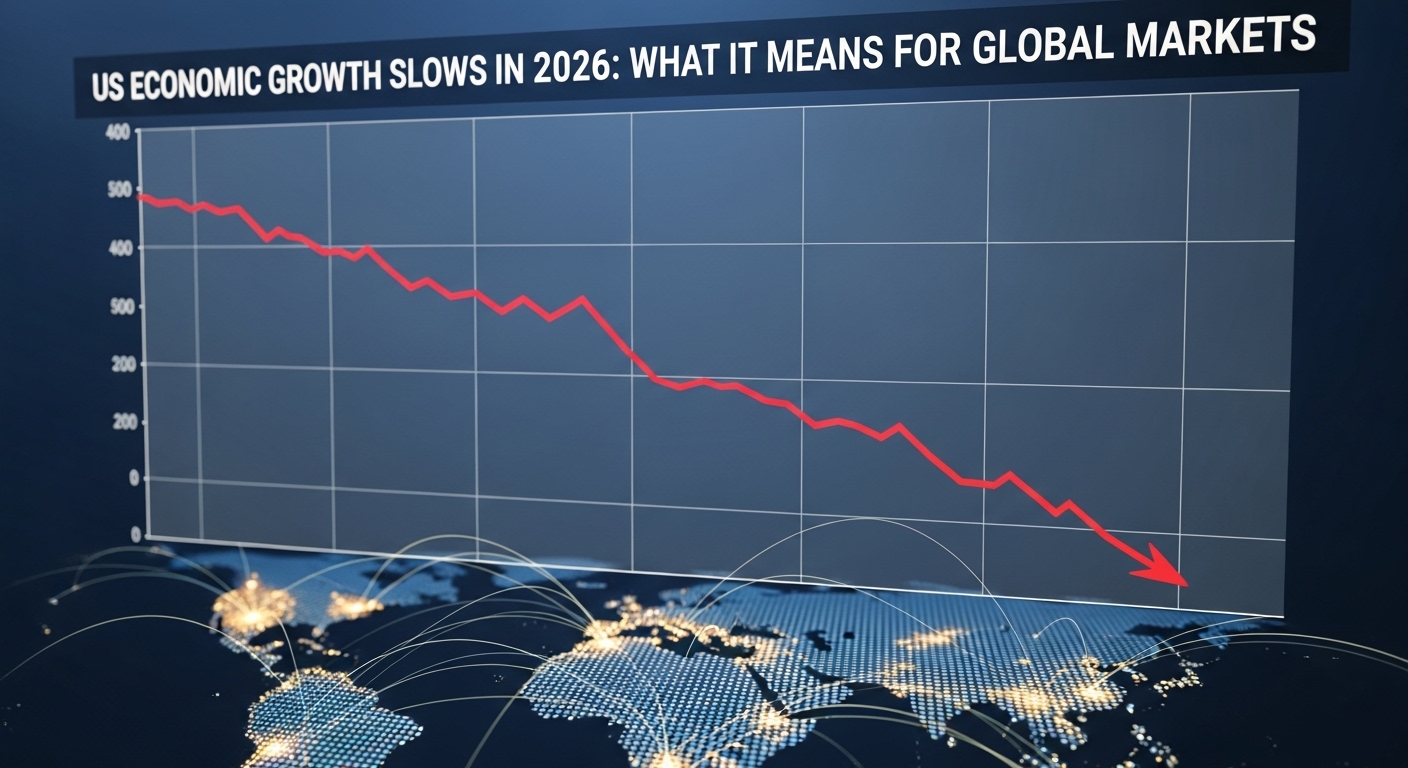
The United States Economy is showing clear signs of slowing down in 2026, raising concerns among investors, policymakers, and global markets. As one of the World’s largest economies, any slowdown in the US has ripple effects across international financial systems. Recent data suggests that economic growth has weakened significantly, prompting discussions about a possible downturn and its broader implications.
What Happened?
Recent reports indicate that US economic growth has slowed sharply, with GDP growth revised down to nearly 0.5%. This marks a significant drop compared to previous quarters and signals a cooling economy.
Several factors have contributed to this slowdown, including reduced consumer spending, higher borrowing costs, and global economic uncertainty. The slowdown has raised fears that the US economy may be entering a more challenging phase.
Key Reasons Behind the Slowdown
1. High Interest Rates
To control inflation, the Federal Reserve has maintained high interest rates. While this helps reduce inflation, it also makes borrowing expensive, slowing down business investments and consumer spending.
2. Weak Consumer Demand
Consumer spending, which drives a large part of the US economy, has started to decline. Rising living costs and economic uncertainty are making consumers more cautious.
3. Global Economic Pressure
Ongoing geopolitical tensions and global conflicts are affecting trade and supply chains, contributing to slower economic growth.
4. Inflation Impact
Although inflation has slightly eased, it remains higher than desired levels, continuing to put pressure on households and businesses.
Impact on Global Markets
The slowdown in the US economy has far-reaching effects:
1. Stock Market Volatility
Global stock markets often react strongly to US economic data. A slowdown can trigger uncertainty and fluctuations.
2. Reduced Investment Flows
Investors may become cautious, reducing investments in emerging markets and shifting funds to safer assets.
3. Currency Movements
A weaker US economy can impact the value of the dollar, affecting global trade dynamics.
4. Trade Impact
Countries that depend on US demand for exports may face reduced trade opportunities.
Impact on Businesses and Investors
Businesses are already feeling the effects of the slowdown:
- Reduced expansion plans
- Lower hiring rates
- Increased focus on cost-cutting
For investors, the situation creates uncertainty. Many are shifting towards safer investments such as bonds and gold, while reducing exposure to riskier assets.
Expert Analysis
Economists believe that the slowdown could be temporary if inflation comes under control. However, if current trends continue, it may lead to a broader economic downturn.
Some analysts suggest that the Federal Reserve may eventually reduce interest rates to stimulate growth, but this depends on inflation trends.
Future Outlook
The direction of the US economy in 2026 will depend on several factors:
- Inflation trends
- Federal Reserve policies
- Global economic stability
- Consumer confidence
If conditions improve, the economy could stabilize. However, prolonged slowdown may lead to recession concerns.
Conclusion
The slowdown of the US economy in 2026 is a major development with global implications. From financial markets to international trade, its impact is widespread. Investors and policymakers will need to closely monitor economic indicators to navigate the challenges ahead.