 Iran-Agree-to-Temporary-Truce-Pakistan-Played-Key-Role-1024x683.png" alt="" class="wp-image-3331"/>
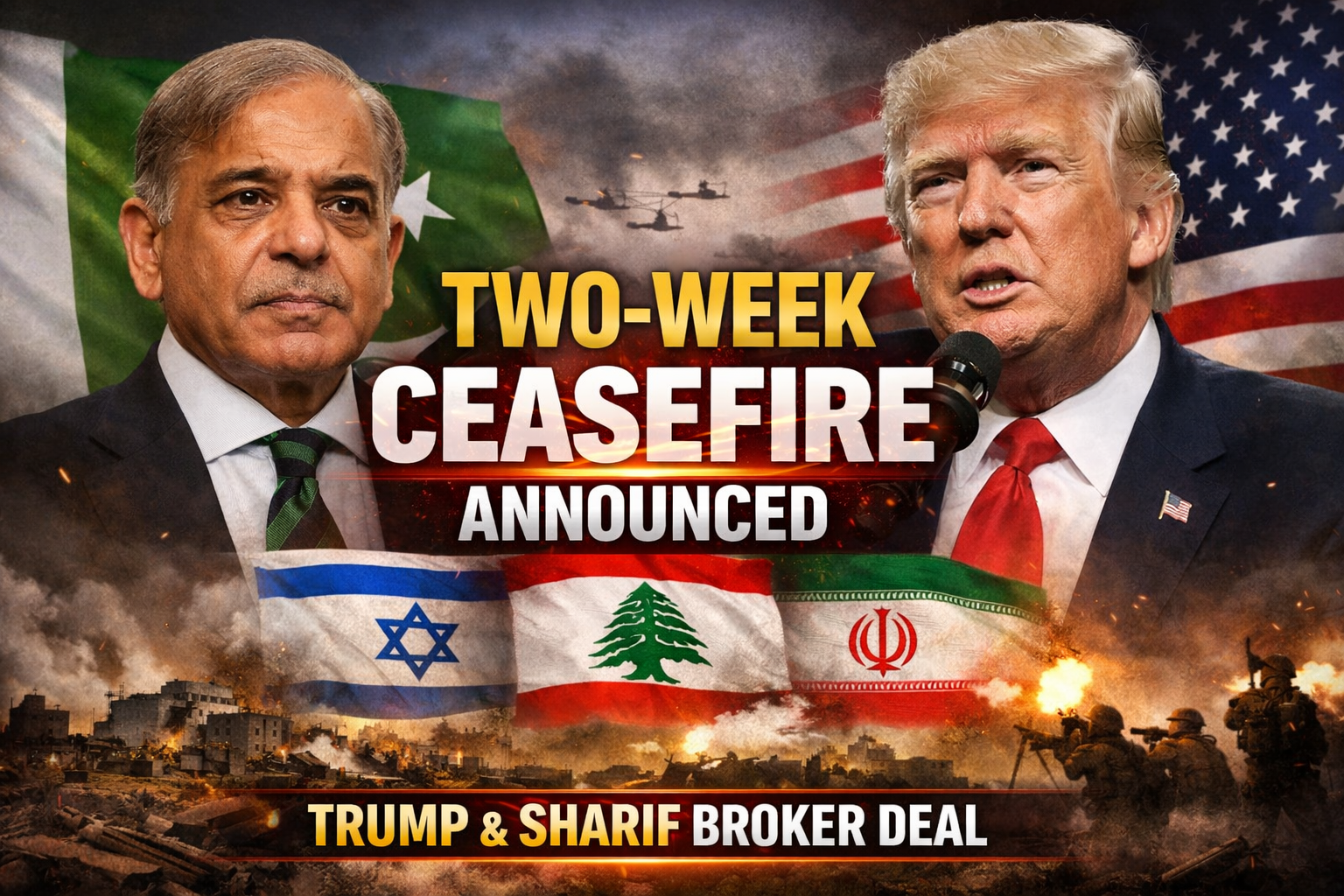
President Donald Trump has announced a two‑week ceasefire with Iran, stepping back from earlier threats of large‑scale military action and opening the door to further talks.
The agreement comes after intense negotiations involving Shehbaz Sharif of Pakistan, who helped mediate communication between Washington and Tehran. Pakistan’s government has said the ceasefire applies “everywhere, including Lebanon” and called for both sides to pursue a lasting peace.
What Trump Announced
On Tuesday evening, just hours before his own deadline for possible strikes on Iran, Trump posted on social media that he would suspend bombing and attacks on Iran for two weeks if Tehran agreed to reopen the Strait of Hormuz and facilitate safe passage.
He said the pause in the conflict would allow diplomatic talks to continue, and claimed the sides were “very far along” toward a broader agreement.
Ceasefire Coverage and International Reactions
Pakistan’s Prime Minister Shehbaz Sharif welcomed the immediate ceasefire and said both countries and their allies had agreed to stop fighting “everywhere,” including Lebanon and other fronts. He also invited Iranian and U.S. delegations to Islamabad for talks beginning April 10 to work toward a more permanent deal.
However, Israeli leaders have issued mixed statements, with some saying operations in Lebanon may not be fully covered by the truce, highlighting continued uncertainty on the ground.
Why It Matters
The ceasefire marks a major de‑escalation in what had been a rapidly expanding conflict across the Middle East. It follows weeks of strikes between Iranian forces and U.S.‑led forces and comes amid international pressure to reduce tensions and avoid further casualties.
The two‑week truce is seen as a temporary halt rather than a final peace agreement, with expectant diplomatic talks planned in Pakistan. Global oil markets and World leaders have reacted positively to the announcement, though the situation remains fluid and subject to change as negotiations continue.